

More Housing, Faster: Governor Newsom signs historic housing affordability reforms
Reduces timelines, cuts costs, and helps create more affordable homes — advancing California’s nation-leading work
✅ More housing: 59% increase in residential construction since 2019
✅ Less homelessness: Largest reduction in unsheltered homelessness in 16 years
What you need to know: As part of the 2026-27 budget — with ZERO deficit this year and next — Governor Newsom today signed Assembly Bill 179, housing budget trailer bill, modernizing California's affordable housing finance system to help expand homeownership, reduce costs, support more affordable housing, and strengthen the impact of state housing investments.
July 13, 2026
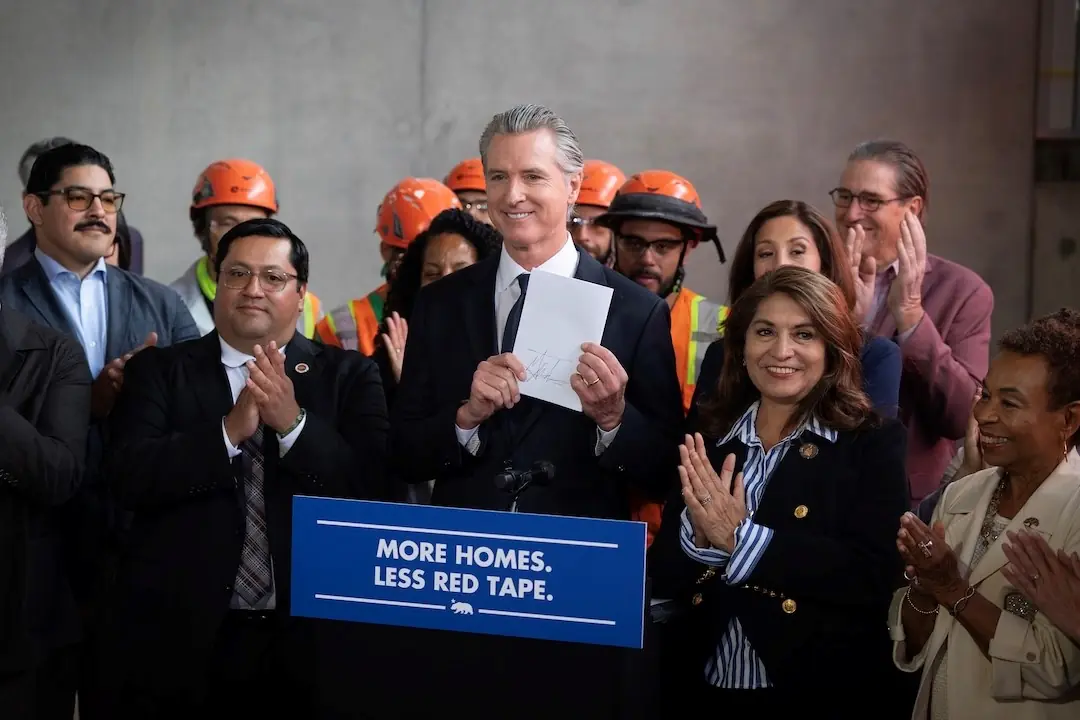
Oakland, CA
Adding to hundreds of pieces of legislation signed since 2019, and groundbreaking CEQA reform enacted last year, today Governor Gavin Newsom signed housing trailer bill legislation as part of the 2026–27 State Budget that advances the next major phase of California's housing strategy. The legislation modernizes how California finances and delivers affordable housing and builds on the Governor’s efforts that have reversed decades of inaction on housing and homelessness — creating more homes and the largest reduction in unsheltered homelessness in more than 15 years.
These investments come as part of the 2026-27 balanced budget that ensures a $0 deficit, this year and next, while protecting key state programs such as the Housing Homeless Assistance and Prevention (HHAP) program.
“When I took office in 2019, my goal was clear: to reverse decades of inaction on housing and homelessness and ensure there was enough housing and care for people to leave the streets. Through historic investments, stronger partnerships, and greater accountability, we're seeing real progress that will benefit Californians not just today, but for generations to come. I’m grateful for the Legislature’s partnership, as together we add to this proven foundation with new laws that cut red tape, expand financing opportunities, and help communities build housing faster. Every Californian deserves a place to call home, and through this work, we're turning that goal into reality,” said Governor Newsom.
Announcing groundbreaking new reforms
These reforms will help stretch existing dollars further and come alongside the passage of the historic $11.25 billion Veterans and Affordable Housing Bond Act of 2026, proposed for voter approval later this year. Through the legislation signed today, the Governor and the Legislature are:
- Modernizing California's housing finance system through landmark One-Stop Shop reforms that streamline project delivery, reduce duplicative reviews, and accelerate affordable housing production.
- Reducing the cost of building affordable housing by an estimated $60,000 to $70,000 per unit through One-Stop Shop financing reforms and impact fee changes, enabling state housing dollars to finance significantly more homes and maximize the impact of future housing investments.
- Creating a new Disaster Rebuilding Fund (DRF) — Directs $100 million in funding to reduce financing costs for homeowners rebuilding after disasters, helping affected households repair or reconstruct homes more quickly and affordably.
- Extending HHAP— Includes $900 million in FY 2026-27 for another round of state homelessness block grant funding while strengthening accountability through new local matching requirements and Prohousing requirements for direct HHAP recipients that are cities with populations over 300,000 and the counties in which those cities are located, encouraging greater local investment and policies that support housing production.
- Providing multifamily affordable housing resources — Includes $500 million for enhanced state low-income housing tax credits (LIHTC) and $200 million for the Multifamily Housing Program to support the construction and preservation of affordable multifamily housing for low-income Californians.
Since 2019, the Newsom administration has created unprecedented policy and structural changes in state government to help California better address its housing and homelessness crises, including additional and unprecedented support for local governments, stronger accountability, and enforcement, transformational changes to mental health services. This also includes groundbreaking reforms like the legislative reforms signed last year that deliver foundational changes to break down systemic barriers and help ensure California can meet the housing needs of current and future generations. These changes have helped connect hundreds of thousands of people at risk of or experiencing homelessness with vital supports.
Reversing decades of inaction
This work has created immediate, measurable results and the critical foundation necessary to finally solve California’s housing and homelessness crisis. Governor Newsom’s policies have had a significant impact:
- Historic drops in homelessness — The largest statewide reduction in unsheltered homelessness in 16 years, with a 9% reduction in unsheltered homelessness across 30 continuums of care that reported updates in 2025. New federal data also shows California last year saw:
- Largest reduction in unsheltered homelessness in the nation. California reduced unsheltered homelessness by 8,391 people, or 6.8% — more than any other state. That decline is more than twice the national reduction of 2.9% and significantly exceeds that of the next largest state, Texas, which saw a 1.4% decrease.
- Total homelessness declined. California’s overall homeless population dropped by 2.8%, marking the largest statewide decline since 2009.
- Leading the nation in reducing homelessness in key populations. From 2023 to 2025, California ranked first among all states and the District of Columbia in reducing the numbers of veteran homelessness, chronic homelessness, homelessness among young adults ages 18-24, and homelessness among parents under 25.
In addition, Governor Newsom is addressing a housing shortage that has been decades in the making. Since 2019:
- Building is happening faster — Annual residential construction has increased by 59%, from 70,000 homes built in 2018 to about 111,000 in 2024.
- Multifamily construction has reached its highest level in decades — Over the last five years, more multifamily housing units have been built than in any five-year period in over 30 years, and more than 682,000 homes overall have been built statewide since 2019.
- Approval times have been slashed — Streamlining laws enacted since 2019 have cut average time from development application to entitlement by 57%, from 160 days to 68 days in 2024. The time from entitlement to permit also dropped by 9%.
- Communities are ready to build more — Through Governor Newsom’s work to ensure all jurisdictions do their part, communities throughout the state have laid the groundwork and have planned to accommodate at least 3.6 million new homes, including 1.4 million affordable units, moving California closer to meeting its long-term housing needs.
California's fiscal foundation
These investments help support key programs while also advancing fiscal sustainability for years to come. Over the past seven years, California has transformed its fiscal outlook by paying down debt, building historic reserves, maintaining the state's credit rating, and making record investments in the people and infrastructure that power one of the world's largest economies. This budget continues this disciplined approach — protecting essential services today while positioning California for long-term success.
Since Governor Newsom took office, California has:
- Built and maintained the largest state budget reserves in California history.
- Paid down billions of dollars in long-term liabilities.
- Made historic investments in education, transportation, public safety, housing, behavioral health, climate resilience, and economic opportunity.
- Continued prioritizing one-time investments where appropriate to strengthen the state's long-term fiscal outlook.
- Advanced landmark reforms balancing fiscal discipline with long-term investments, such as modernizing budget reserves and championing significant housing and homeownership initiatives. The 2026-27 budget continues this disciplined approach, making strategic investments while preserving California's fiscal strength for years to come.