Affordable Homes Built on State Land
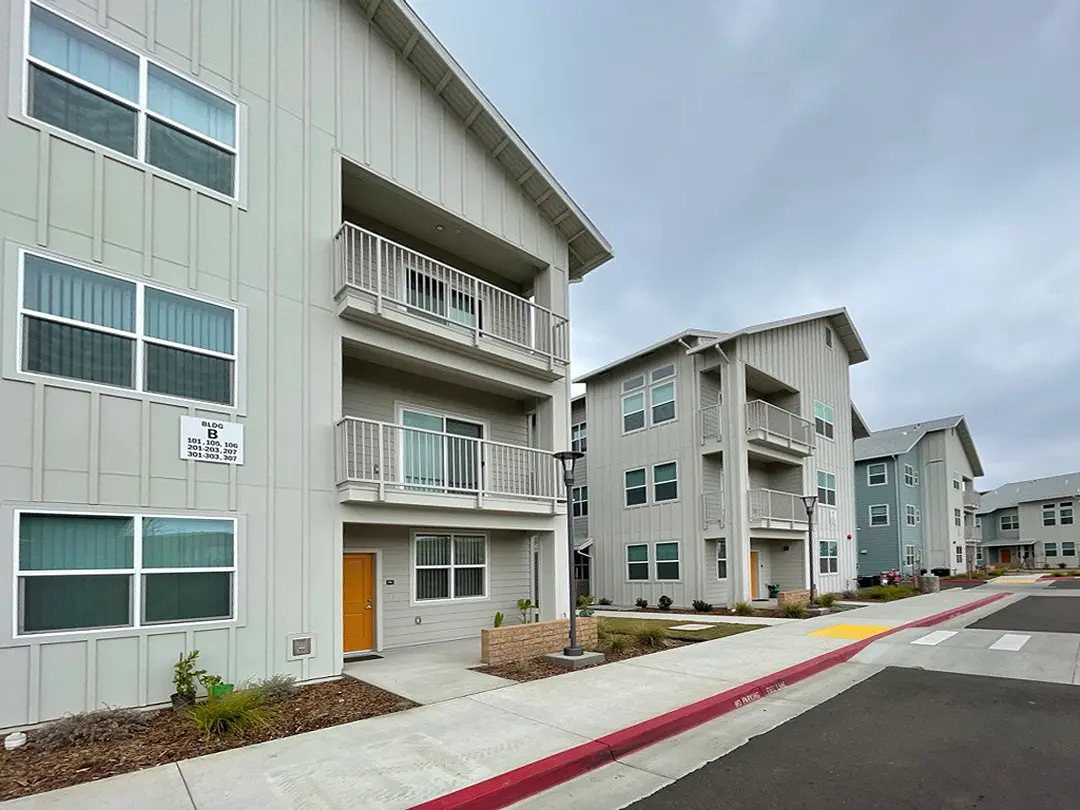
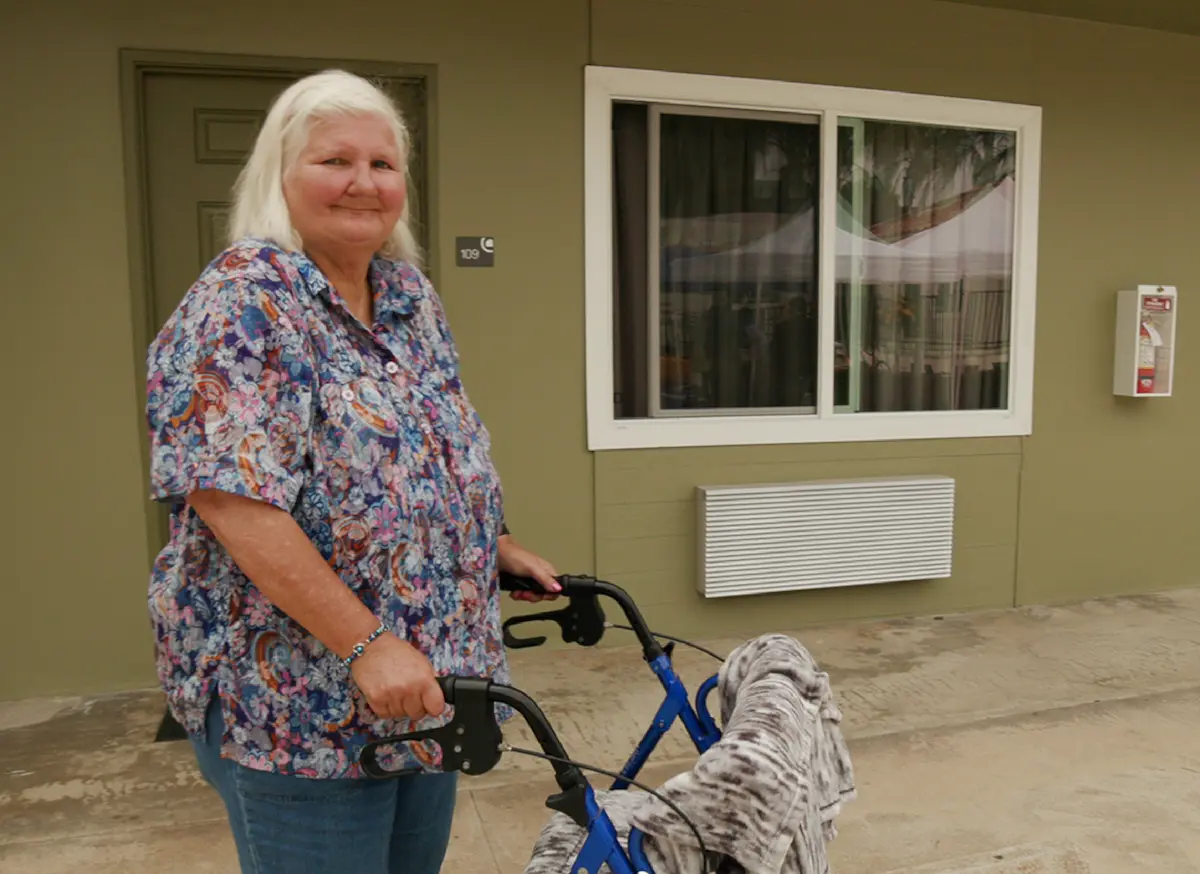
Guardian Village is a new affordable housing community in Reedley built on excess state land. Hear from Cindy, a single mother of six, who says her new apartment will allow her children to thrive.
What you need to know: Governor Newsom is expanding access to the state’s program to create new housing on underutilized state property by streamlining the effort. Today the Governor launched a revamped Excess Sites Program and web portal, an innovative initiative to release state land suitable and available for affordable housing simultaneously, making bidding and building faster.
SACRAMENTO — Governor Newsom today expanded access to California’s program to transform underutilized state land into new affordable housing by announcing a web portal to make it easier for developers to bid on the projects. The revamped, streamlined Excess Sites Program aims to improve the speed and efficiency with which state land is leased for affordable housing.
"California is doing everything we can to give all Californians access to affordable housing as quickly as possible. Today we continue to advance our strategy of transforming underutilized state properties into thriving affordable living communities for Californians,” said Governor Gavin Newsom.
The Department of Housing and Community Development (HCD) and the Department of General Services (DGS) are launching the newly revamped Excess Sites Program, the first housing initiative nationwide to release all state land identified as suitable and available for affordable housing development.
This announcement aligns with the Governor’s 2019 executive order to help scale up California’s response to a housing crisis decades in the making. The order called on HCD and DGS to identify and prioritize excess state-owned property for affordable housing development.
Since the executive order, HCD and DGS have assembled a statewide pipeline of nearly 4,300 housing units across 32 projects in various phases of development. The state estimates that the new sites being released have the capacity for at least 2,000 homes to be added as the sites are developed.
“We’re harnessing technology and innovation to help accelerate the rate of affordable housing construction in the Golden State,” said Government Operations Agency Secretary Amy Tong. “We look forward to the proposals from creative and resourceful developers whose efforts will give more Californians a place to call home.”
"California is committed to creating opportunities to develop housing, and turning underutilized state land into homes for future generations of Californians,” said Business, Consumer Services and Housing Agency Secretary Tomiquia Moss. “The Excess Sites program uses public land to support affordable and healthier communities, and the launch of this new tool will help accelerate these opportunities."
The new improvements allow developers to review all sites on the State Excess Sites map simultaneously and submit proposals continuously until an awardable submission is received and a final deadline is set for that specific site.
“Today, we are taking significant steps to enhance the management of state-owned land,” said DGS Director Ana M. Lasso. “The streamlined processes will help to ensure valuable resources are utilized effectively for growth and community development.”
“The Governor’s vision to develop state land for affordable housing—particularly in high-resource areas connecting low-income Californians to heightened opportunity—continues to strengthen communities,” said HCD Director Gustavo Velasquez. “HCD and DGS will continue to work in partnership to add efficiencies like those announced today and build on the program’s successes for the benefit of all Californians.”
Recent projects
California has announced a number of recent projects throughout the state as part of its Excess Housing Site program including:
To learn more about the State Excess Sites map or the new submission process, please visit Executive Order N-06-19 Affordable Housing Development and/or register for a webinar by HCD and DGS.
Watch the video below highlighting the grand opening of Guardian Village and hear from resident Cindy and how her new apartment will allow her children to thrive.
WHAT YOU NEED TO KNOW: Governor Newsom today announced stronger accountability measures to hold local governments accountable if they fail to make progress in addressing homelessness. The Governor also unveiled a new online accountability tool to help the public track their community’s progress on housing, homelessness, and behavioral health, in addition to $920 million in new funding.
SACRAMENTO — As part of the state’s ongoing efforts to address the national homelessness crisis, Governor Newsom today announced strong accountability measures for local jurisdictions to demonstrate results to continue receiving state homelessness funding. Governor Newsom is also launching a new online tool, accountability.ca.gov, which brings together thousands of locally reported data points to provide a clear picture of local communities’ work on California’s most pressing issues, including homelessness, housing, and behavioral health.
“No one in our nation should be without a place to call home. As we continue to support our communities in addressing homelessness, we expect fast results, not excuses. While we are pleased by the progress many communities have made to address the homelessness crisis, there is more work to do,” said Governor Gavin Newsom.
Stronger accountability
Today, Governor Newsom is announcing additional accountability measures for communities that receive state funding. The announcement comes alongside new Homeless Housing, Assistance and Prevention (HHAP) funding administered by the California Department of Housing and Community Development (HCD) to support local homelessness efforts, tied to performance benchmarks and the ability for the state to withhold funding allocations if local communities do not make progress. The funding also comes with flexibility for communities that need to modify their plans in the case of natural disasters, such as the recent Los Angeles area firestorms.
More results
Communities that receive awards through the newest round of HHAP funding must adhere to increased accountability, transparency, and compliance measures. These include an increased focus on resolving encampments, requirements that recipients have a compliant housing element to obtain future funding, and requirements that grantees obligate and expend past awards before receiving new funds. These strengthened measures will better ensure real, measurable results and will improve the tracking of data and outcomes.
As part of the proposed 2025-2026 budget, the Governor has called for even stronger accountability measures as a condition on any additional state funding, including requirements that grantees have and maintain a compliant housing element, prioritization for communities designated as “pro-housing,” and mechanisms to claw back funding from local governments that fail to demonstrate progress.
Find out how your community is doing
Today’s announcement comes alongside the debut of a new online tool accountability.ca.gov, which brings together thousands of locally reported data points to provide an accurate picture of local communities’ work to address homelessness, create housing, and create behavioral health supports. The new accountability tool will allow Californians to quickly and clearly assess the progress being made by their local governments on these pressing issues, and learn more about the process and funding provided to communities by the state.
Funding for local governments
Today, the state is announcing awards of roughly $160 million and the availability of $760 million in new funding for communities — providing local communities with additional funding to:
“Combined with historic investments to address homelessness, we share the Governor’s commitment to ensure that every dollar is spent effectively, driving measurable outcomes and meaningful change,” said Department of Housing and Community Development Department Director Gustavo Velasquez. “These programs continue to uplift some of our unhoused residents with empathy and compassion while ensuring their health, safety, and well-being.”
Please visit the ERF and HHAP program webpages for a full list of recipients receiving the ERF and HHAP Awards.
Reversing decades of inaction
As states throughout the nation continue to see ever-higher increases in homeless populations, California has dramatically slowed the growth in homelessness and reduced the number of veterans and youth experiencing homelessness — more than any other state.
Homelessness continues to increase nationwide, increasing in 2024 by more than 18%, but California is bucking the national trend by holding the statewide increase to 3%. This is a lower rate than in 40 other states.
California is also one of the few states that have dramatically blunted the increases in unsheltered homelessness, holding it to 0.45%. By comparison, in 2024, nationwide unsheltered homelessness grew by nearly 7%. Unsheltered homelessness growth in other large population states like Illinois, Florida, New York, and Texas surpassed California’s in terms of percentage and number.
The Newsom Administration is making significant progress in reversing decades of inaction on homelessness. Between 2014 and 2019, unsheltered homelessness in California increased by approximately 37,000 people — more than double the increase seen during the Newsom Administration.

HCD Deputy Director Megan Kirkeby introduces 440 Arden Way, the site of a new affordable housing development in Sacramento built on public land. When completed, 440 Arden Way will provide 124 homes for individuals and families near parks, transit and amenities.
440 Arden Way is supported by more than $48 million from HCD’s Local Government Matching Grant (LGMG) and Affordable Housing Sustainable Communities (AHSC) programs.
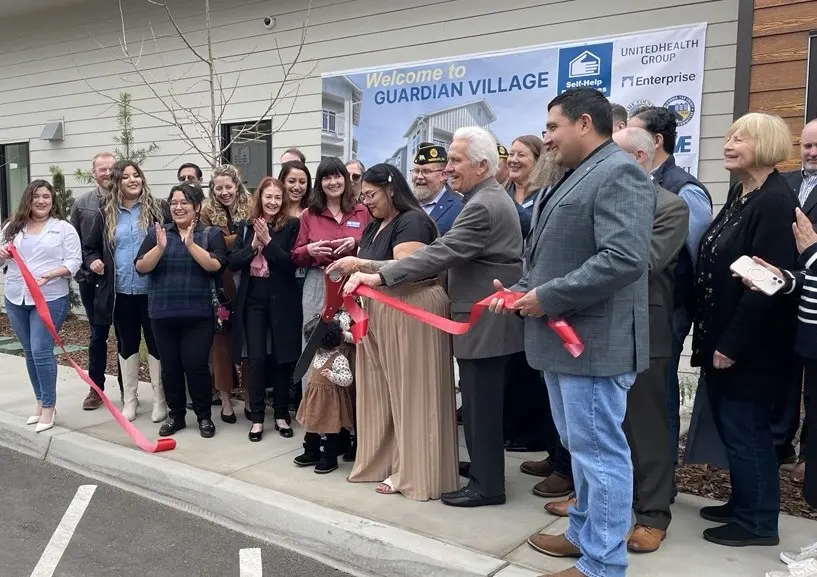
The California Department of Housing and Community Development (HCD) and the Department of General Services (DGS) today celebrated the grand opening of the Reedley affordable housing development, Guardian Village.
The departments also released a video (below) highlighting the late 2024 groundbreaking for a new Sacramento affordable housing community at 440 Arden Way that will provide 124 affordable apartment homes.
Both developments—located on former armory sites—are part of Governor Gavin Newsom’s effort to increase housing availability under the Excess Land for Affordable Housing Executive Order N-06-19. Under the order, the two departments identified and prioritized excess state-owned properties for sustainable, innovative, and cost-effective housing projects.
“We celebrate not just the opening of doors for those in need of affordable housing but also our commitment to maximizing the use of excess land to create vibrant communities,” said DGS Director Ana Lasso.
“Governor Newsom’s excess sites order has inspired the creative reuse of properties like these former armories to help meet California’s critical housing need,” said HCD Director Gustavo Velasquez. “As cities and counties follow the state’s example and identify their usable surplus land, opportunities to develop affordable housing multiply, furthering our mission to ensure safe, quality housing for Californians at all income levels.”
The Guardian Village development celebrated today was built on the former Reedley Armory at 601 East 11th Street in Fresno County. The site had been identified as excess to the needs of the California Military Department and was selected as suitable for the development of affordable housing.
The 48-unit, 60,581-square foot project sits on a two-acre site and was developed by Self-Help Enterprises comprising two- and three-story residential apartment buildings. Features include energy-efficient appliances, lighting, and washer/dryer hookups, plus a community gathering building, playground, dog park, and picnic area.
The state provided nearly $5 million in loans and grants, through HCD. DGS also provided a 99-year ground lease to Self-Help Enterprises for $1 per year for the two-acre parcel for the development, valued at $700,000.
The project on Arden Way in Sacramento is an exemplary model of the state and city working together to ensure housing for all Californians, as the site comprises a 1.25-acre shuttered military armory and a quarter-acre site donated by the City of Sacramento. The homes will range from one to three bedrooms, and 31 of the units will be reserved for individuals and families at risk of homelessness.
California Governor Gavin Newsom, Attorney General Rob Bonta, and California Department of Housing and Community Development (HCD) Director Gustavo Velasquez issued the following statements after yesterday’s decision by the Los Angeles County Superior Court to deny the City of Norwalk’s attempt to dismiss the state’s lawsuit over the city’s unlawful ban on emergency shelters, supportive housing, single-room occupancy, and transitional housing:
“No community should turn its back on its residents in need. We will continue to hold Norwalk accountable for its failure to reverse this cruel and unlawful ban,” said Governor Gavin Newsom.
“We are pleased to proceed with our case and to protect the public’s interest in the rule of law. Norwalk’s ban on new housing for unhoused individuals and lower-income households at risk of homelessness is illegal,” said Attorney General Rob Bonta. “At a time when affordability issues are a top concern for Californians, we should be doing everything in our power to help — not hurt — those struggling to keep a roof over their heads or lacking housing altogether. We look forward to holding the city accountable.”
“Far from being a threat, availability of safe shelter and supportive services brings stability and makes communities stronger," said HCD Director Gustavo Velasquez. “We will continue to fight to hold Norwalk and all others accountable for planning for the housing needs of residents at all income levels."
Filed on November 4, 2024, the lawsuit by Attorney General Bonta, Governor Newsom, and HCD Director Velasquez alleges that Norwalk has violated (1) California’s urgency ordinance statute; (2) the Housing Crisis Act; (3) the Housing Element Law; (4) the Anti-Discrimination in Land Use Law; (5) the Affirmatively Furthering Fair Housing Law; and (6) the by-right laws for supportive housing and emergency shelters.
A copy of the court’s tentative decision, which the court adopted as the final ruling at yesterday’s hearing, can be found here.
The California Department of Housing and Community Development (HCD) is pleased to announce the release of the 2025 Round 3 Multifamily Finance Super NOFA (MFSN) Guidelines and NOFA.
Through this NOFA, there is approximately $382 million in funds for the following programs:
In the coming weeks, HCD will consult with fire-impacted communities and other stakeholders to inform the development of a separate $96 million Disaster Impacted Areas MFSN to support recovery and rebuilding from unprecedented Southern California wildfire destruction. HCD will also release a Tribal MFSN in the near future.
This is the third funding round of Multifamily Finance Super NOFA that provides applicants the opportunity to apply for a combination of the available funding programs at the same time and within the same round, and the first round to offer capitalized operating subsidy reserve funding through MHP. The MFSN makes funds more accessible to developers (including Emerging and Community-Based Developers), enables the funding to further serve the lowest-income Californians, and increases the range of potential applicants and target populations to achieve better outcomes in health, climate, and household stability.
Please visit Super NOFA | California Department of Housing and Community Development for more information on the program and where future workshops will be announced.
For any questions, please email SuperNOFA@hcd.ca.gov.
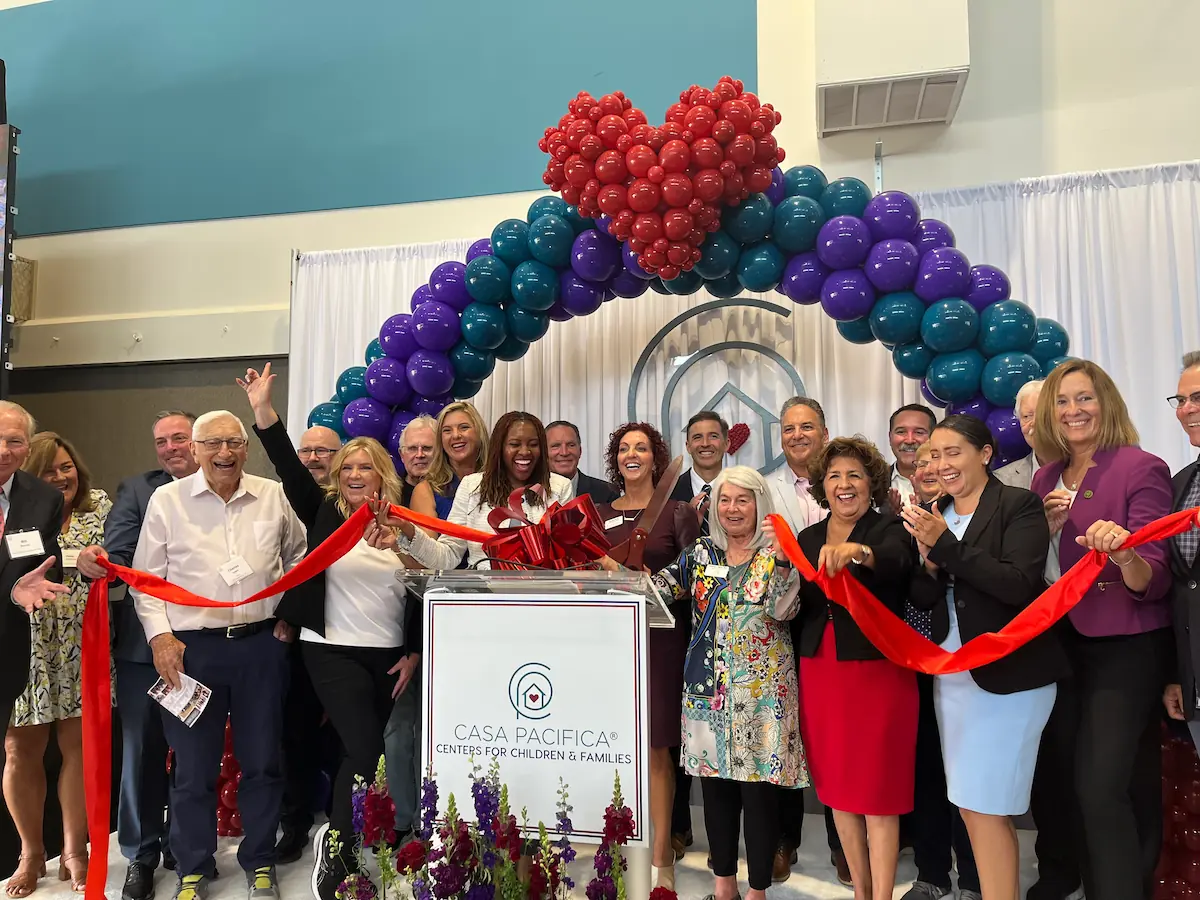
Ventura County recently hosted a ribbon cutting to celebrate Casa Pacifica, a new supportive housing development in Camarillo for young adults aged 18-25 years. Casa Pacifica, named after the project’s co-developer and main service provider, is a 27-home complex for young adults who are homeless or at risk of homelessness, including those who have “aged out" of the foster care system.
Funded in part by almost $6 million from HCD’s Homekey program and more from the California Department of Social Services’ Transitional Housing Program Plus, Casa Pacifica demonstrates just how well state funding can work in tandem to do great things. Designed to provide supportive homes for young adults and their children, resident services will include educational and career development, parenting classes, life skills training, and mental health care assistance.
As well as celebrating a new affordable housing development, the event was also a celebration of co-developer Casa Pacifica’s 30th anniversary. Casa Pacifica Centers for Children and Families provide transitional housing and mental health services to families and adolescents in Ventura and Santa Barbara counties. This most recent development, co-developed by the County of Ventura, stands as an excellent example what California communities can do to support youth who are transitioning from foster care or the juvenile justice system—or otherwise lacking the familial support so many take for granted.
Governor Gavin Newsom today announced new efforts to provide accountability with ongoing Los Angeles firestorm recovery efforts and support firestorm survivors.
California launched a new dashboard on the CA.gov/LAfires website to track recovery efforts for Los Angeles – including data on people helped, debris removal, schools, water systems and air quality. Additionally, the state launched a new recovery services finder tool that helps survivors and businesses connect with state and federal resources, including housing, individual assistance, personal document replacement, employment, and more.
The new features build on the CA.gov/LAfires website, which was rapidly launched in the days following the start of the firestorms, and soon after was significantly overhauled to better integrate with in-person Disaster Recovery Centers.
Since its launch, there have been over 550,000 visits to the website. This latest update means impacted Californians can access all of the same resources offered at Disaster Recovery Centers – completely online.
“We’re moving faster than ever to ensure survivors of these firestorms have all the resources they need to recover. And for the first time, survivors can access all the services available at in-person centers completely online. Not only that – we’re now tracking recovery efforts in real-time to hold ourselves and all levels of government accountable for delivering for Angelenos,” said Governor Gavin Newsom.
Governor Newsom directed the Government Operations Agency, in collaboration with the California Department of Technology and the Office of Data and Innovation, to improve the digital experience after hearing directly from survivors on the ground about their needs.
“I commend the dedicated teams at CDT and ODI for coming together, creating a plan and executing the launch of this survivor resource,” said Government Operations Agency Secretary Amy Tong. “The outcome of this was solely focused on how to get survivors what they need, and the team was laser focused on making the new site work for them.”
Historic recovery and rebuilding efforts — faster than ever before
Buena Tierra brings 60 new homes for people exiting homelessness to the City of Goleta. Hear from resident Johnny, whose life was changed by HCD-funded permanent supportive housing. Buena Tierra was supported by HCD’s Homekey program.