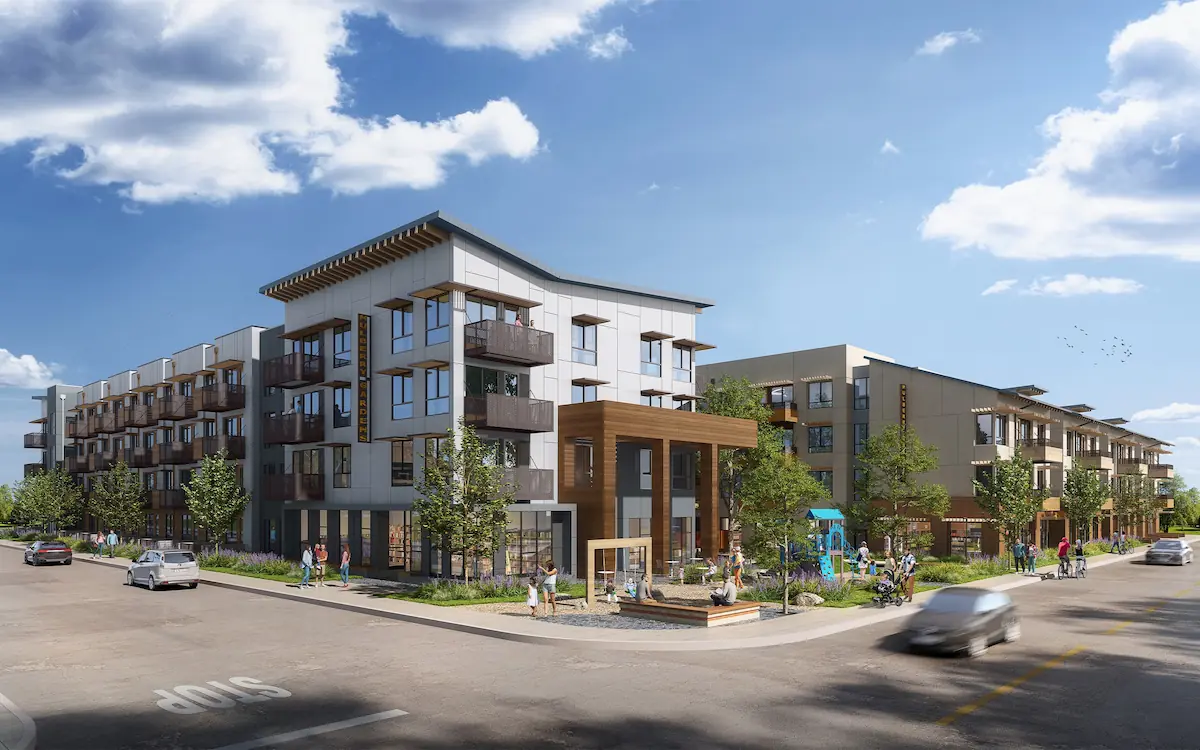
On Friday, state leaders broke ground on an affordable housing community in Riverside. Through Governor Gavin Newsom’s executive order to address the housing and homelessness crisis by transforming state land, the development is now in Phase II and will include 150 affordable family housing units for low-income households. Phase I, already under construction, includes 59 affordable housing units for low-income seniors. The property, formerly owned by the California Department of Forestry and Fire Protection (CAL FIRE) is just over four acres.
“We’re not just pushing local government to build more housing — we’re putting state land to work and creating new homes ourselves. It’s a groundbreaking strategy, and as the Trump administration turns its back, California is leading with real solutions to tackle the national housing crisis head-on. As we convert state properties, we’re moving faster to tackle homelessness and open up opportunities for families and seniors who need a safe, stable place to call home,” said Governor Gavin Newsom.
“The state has taken huge strides to bring these sites online for those who need it most,” said Government Operations Agency Secretary Nick Maduros. “Because of projects like this up and down the state, we are helping to address housing affordability issues in every corner of California.”
“Through partnership and collaboration, we are transforming state-owned land for the critical purpose of housing Californians in need,” said Business, Consumer Services and Housing Agency Secretary Tomiquia Moss. “Our fixed-income seniors and generations of families in the Inland Empire will be uplifted by this development, made possible by Governor Newsom’s vision for Excess Sites.”
In 2019, Governor Gavin Newsom issued an Executive Order N-06-19, which tasked the Department of Housing and Community Development (HCD) and Department of General Services (DGS) with tackling the state’s affordable housing crisis by identifying underutilized state-owned land that could be converted into affordable housing, with consideration to factors such as proximity to job centers, amenities, and public transit. The order has since been utilized to create hundreds of affordable homes, including:
Project details
The plans for Mulberry Gardens Phase II include 150 family units with one to three bedrooms each, a community room, computer lab, fitness facilities, and a playground. The project is located less than a mile from downtown Riverside and is near transit and vital services. The project is made possible through a combination of 37 project-based Section 8 vouchers and approximately $4.5 million in local funds, $44.8 million in state funding, and $2 million in private sources, demonstrating a strong public-private partnership to address California’s housing needs. This community is being developed by Eden Housing.
“Through this groundbreaking we are not only creating homes, but nurturing the entire community,” said DGS Director Ana M. Lasso. “At a time when so many are struggling to make ends meet, this is a triumphant moment that emphasizes what good we can do when we join forces for the benefit of our neighbors.”
“Across the board, this Administration is collaborating on forward-thinking solutions to end a crisis of housing affordability and homelessness decades in the making,” said HCD Director Gustavo Velasquez. “Through Mulberry Gardens, this underutilized CAL FIRE site will become a safe and welcoming home, connecting thousands to stability and opportunity over the life of the project.”
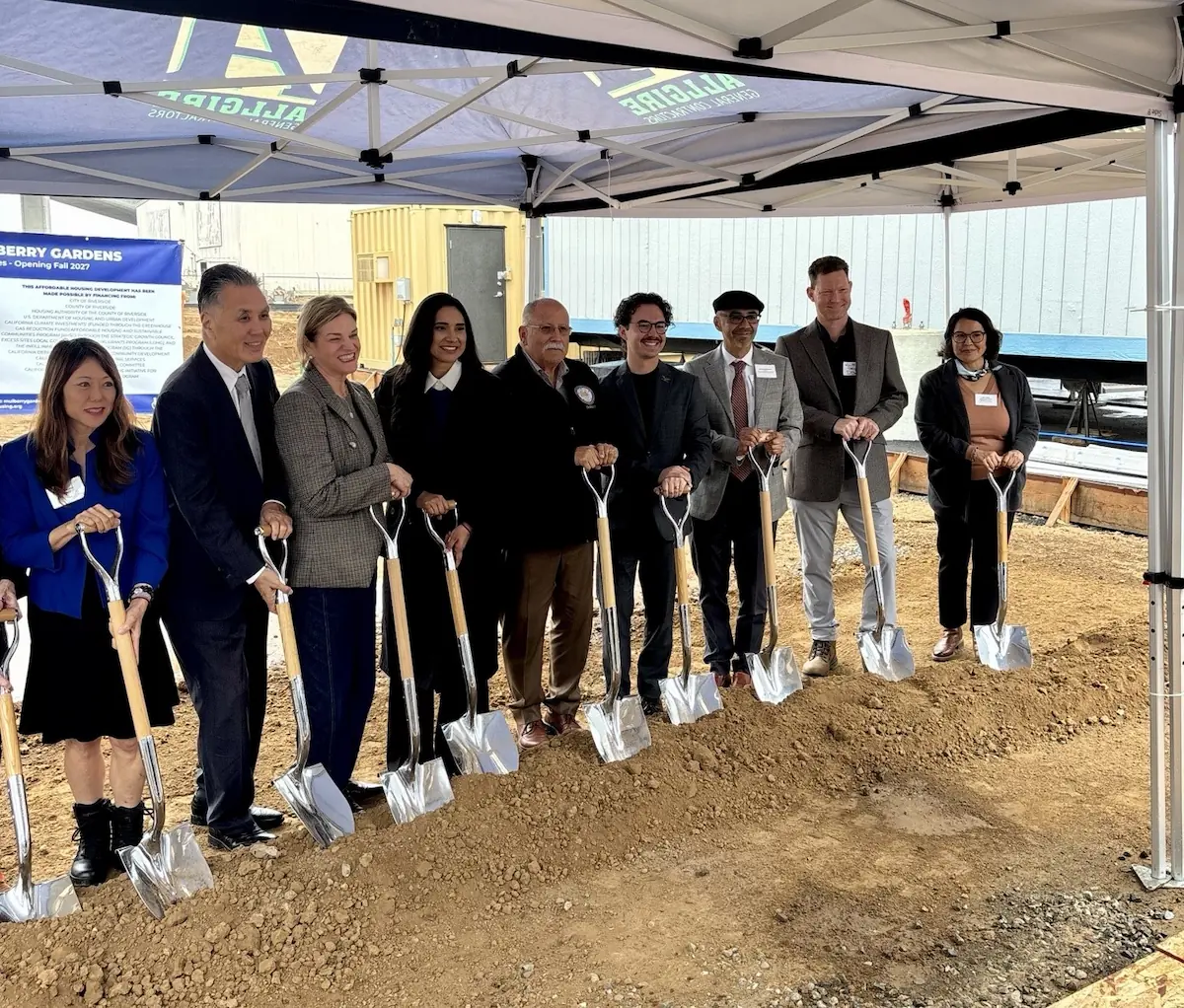
Mulberry Gardens Groundbreaking Ceremony
Building more, faster – for all
The Department of Toxic Substances Control (DTSC) provided expedited environmental review to make the project possible. DTSC completed its cleanup review in under six months -- an accelerated timeline for this type of detailed environmental process -- helping the developer meet key financing and construction milestones while upholding strong public health protections.
“We accelerated our environmental review to keep this project on time and with strong public protections for the people who will live in this community,” said DTSC Director Katherine Butler. “DTSC is proud to help clear the way for another safe, affordable housing project in Riverside.”
Revitalizing communities across California
The Mulberry Gardens project is one of more than 90 revitalization efforts statewide supported through DTSC’s Equitable Community Revitalization Grant program. The initiative helps local governments, nonprofits and developers clean up and reuse contaminated properties -- known as brownfields -- for housing, parks, retail and community spaces. Through the Equitable Community Revitalization Grant program, DTSC is investing more than $130 million to support the cleanup and reuse of more than 150 sites across 49 cities, preparing them for new life in communities that have historically faced environmental and economic barriers.
DTSC is addressing brownfields through multiple efforts, including its Equitable Community Grant program to help local governments and developers move housing and infrastructure projects forward.
Accelerating cleanup and construction
DTSC’s Equitable Community Revitalization Grant program is expected to support nearly 5,000 affordable housing units statewide.
Other projects include:
- Crossroads at Washington in Santa Ana – 86 affordable homes now open following DTSC-supported cleanup.
- Ms. Margaret Gordon Apartments in West Oakland – 58 affordable homes now open, including 30 for formerly homeless families, on a remediated former vehicle facility.
- Algarve Apartments in San José – 90 affordable homes underway for low-income residents after $3 million in DTSC funding.
- Lincoln Beach in Anaheim – 47 affordable homes for seniors and youth underway after $1.3 million in DTSC funding.
Together, these projects demonstrate how brownfield cleanup is unlocking new opportunities for housing, economic growth, and environmental justice across California.
From state land to affordable housing
The Excess Sites program is administered in partnership by DGS and HCD. The program identifies state-owned land available and suitable for housing and creates a digital inventory of those properties through the State Excess Sites – Affordable Housing Opportunities Map Viewer. The sites are awarded to developers via a long-term ground lease allowing the development of affordable housing on the sites at low cost. Through the Governor’s executive order, the state has created hundreds of affordable homes, including:
- 248 new homes at Sugar Pine Village for families and workers in the Tahoe region
- 75 new homes at 750 Golden Gate Avenue with an additional 92 new homes at 850 Turk Street in San Francisco
- 57 new homes at Sonrisa in Sacramento
- 48 new homes at Guardian Village in Reedley
- 241 new homes under construction at The Monarch in Sacramento
- 55 new homes under construction at Pacific Crest Commons in Truckee
- 105 new homes under construction at Alveare Parkview in Los Angeles