September 2022

California COVID-19 Rent Relief Program Distributes Over $3 Billion to California Low-Income Renters

Off
Newsroom Default Image

COMPTON — Today, during a meeting with U.S. Treasury Deputy Secretary Wally Adeyemo in Compton, Business, Consumer Services and Housing Agency Secretary Lourdes Castro Ramírez announced that the California COVID-19 Rent Relief Program has distributed $3.1 billion of rent and utility assistance to over 275,000 households throughout the state to keep families housed.

“My administration has worked tirelessly to ensure that Californians impacted by this pandemic receive the support they need to get back on their feet,” said Governor Gavin Newsom. “By providing assistance through the largest rental relief program in the nation, we are helping to protect individuals and families from the devastating economic impacts caused by this pandemic.”

Nearly one in every three Emergency Rental Assistance Program dollars reallocated from the U.S. Treasury was sent to California, and no state has paid out more or served as many people. More than 61 percent of the households served are extremely low income with household incomes under 30 percent of Area Median Income (AMI), and more than 85 percent are low-income with household incomes below 50 percent AMI.

“Thanks to federal American Rescue Plan Act dollars and other federal funding, we have helped hundreds of thousands of California households affected by the pandemic to stay in their homes and avoid eviction,” said Secretary Castro Ramírez. “The state’s rent relief program has been a critical component of California’s COVID-19 response and would not have been possible without the federal funding we have received and the close partnership with local jurisdictions and community-based organizations that make up the program’s Local Partner Network.”

The California rent relief program’s Local Partner Network is a coordinated group of hundreds of community-based organizations working in traditionally underserved communities. These partners assisted over 178,000 applicants either over the phone or in-person with completing their program applications, helping to ensure that language, literacy and technology were not barriers to participating.

“Since the beginning of the COVID-19 pandemic, we have worked hard to stand up the state rental assistance program – the largest in the nation – to help families in need remain housed during the emergency,” said Gustavo Velasquez, Director of the Department of Housing and Community Development, which administers the state program. “The U.S. Treasury urged states to act with urgency to get the job done, and that’s exactly what we did. Now, 13 months after the program began, we have paid out more than $3 billion and we will continue to work with a sense of urgency to get people the support they need.”

But while it’s easy to look at the numbers, it’s the stories of impact from the State’s Local Partner Network organizations, renters and landlords that illustrate the significance of the state’s efforts to keep families housed and prevent evictions via the emergency rent relief program.

  • Helping people: Alisha, a Los Angeles County resident, received funding through the state program that helped her during the pandemic and was assisted by the Fair Housing Foundation in the Los Angeles area, one of the rent relief program’s Local Partner Network (LPN) organizations. She was grateful for the program, which “helped keep food in my refrigerator and gas in my car.” Another Los Angeles County resident, Maria, also received funding from the state program, which she said helped her to get back on her feet and pay her rent on time.
  • Improving relationships: Shores of Hope in Yolo County, another LPN organization, told us about Pamela, a longtime Yolo County resident who indicated the program did more than just provide financial assistance. Applying for and receiving quick payment for emergency rental relief has helped improve her relationship with her landlord.
  • Supporting landlords: The Daly City Partnership worked with landlord Eriko, who was concerned about her tenant who was behind on rent. She wanted to ensure the tenant received the help he needed but also couldn’t afford to lose the rental income. Together with her tenant, Eriko applied for the program, keeping the tenant housed and Eriko’s income stream steady.

The California COVID-19 Rent Relief application portal closed to new applications after March 31, allowing HCD to continue processing the remaining applications. Thanks to SB 115, signed into law by Governor Gavin Newsom, the state has allocated temporary funding to provide the state and local programs the ability to continue to deploy assistance to eligible households as additional federal funds are made available.

AB 2179, signed into law on March 31 by Acting Governor Eleni Kounalakis, extends the state’s eviction protections for those who submitted a completed application on or before March 31. The state is working diligently to ensure all applications are processed prior to the end of the state’s existing eviction protection period on June 30.

“This program has been a vital resource for Californians impacted by COVID-19 and we know there is more work to be done to address the housing instability impacting many Californians,” said Secretary Castro Ramírez. “The information we’ve gleaned from this program will help us to deepen our understanding of the communities we serve as we continue our efforts to keeping Californians housed and move with urgency to build more housing through programs like Homekey and the Housing Accelerator.”

The California COVID-19 Rent Relief Program is just one aspect of the state’s comprehensive effort to use American Rescue Plan Act funds to keep Californians housed along with long-term housing investments to further our state’s recovery from the impacts of the COVID-19 pandemic.

  • Homekey: Using a combination of ARPA and state funds, this California program gives local communities the funds to acquire buildings such as hotels, motels and offices that can be quickly converted into supportive housing for people experiencing homelessness. So far this year, Homekey has allocated almost $1 billion for projects at 61 sites statewide that will create more than 3,400 homes in the coming months. (More information is available at homekey.hcd.ca.gov)
  • Mortgage Assistance Program: For homeowners, the state used ARPA monies to create a $1 billion Mortgage Assistance Program that assists qualified homeowners who have fallen behind on their home payments. To date, approximately $26 million has been approved to support over 800 households. (More information is available at camortgagerelief.org)
  • Housing Accelerator Program: To create more affordable housing faster, the Housing Accelerator Program is utilizing $1.75 billion in ARPA funds to help shovel-ready housing projects fill funding gaps and start construction. To date, 27 projects have been allocated more than $900 million to speed the creation of 2,315 affordable housing units. (More information is available at accelerator.hcd.ca.gov)
  • Press Release
  • May 2, 2022
    Over 275,000 Low-Income Renter Households Keep Their Homes Thanks to State Program
    Monica Hernandez
    (916) 890-5240
    Off
    Article

    State Announces Nearly $25 Million in Funding for Homekey Projects in Santa Cruz, Santa Clara Counties

    Off
    Sacramento, CA
    First Homekey site: Veterans Village in Ben Lomond

    The Business, Consumer Services and Housing Agency (BCSH) and the Department of Housing and Community Development today joined Assemblymember Mark Stone (D-Santa Cruz) and representatives for Senator John Laird (D-Santa) Cruz at the county’s first Homekey site – Veterans Village in Ben Lomond – to announce the county’s second Homekey award: $10.7 million for construction of 36 new apartments for unhoused and at-risk veterans, young adults and families with children.

    The site is one of two announced this week. The other is in Santa Clara County and received $14.3 million. When operational, both sites will provide 79 homes, with a particular focus on youth. When added to other Homekey Round 2 awards, the state has funded 72 projects statewide so far this year, for a total of more than $1.15 billion. Since announcing Governor Newsom’s $2.75 billion extension of Homekey back in September, the state has already approved projects that – when completed – will create more than 4,000 units of housing.

    “The awards announced today are a signal to our young people and families in need of assistance in these two cities that help is on the way,” Governor Newsom said. “Our commitment continues to be to use every tool available to us to get Californians of all ages the housing and services they need. And Homekey continues to lead the way with targeted investments and innovation.”

    “Resources derived from Homekey will be used to maximize safe, permanent, supportive housing and on-site services for our local veterans, students and families who are unsheltered in Santa Cruz County,” said Senator Laird. “Thank you to the Newsom Administration and all those who have led efforts to provide affordable housing solutions in our city and county government along with the passionate advocates who are determined to make Santa Cruz County affordable for all.”

    Assemblymember Stone added, “The high population of unhoused youth and veterans is frankly unacceptable, and it is our responsibility to provide them with proper stability and support. These new housing projects will help us to do just that. This is an important and proactive step in combating the homeless crisis.”

    “About 80 percent of unaccompanied youth experiencing homelessness in California are unsheltered, sleeping in cars, on sidewalks, or in places not meant for human habitation,” said California Business, Consumer Services and Housing Agency Secretary Lourdes Castro Ramírez. “We know that to end homelessness, youth and young adults need stable housing, supportive connections and access to services. This requires significant investments from the state and decisive action from our local partners, such as those we see in Homekey.”

    “Last year, more than 22,000 unhoused youth accessed homelessness services across the state,” said HCD Director Gustavo Velasquez. “Through the data we have gathered in the Statewide Housing Plan, we know how great a need there is for unhoused Californians at all ages, and that’s why we have targeted set-asides in programs like Homekey. The two projects approved today will provide an additional 79 homes with a particular focus on youth experiencing or at risk of homelessness at a time when we know a stable home can make a huge difference for their futures.”

    The Action Plan for Preventing and Ending Homelessness in California developed by the California Interagency Council on Homelessness includes strategies for preventing and ending homelessness for youth and young adults, in partnership with state agencies, local governments and community-based organizations.

    Today’s Homekey awards include the following projects:

    • Santa Clara County Housing Authority, along with Jamboree Housing Corporation (borrower entity JHC-4th Street LLC) will receive more than $14.3 million to acquire and rehabilitate the Pavilion Inn. This 43-unit project will solely serve formerly homeless youth or youth at risk of homelessness. The Bill Wilson Center will provide supportive services, which will include meal and food support, for some of the City’s most vulnerable residents. The site is within a half mile of transit, and within a mile of a health facility, library and pharmacy.
    • The County of Santa Cruz, Novin Development Corp. and Central Valley Coalition for Affordable Housing will receive $10.7 million for construction of 36 new apartments to provide affordable housing for homeless and at-risk veterans, young adults, and families with children. The units will range in size from one to two bedrooms, with all standard apartment features.

    “There’s a critical need for service-enriched affordable housing for transitional-aged youth and their families in our community, particularly those experiencing or at risk of homelessness,” said Preston Prince, Executive Director of the Santa Clara County Housing Authority. “This project is a wonderful example of the alignment between our local governmental agencies and our nonprofit partners. By bringing together the County of Santa Clara, City of San Jose, Jamboree Housing Corporation, Bill Wilson Center and ourselves, our collective impact and leverage is so much greater. We look forward to welcoming home our future residents.”

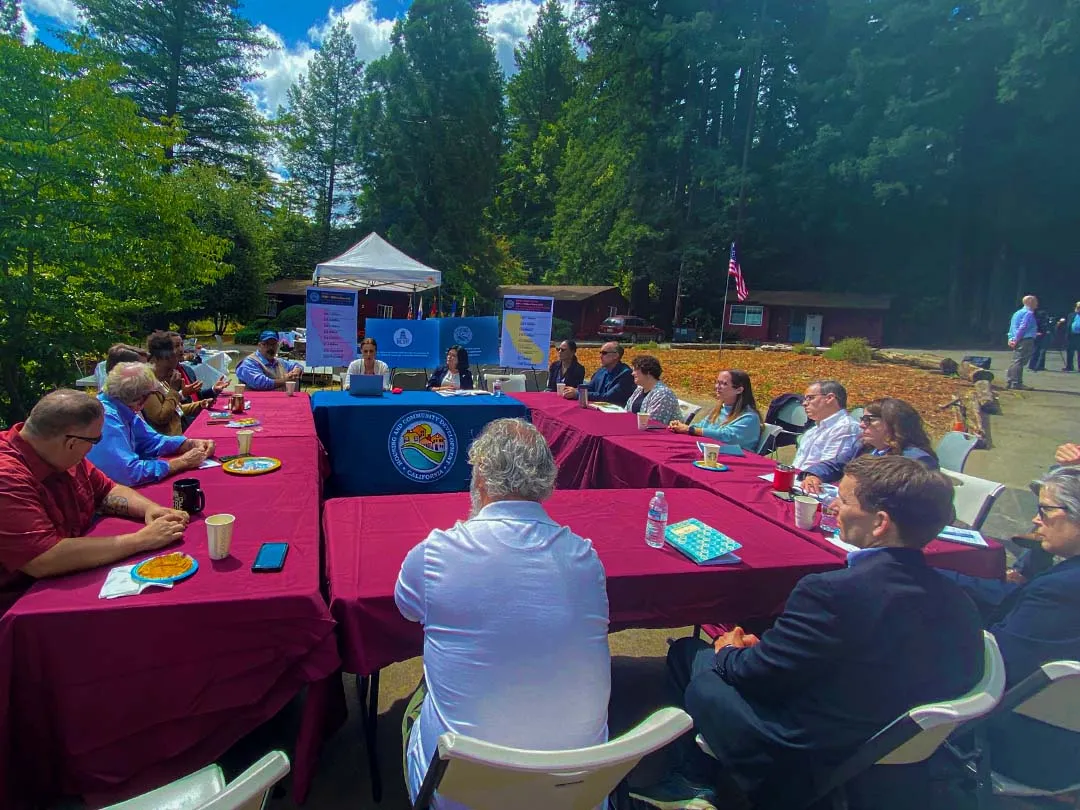
    Today’s announcement in Santa Cruz was preceded by an hour-long roundtable discussion at the Veterans Village Homekey site in Ben Lomond, where Secretary Castro Ramírez heard from leaders of Santa Cruz County, the city of Santa Cruz, managers and residents of Veterans Village and other private, public and nonprofit sector leaders in the area. They discussed how the Veterans Village project came about, what lessons have been learned, and suggestions for future projects.

    In addition to the projects announced today, Homekey proposals that have already been conditionally approved, but are not yet funded, will remain in HCD’s queue for future grant consideration, upon appropriation by the Legislature of additional funding. For more information, please visit the Homekey webpage. The Department of Housing and Community Development has also created the Homekey Awards Dashboard where Californians can track Homekey project awards by dollar totals, project type, progress and region. The dashboard is updated in real time as additional projects are approved. Additional Homekey awards will be announced in the coming weeks.

  • Press Release
  • June 17, 2022
    Sites to include housing for youth at risk of or experiencing homelessness
    Monica Hernandez
    (916) 890-5240
    Off
    Article

    State Rent Relief Program Receives Additional $136 Million From U.S. Treasury

    Off
    Sacramento, CA
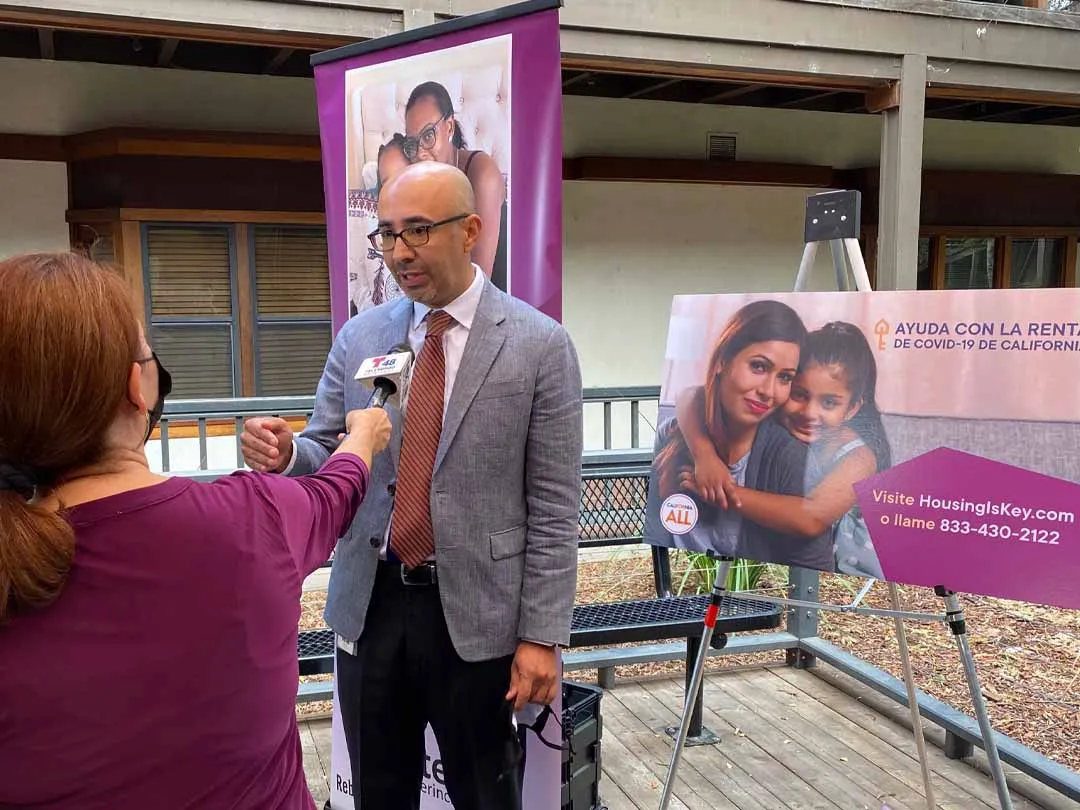
    HCD Director Velasquez speaking on CA Rent Relief

    Today, on the one-year anniversary of the launch of the California COVID-19 Rent Relief program, the California Department of Housing and Community Development (HCD) announced it has received an additional $136 million from the U.S. Treasury (Treasury) to provide additional rent and utility assistance to low-income Californians. As of today, the program has paid out more than $2.36 billion to assist more than 206,000 low-income households across the state.

    “The California COVID-19 Rent Relief Program has been a game changer for struggling renter households across our state, and we continue moving with speed to deliver assistance to keep families facing financial hardship in their homes,” said Business, Consumer Services and Housing Agency Secretary Lourdes Castro Ramírez. “As we mark the one-year anniversary, we pause to acknowledge the federal-state-local partnerships established to stand up the nation’s largest and most effective emergency rental relief program that has prevented over 200,000 households from being evicted; and we recommit to moving with urgency to equitably distribute rental assistance to households in need.”

    “We have accelerated the pace and number of payments week over week since the beginning of the program a year ago today,” said HCD Director Gustavo Velasquez. “Just last week, nearly 9,000 households were assisted, amounting to more than $81 million in rent and utility assistance.”

    As part of the Treasury reallocation process, unused federal funds are reallocated to state and local governments across the nation, with additional federal funds prioritized to jurisdictions with unmet need and a demonstrated ability to rapidly deploy these emergency resources.

    Through the first two rounds of federal reallocations, the state program has received nearly $200 million in additional federal funds, amounting to nearly one out of every three dollars that have been reallocated across the country. The state will continue to submit subsequent requests for reallocated federal funds in the months to come.

    Overall, one in four rent relief payments made nationally have been made in California. It is estimated that upon program completion, the state program will have distributed more than $4 billion in assistance to help keep low-income renters in their homes.

    "In establishing a Local Partner Network, the State's rent relief program has been able to reach many of California's most vulnerable populations," said Tunua Thrash-Ntuk, Executive Director of Local Initiatives Support Corporation, Los Angeles. "Our Local Partner Network--a coordinated group of hundreds of community-based organizations--are trusted messengers already engrained in traditionally underserved communities. Whether it's helping non-English speakers, those without access to the internet, or other challenges that an applicant might face, the combined knowledge and experience of the Local Partner Network has helped provide one-on-one support to qualified applicants as they move through the program. In turn, the partners have been able to provide realtime feedback to the State to help ensure the program has been effective in reaching the people who need it the most."

    Of those assisted thus far, more than 86 percent are very low- or extremely low-income households, earning less than 50 percent of Area Median Income. Of those applying, more than 56 percent are women heads of household, and more than 27 percent of applicants are over the age of 50. The state will focus on prioritizing households who applied first and are at highest risk of eviction regardless of where they fall within the 80 percent Area Median Income and below eligibility.

    “I was out of work for six months due to my COVID scare and had a reduction in my income,” said rent relief recipient Margarita Amador. “It has taken so much stress off me. I’m so thankful and eternally grateful.”

    On February 9, Governor Gavin Newsom signed Senate Bill 115, which provides temporary state resources to help state and local rental assistance programs continue their operations as additional federal resources are made available. This funding is available to assist eligible applicants who submit a complete application on or before March 31, 2022, covering the period of April 1, 2020 through March 31, 2022.

    Tenants are encouraged to continue to apply for rent relief in order to receive AB 832 statewide eviction protections, which remain in place through the end of the month. In addition, some localeviction protections will remain in place past March 2022. We encourage tenants to check with their city or county regarding additional protections or resources that may be available in their communities.

    Legal aid resources are available to support tenants navigating available protections. Low-or no-cost legal help is available through www.lawhelpca.org and/or the Tenant Resources page on HousingIsKey.com.

  • Press Release
  • March 15, 2022
    Program Has Distributed $2.36 Billion; Assisted More Than 200,000 Households CA COVID-19 Rent Relief Program Application Deadline is March 31
    Monica Hernandez
    (916) 890-5240
    Off
    Article

    California Department of Housing and Community Development Awards $220 Million for Affordable Multifamily Housing Developments

    Off
    Sacramento, CA
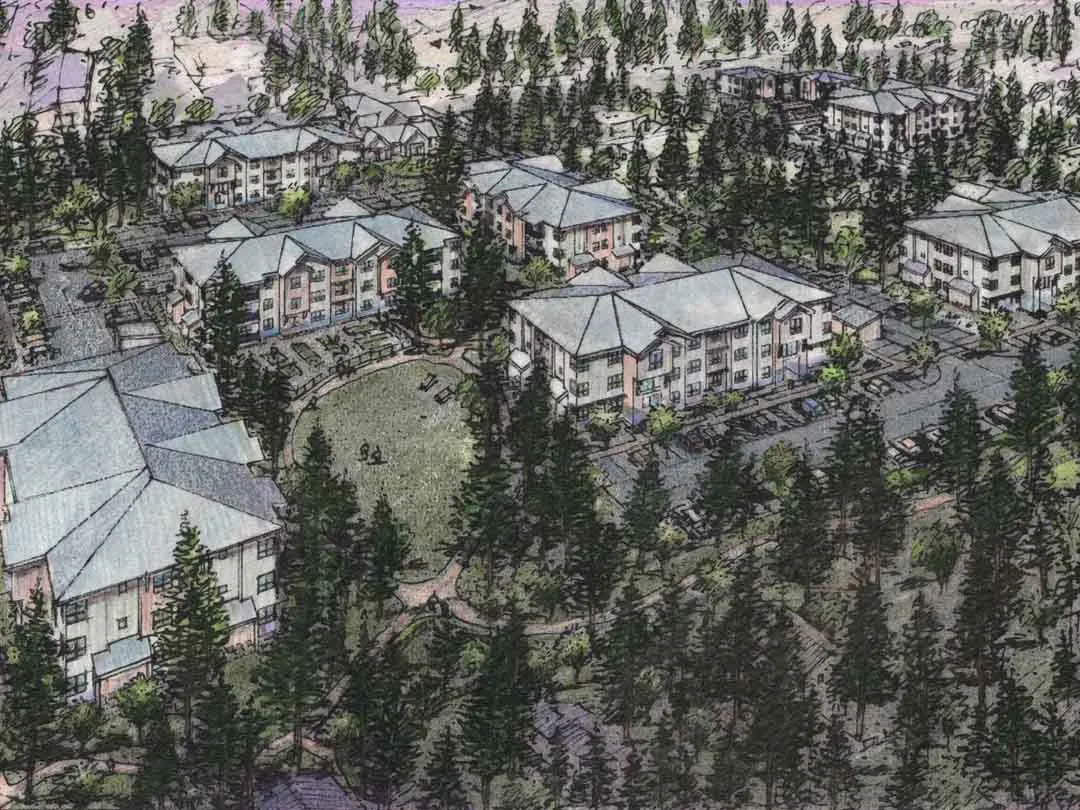
    Sugar Pine

    In the ongoing effort to address California’s housing affordability and homelessness challenges, the California Department of Housing and Community Development (HCD) today announced $220 million in awards from the Multifamily Housing Program (MHP) to preserve and build new affordable homes.

    The announced funding will assist with new construction of affordable homes and acquisition, rehabilitation, and preservation of permanent and transitional rental housing for lower-income households.

    “For years, California has been underbuilding homes, especially multifamily housing. This lack of supply and skyrocketing rents and home prices have created heavy, overwhelming cost burdens on families,” HCD Director Gustavo Velasquez said. “The funding announced today will hopefully kick start a variety of affordable projects that will help keep roofs over the heads of vulnerable California families.”

    View full list of awardees.

    The Department has awarded a total of 20 projects located in 12 counties, including:

    • Seven projects located in Los Angeles County.
    • One project located in San Diego County.
    • Two projects located in El Dorado County.
    • One project located in Nevada County.
    • Three projects located in the Bay Area.

    The Department has awarded its first MHP Tribal entity project to Burbank Housing Development Corporation and Kashia Band of Pomo Indians of the Stewarts Point Rancheria, which was located in Sonoma County.

    The two El Dorado County projects noted above are located in South Lake Tahoe. These excess site projects meet the requirements set forth in Governor Newsom’s Executive Order N-06-19.

    The Multifamily Housing Program awards are funded from Proposition 1 — the Veterans and Affordable Housing Bond Act of 2018 — which California voters approved on November 6, 2018, authorizing bonds providing $1.5 billion in new funding for housing. The Department anticipates two additional rounds of MHP awards before Proposition 1 funding is exhausted.

    An additional $200 million in available funding for the Multifamily Housing Program will be released in March as part of the AB434 Super NOFA, with awards announced sometime in late 2022.

    For more information, please visit the Multifamily Housing Program webpage.

  • Press Release
  • March 10, 2022
    Fourth Awards from Voter-Approved, Proposition 1
    Monica Hernandez
    (916) 890-5240
    Off
    Article

    Governor Newsom Announces New Awards to Create 2,300 Housing Units

    Off
    Sacramento, CA
    Governor Gavin Newsom's announcement on housing projects.

    Governor Gavin Newsom today announced more than $923 million in awards for affordable housing projects across California as part of the California Housing Accelerator, a $1.75 billion investment to provide bridge funding to shovel-ready projects that were otherwise unable to begin construction because of a shortage of federal tax credits and bonds.

    “We’re building more housing for people at risk of homelessness to prevent folks from ending up on the streets, and we’re doing it faster than ever before,” said Governor Newsom. “We’re getting shovels in the ground in a matter of months, creating thousands of new affordable homes for people at the economic margins who need these new units the most.”

    In total, 27 statewide projects have been approved to date, with nearly all of the projects expected to break ground this summer. When fully completed, the projects will create 2,300 housing units, 500 of which are for those experiencing homelessness. The Housing Accelerator prioritizes projects for those experiencing homelessness and for those below 30 percent of the Area Median Income. A full list of awardees can be found here.

    Governor Newsom’s comprehensive strategy to address the homelessness and housing affordability crisis includes historic multi-year investments and new laws and accountability measures. Last year’s California Comeback Plan invested an unprecedented $22 billion to tackle these systemic issues, with $10.3 billion to build more affordable housing and $12 billion allocated for homelessness and behavioral health services. The Governor’s California Blueprint builds on these bold investments with a proposed $2 billion to advance behavioral health housing and encampment rehousing strategies as well as $2 billion to boost housing production and preserve affordable housing across the state. The Administration continues to implement reforms targeting existing roadblocks to affordable housing production while addressing the interrelated problems of climate change and housing affordability by promoting denser housing closer to people’s daily destinations.

    “The pandemic underscored the urgent need to expand housing, particularly for communities that are most economically vulnerable,” said Business, Consumer Services and Housing Agency Secretary Lourdes Castro Ramírez. “The California Housing Accelerator fast tracks stalled housing projects, making these units more quickly available to low-income individuals and families across the state. This initiative is a critical part of the state’s multi-program housing strategy and will enable us to construct quality affordable housing for thousands of households.”

    The California Department of Housing and Community Development (HCD) oversees the Housing Accelerator program with funding derived from the Coronavirus State Fiscal Recovery Fund, established by the federal American Rescue Plan Act of 2021. In September, state officials announced utilizing these resources to create the California Housing Accelerator in order to move housing developments that were stuck through the funding pipeline.

    “When we launched the California Housing Accelerator, we had clear objectives – eliminate the backlog of projects standing in long lines for tax credits and bonds, bring affordable housing to communities in need, and reduce the amount of time and money involved in preparing to make these homes available,” said Director of the California Department of Housing and Community Development Gustavo Velasquez. “And while more work remains, today’s announcement is an important step toward achieving our affordable housing goals.”

    In addition to today’s awards announcement, HCD is finalizing the project solicitation and guidelines for the next round of the California Housing Accelerator, which will be released in mid-February.

    “The California Housing Accelerator will help reduce one of the biggest bottlenecks preventing California from building more affordable housing – providing much-needed funding for dozens of shovel-ready projects stalled in the state’s oversubscribed housing financing system,” said Executive Director of the California Housing Consortium Ray Pearl. “This new program is going to allow communities all over the state to move quickly, starting now, to build safe, affordable homes for their lowest-income households. It will mean more affordable housing for those who need it most, and affordable housing providers are committed to working with state leaders to support these vital investments for years to come.”

    The next round of the California Housing Accelerator will be a competitive process for previously HCD-awarded 4 percent tax credit projects and the program will include regional allocations to ensure a broad geographic distribution of Accelerator funds. Projects will be rated based on four primary policy objectives: efficient use of Accelerator funds; age of HCD award; targeting of special needs populations; and climate change mitigation based on proximity to transit. Additionally, applications received will be evaluated for threshold criteria, such as ensuring projects proceed to construction within 180 days of awarded funds. For the next phase of projects, an additional $735 million is available.

    For more information, please visit the California Housing Accelerator webpage.

  • Press Release
  • February 3, 2022
    Under California Housing Accelerator program, affordable housing projects get the funds they need to break ground, creating much-needed housing for those most in need
    Monica Hernandez
    (916) 890-5240
    Off
    Article

    Sacramento Becomes First California Jurisdiction to Earn State Prohousing Designation

    Off
    Sacramento, CA
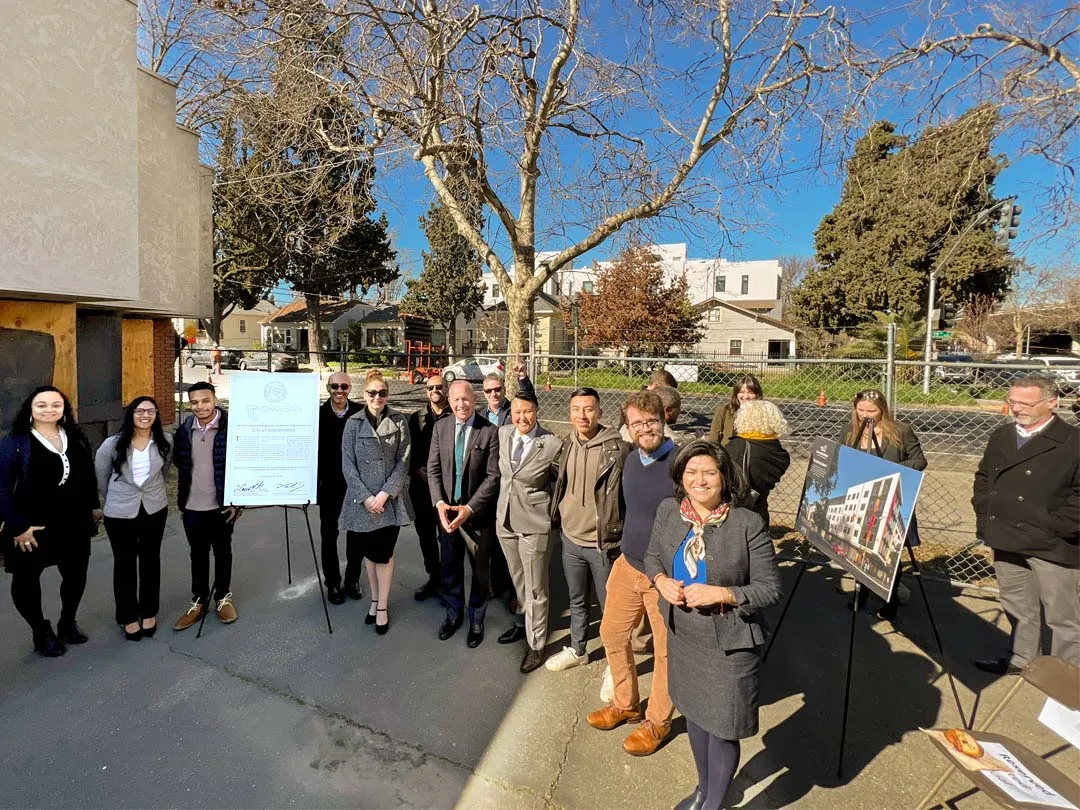
    HCD announcing Sacramento as the first jurisdiction in the state to earn a Prohousing Designation.

    The California Department of Housing and Community Development (HCD) today announced that the City of Sacramento is the first jurisdiction in the state to earn a Prohousing Designation.

    The Prohousing Designation Program was officially established with the passage of the Newsom Administration’s Fiscal Year 2019-2020 Budget, which provided a spectrum of support, incentives, and accountability measures to help meet California’s housing goals. The Program provides incentives to cities and counties in the form of additional points or other preference in the scoring of competitive housing, community development, and infrastructure programs.

    “We’re deploying a comprehensive strategy to boost the state’s housing supply and affordability for all Californians,” said Governor Gavin Newsom. “I commend the efforts of the City of Sacramento, the first jurisdiction in the state to make a commitment to accelerate housing production through this designation and I urge cities and counties across California to follow suit. Together, we can meet this challenge head-on.”

    “Housing insecurity and homelessness impact every corner of our state in one way or another,” said Business, Consumer Services and Housing Agency Secretary Lourdes Castro Ramírez at an event in Sacramento to commemorate the city’s achievement. “We have been fortunate to be on the receiving end of unprecedented resources to help solve our housing crisis. But for us to succeed, we need everyone working together. It’s a cause worthy of our efforts because for every unit of housing we create, there is a real story of a family whose lives will be improved immeasurably.”

    Added HCD Director Gustavo Velasquez: “Prohousing is designed to incentivize the removal of barriers standing in the way of the affordable housing our state so desperately needs. It means promoting housing density by including multifamily housing, such as duplexes to fourplexes, upzoning in places near jobs and transit to reduce emissions and creating more homes in places of high opportunity for families of modest means.”

    “I’m proud to see Sacramento recognized for being a state leader when it comes to eliminating the barriers to building the affordable, transit-friendly housing we so desperately need in our city and all over the state,” said Sacramento Mayor Darrell Steinberg. “This designation signals to the development community that we stand ready to work with you and find creative ways to house more people.”

    To be eligible for a Prohousing Designation, a jurisdiction must receive a minimum score of 30 on its application – the City of Sacramento attained a score of 64. Actions taken by the City of Sacramento to help attain the Prohousing Designation include but are not limited to the following:

    • Eliminated parking requirements citywide for Accessory Dwelling Unit (ADU) developments.
    • Expanded residential and mixed uses allowed by-right.
    • Eliminated maximum density for mixed-use projects.
    • Reduced parking requirements for affordable and senior housing, small lots, and vertical mixed-use developments and went above and beyond by offering incentives for higher density developments near transit by eliminating or reducing parking requirements.
    • Possesses a Master Environmental Impact Report to streamline development as well as multiple specific area plan EIRs in a multi-faceted strategy to streamline development.
    • Single-unit, duplex, and multi-unit dwellings permitted by right.
    • Eliminated requirement that projects of 150+ dwelling units require a planning and design commission public hearing.
    • Created objective, citywide infill housing design standards for all housing and mixed-use developments of two or more dwellings.
    • Reduced development impact fees for new affordable dwelling units - $0 rate for regulated affordable units up to 120% AMI.
    • Eliminated housing impact fees for mobile home parks, owner occupied single-family, affordable units, high-density housing and ADUs.
    • Adopted policy for Enhanced Infrastructure Financing Districts (EIFDs), most recently the Aggie Square EIFD with a 20% set aside for affordable housing.
    • Adopted transit-oriented development land use zoning overlay.

    For more information on HCD’s Prohousing Designation Program, please visit the HCD Prohousing webpage.

  • Press Release
  • February 24, 2022
    Monica Hernandez
    (916) 890-5240
    Off
    Article
    Top