November 2024

Residents Thankful and Hopeful in Their New Home (Video)

Off
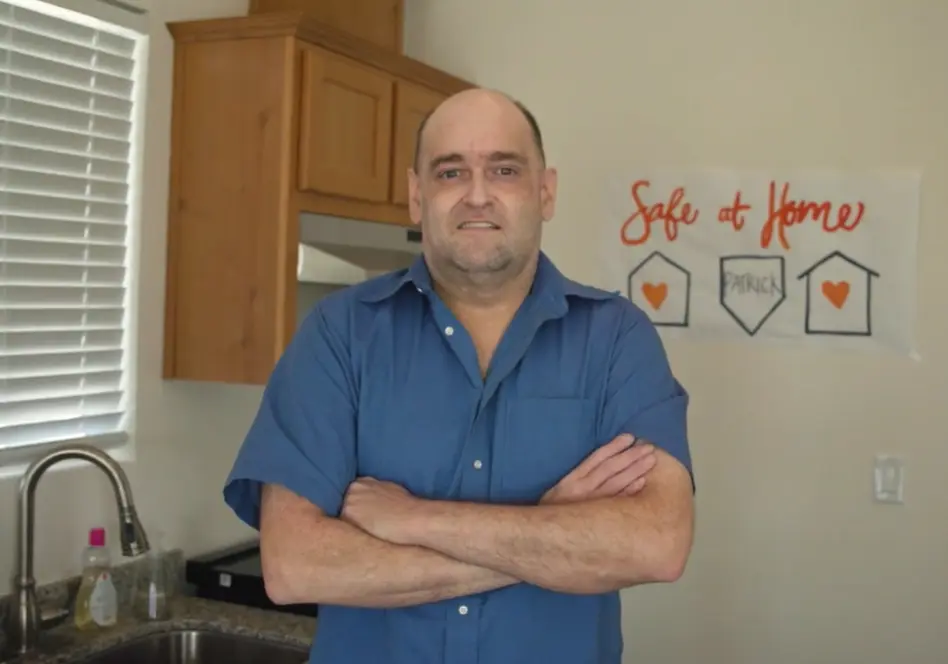
Resident Patrick smiling in his kitchen

Patrick had lost all hope. He was experiencing homelessness, and he was not sure if his life could continue. Then Patrick moved into his new home at The Neighborhood Village. 

“I keep thinking I am dreaming, but I am not. This is my home now”, said Patrick. “I am here, and I am happy.” 

The Neighborhood Village in the Tulare County enclave of Goshen is California’s first-ever master-planned permanent supportive housing community. A project of Salt and Light Works and Self-Help Enterprises, The Neighborhood Village recently celebrated its grand opening; the development provides 52 affordable manufactured homes for people exiting homelessness. 

“When I was living in a rough environment, it was all about survival. Now it is about belief and hope that there are people out there that care and people out there that change lives,” said Alexander, another resident of The Neighborhood Village. “I am blessed and fortunate that my life is one that has been impacted with that goodness.”

 The Village was supported by $14.7 million from HCD’s Multifamily Housing, Permanent Local Housing Allocation, and Regional Early Action Planning Grant 2.0 programs. The California Department of Social Services also provided funding through their Community Care Expansion program. 

This is the first manufactured home project built in California in the last decade. The complex includes a library, parks, and memorial gardens and provides on-site supportive services including physical and mental health, job training, financial literacy, and case management. 

“This place is a godsend,” said Patrick. “It has given me a second chance at life.” 

“I didn’t know about goodness before. I didn’t care because I never had it,” said Alexander. “Now that I have it, it is precious to me.”

  • Affordable Housing
  • Success Stories
  • November 27, 2024
    Off
    Article

    New Tools and Funding Available for Local Communities To Build More Supportive Housing, Faster

    Off
    Sacramento, CA
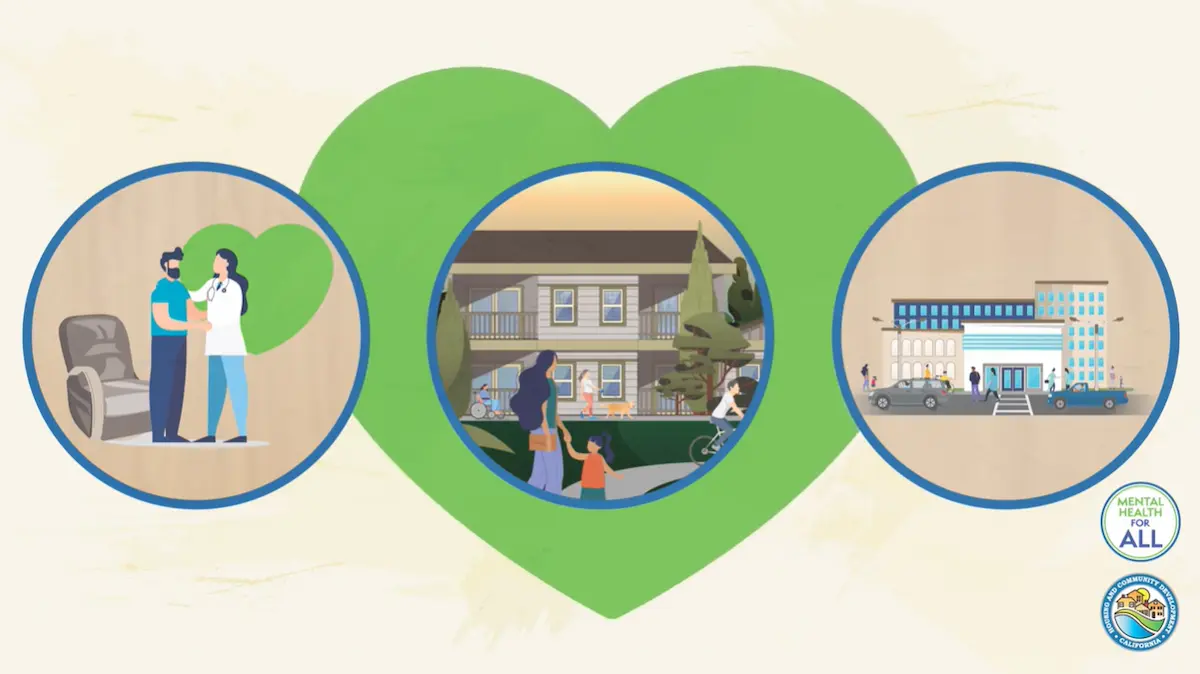
    graphics of healthcare workers and healthcare facilities with a green heart background

    Continuing the state’s commitment to creating more housing and providing support faster, Governor Gavin Newsom today announced that local communities now have access to new streamlining tools to expedite the development of new supportive housing with simplified permitting and approval processes.

    These projects will help to get people off the streets and give them access to the care they need. Local communities can access approximately $2.145 billion in new Prop 1 funding to utilize these tools, pay for permanent supportive housing projects, and unlock new opportunities. The state is making these tools and funding available less than a year after they were approved by voters, demonstrating the state’s commitment to acting with the urgency the situation demands. This funding and streamlined permitting will help expedite the development of new permanent supportive housing to help get people off the streets and give them access to the care they need.

    “The state has fulfilled its promise to help provide California communities with the tools and funding to build new housing with urgency and with an eye to our state’s veterans. It is now time for locals to do their part — we must act quickly to build more housing for people struggling with mental health or substance use disorder and homelessness so they can get a roof over their heads and support at their fingertips as quickly as possible. I encourage eligible entities to move projects forward swiftly and get your shovels ready to break ground,” said Governor Gavin Newsom.

    The Homekey+ Notice of Funding Availability (NOFA) for applications will be accepted continuously beginning in January 2025. Grant funding is available to cities, counties, or other local public entities, such as housing authorities, as well as federally or non-federally recognized Indian tribes within California. Tribes and Tribal Entities also have access to the $121 million Tribal Homekey+ NOFA also released today.

    How we got here 

    Proposition 1, passed by California voters in March 2024, is a critical step in advancing the state’s goals to reduce homelessness and protect our most vulnerable populations. Proposition 1 includes two parts: a $6.4 billion Behavioral Health Bond for treatment settings and housing with services, and historic reform of the Behavioral Health Services Act (BHSA) to focus on people with the most serious illnesses, substance use disorders, and housing needs. Homekey+ is the Permanent Supportive Housing component of the bond.

    "With this unprecedented commitment to address homelessness, we are moving quickly to support communities throughout California and invest in solutions to build permanent supportive housing," said Business, Consumer Services and Housing Secretary Tomiquia Moss. "These funds will provide local governments and Tribes with essential resources so that unhoused Californians can access the essential housing and supportive services they need to achieve safe and dignified housing and long-term stability.”

    More supportive housing, faster 

    California has provided communities with unprecedented support to help streamline the permitting and approval process for new development and to help remove roadblocks that have historically been cited by local governments as impeding their efforts to get people the help they need.

    What the funding does 

    Building on the success of the Homekey model, Homekey+ will continue to support the acquisition and rehabilitation of existing buildings, and other project types that can be quickly converted into PSH. Additionally, Homekey+ will also provide funding opportunities for new construction PSH projects that incorporate cost-containment strategies. New construction projects will have 24 months to complete construction and will be subject to total development cost per unit caps. Another key new feature of Homekey+ is the ability to provide gap financing for shovel-ready permanent supportive housing projects with prior HCD or other awards, enabling them to quickly commence construction. 

    Proactive coordination with County Behavioral Health Departments, and for Veteran serving projects, County Veteran Service Officers, is highly encouraged. 

    “The voters of California have given us a historic opportunity to extend housing and wide-ranging supports to those most critically in need,” said HCD Director Gustavo Velasquez. “Team HCD is honored to build on the successes of Homekey, bringing residents stability that opens their lives to opportunity and uplifting California communities.”

    Why this matters 

    Lack of affordable housing, quality mental health and addiction services, and homelessness are all part of the same problem — and much of the responsibility to address these problems directly falls on local jurisdictions. New accountability and more enforcement are needed to ensure taxpayer dollars are spent effectively.

    California continues to address a decades-long homelessness and housing affordability crisis. According to the most recent verified data, in 2023 roughly 181,000 Californians experienced homelessness, with approximately 90,000 people in unsheltered conditions. Although there are many reasons why someone may lose access to housing, the lack of available affordable homes in California is a key driver. Most people who enter homelessness are rent-burdened and cite economic hardship such as increased rent or housing costs. Adding to the inventory of available housing is an essential part of the state’s strategy to address this challenge.

    To learn more, please visit HCD’s Homekey+ website. Resources such as guidance and templates mentioned within this NOFA will be published to the HCD website with the release of the Homekey+ Application.

    California’s mental health transformation

    California is modernizing the behavioral health delivery system to improve accountability, increase transparency, and expand the capacity of behavioral health care facilities for Californians. Proposition 1, which was passed by voters in May 2024, includes two parts: a $6.4 billion Behavioral Health Bond for treatment settings and housing with services, and historic reform of the Behavioral Health Services Act (BHSA) to focus on people with the most serious illnesses, substance disorders, and housing needs. More information about California’s transformation of our entire mental health and substance use disorder system can be found at mentalhealth.ca.gov.

  • Press Release
  • Homekey
  • November 26, 2024
    Pablo Espinoza
    Off
    HCD Media
    Deputy Director of Communications
    Article

    Tribal Homekey+

    Application Timeline and Deadlines

    NOFA ReleaseNovember 26, 2024
    Application Materials and Instructions AvailableDecember 2024
    NOFA and Application WorkshopsJanuary 2025
    REQUIRED Pre-Application Meeting (email HKTribal@hcd.ca.gov to schedule)Beginning December 2024 (ongoing)
    Application Portal Opens – applications accepted over-the-counter until all funds are awardedLate January 2025

    California Native American Communities Receive $91 Million For Affordable Housing And Homeless Interventions

    Off
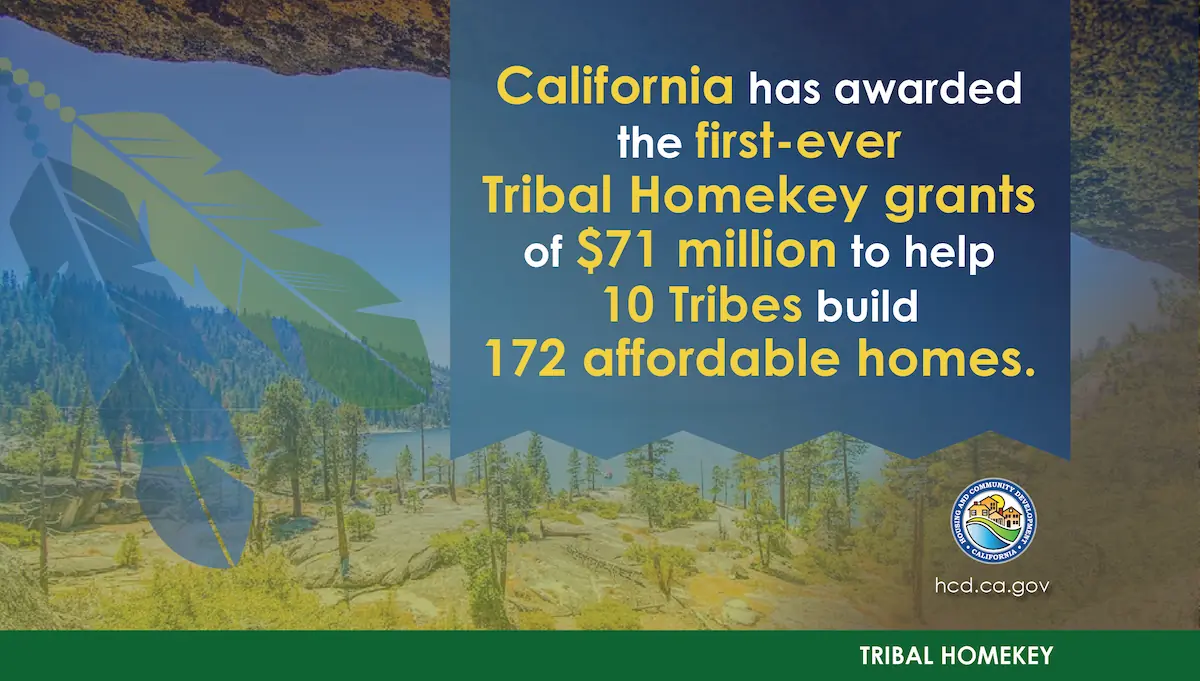
    Lake and forest scene with feather graphic and text: California has awarded the first-ever Tribal Homekey grants of $71 million to help 10 Tribes build 172 affordable homes.

    What you need to know: Native American communities throughout California will receive more than $91 million in state funding to help create more affordable housing and address homelessness through the state’s Tribal Homekey program and the Tribal Housing Homeless Assistance and Prevention Program.

    SACRAMENTO — California Governor Gavin Newsom today announced that California Native American Tribes throughout the state will receive more than $91 million to address housing and homelessness, including $71 million from the first-ever awards from the state’s Tribal Homekey program and an additional $20 million through the state’s Tribal Housing Homeless Assistance and Prevention Program, both administered by the California Housing and Community Development Department.

    “No community is untouched by housing challenges, and across the nation, Native Americans experience higher rates of homelessness and housing insecurity. These programs — developed in partnership with tribes across the state — are designed to help address the unique challenges and needs of Native communities in terms of housing and homelessness support,” said Governor Newsom.

    Tribal Homekey Funding

    The Tribal Homekey program was created in partnership with California Tribes to help overcome historical barriers to securing funding for affordable housing development. The 10 awards totaling just under $71 million will fund 172 permanent, affordable rental housing units in rural California communities in the counties of Butte, Colusa, Del Norte, Fresno, Humboldt, Lake, Los Angeles, Mendocino, and Sonoma.

    The program is modeled on California’s successful Homekey program, which awarded its third round of funding this year to rapidly build housing for people experiencing or at risk of homelessness.

    “Native American communities experience some of the deepest disparities of homelessness rates and unique housing challenges which require a thoughtful, coordinated approach,” said Business, Consumer Services and Housing Agency Secretary Tomiquia Moss. "I want to thank the Department of Housing and Community Development for partnering with tribes to catalyze development and build safe, affordable housing."

    “California Tribes have faced historic inequities in accessing complex housing funding programs not designed with their unique needs in mind, and HCD is firmly committed to addressing this injustice,” said HCD Director Gustavo Velasquez. “Tribal Homekey reflects this promise. It was an honor to be able to dedicate the staff and resources to help meet the affordable housing needs of our Tribal partners.”

    Tribal Homekey Award Recipients: 

    • Big Sandy Rancheria of Western Mono Indians of California was awarded $4,485,587 for the Big Sandy Rancheria Homekey Project in rural Fresno County, funding 12 permanent rental homes for people experiencing or at risk of homelessness.
    • The Yurok Indian Housing Authority was awarded $4,741,116, funding 24 permanent rental homes in rural Del Norte County for people experiencing or at risk of homelessness.
    • Dry Creek Rancheria was awarded $12,000,000 for the Bi’du Khaale project in rural Sonoma County, funding 25 permanent rental homes for seniors (55 and over) and their families.
    • The Colusa Indian Community Council was awarded $8,336,672 for the CICCs Old Res Housing Complex in rural Colusa County, funding 21 permanent rental housing units for people experiencing or at risk of homelessness.
    • The Round Valley Indian Housing Authority was awarded $8,776,001 for Tribal Winds – Phase 5, funding 18 permanent, supportive rental housing units in the rural Mendocino County community of Covelo for extremely low-income people experiencing homelessness.
    • Big Lagoon Rancheria and Two Feathers Native American Family Services were awarded $4,131,114 for Two Feathers Wellness Village in the rural Humboldt County community of Hoopa, funding eight permanent, supportive housing rental units for households experiencing homelessness.
    • The Big Valley Band of Pomo Indians was awarded $6,556,818 for Kuh-la-Napo, a project that will include 24 permanent supportive housing rental units for people at risk of or experiencing homelessness in the rural Lake County community of Lakeport.
    • The Northern Circle Indian Housing Authority and Berry Creek Rancheria of Maidu Indians of California were awarded $6,897,713 for the Maidu Mountain Lion Housing Development; funding 12permanent, supportive single-family rental housing units in the Butte County community of Oroville.
    • The Scotts Valley Band of Pomo Indians was awarded $3,038,659 for the Scotts Valley Senior Community, funding eight permanent affordable homes for extremely low-income seniors in the Lake County community of Lakeport.
    • The Fernandeno Tataviam Band of Mission Indians; Aszkenazy Development, Inc.; and the Pukuu Cultural Community were awarded $12,000,000 for FTBMI San Fernando, funding 26 permanent, affordable homes for seniors on Fee Land in rural Los Angeles County.

    HHAP Awards

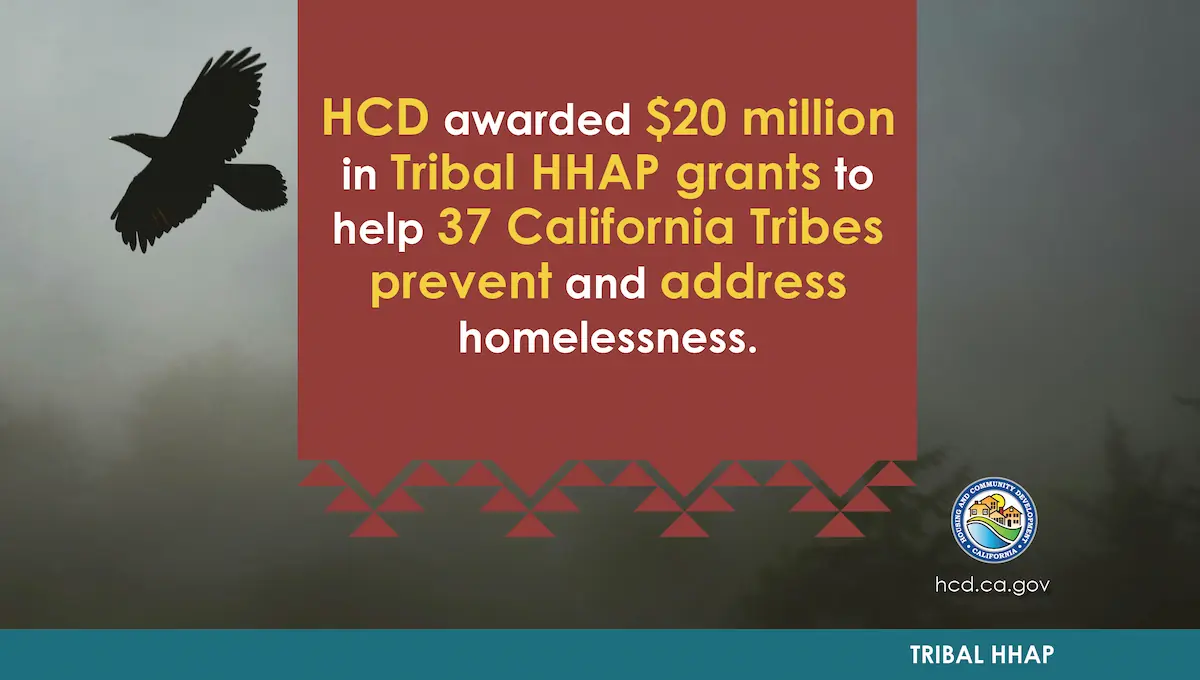
    The state is also announcing $20 million in conditional Tribal Homeless Housing, Assistance and Prevention (Tribal HHAP) program grants to help 37 federally recognized Tribes in California implement unique, culturally responsive interventions to prevent and address homelessness.

    Graphic of eagle and Native American pattern with text HCD awarded $20 million in Tribal HHAP grants to help 37 California Tribes prevent and address homelessness.

    In its first year under HCD administration, Tribal HHAP saw a 68-percent increase in applications over the previous round. Tribes conditionally awarded Tribal HHAP grants are working closely with HCD and Tribal technical assistance providers to finalize their program activities and budgets. Once finalized and approved, Tribes will receive their full award and begin this important work, with ongoing technical assistance available to support Tribes throughout the implementation process.

    Tribal HHAP award recipients

    Creating More Tribal Housing

    Earlier this year, the Governor signed measures to support Tribal communities in developing more housing. AB 1878 by Assemblymember Eduardo Garcia (D-Coachella) establishes a Tribal Housing Advisory Committee within the Department of Housing and Community Development, composed of members from federally recognized Tribal governments, to provide technical assistance for Tribal housing programs and reduce the barriers Tribes face when applying for funding. SB 1187 by Senator Mike McGuire (D-North Coast) creates the Tribal Housing Grant Program Trust Fund dedicated to supporting Tribal housing projects.

  • Press Release
  • Homekey
  • November 22, 2024
    Pablo Espinoza
    Off
    HCD Media
    Deputy Director of Communications
    Article

    A New "Beacon" of Hope For People Experiencing Homelessness In LA

    Off
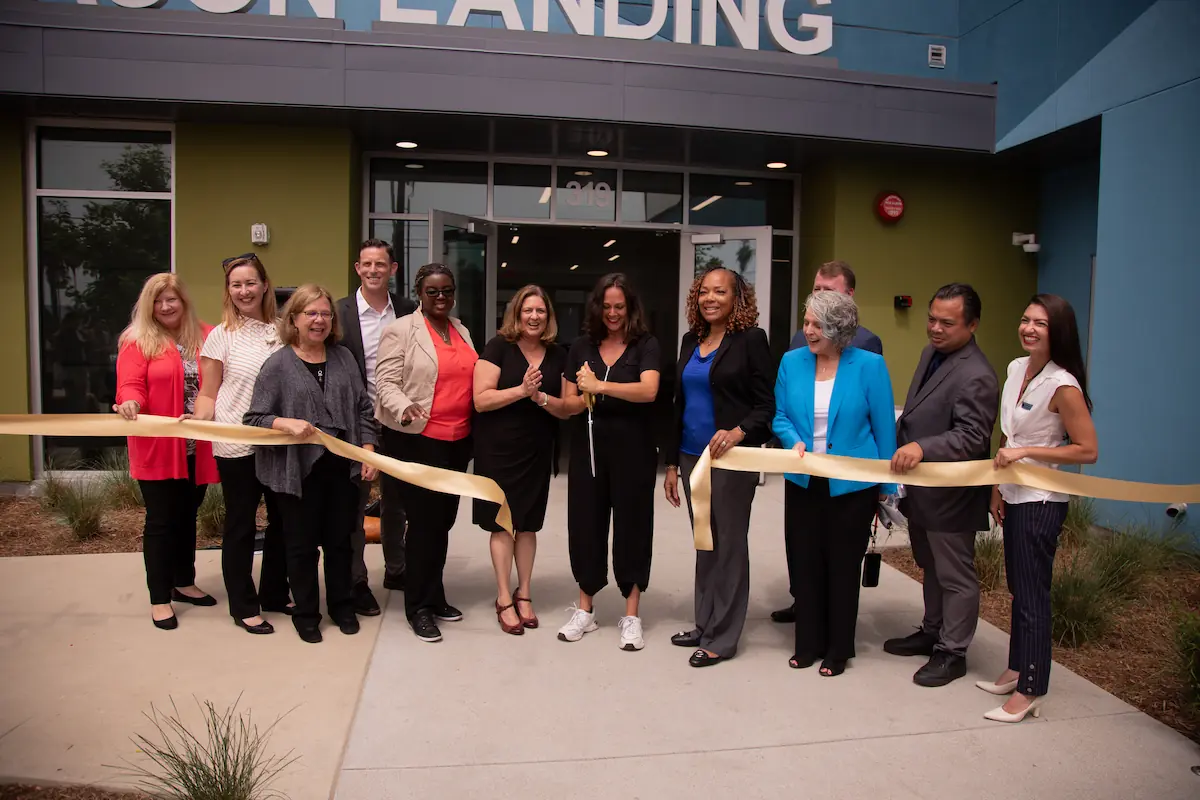
    ribbon cutting ceremony

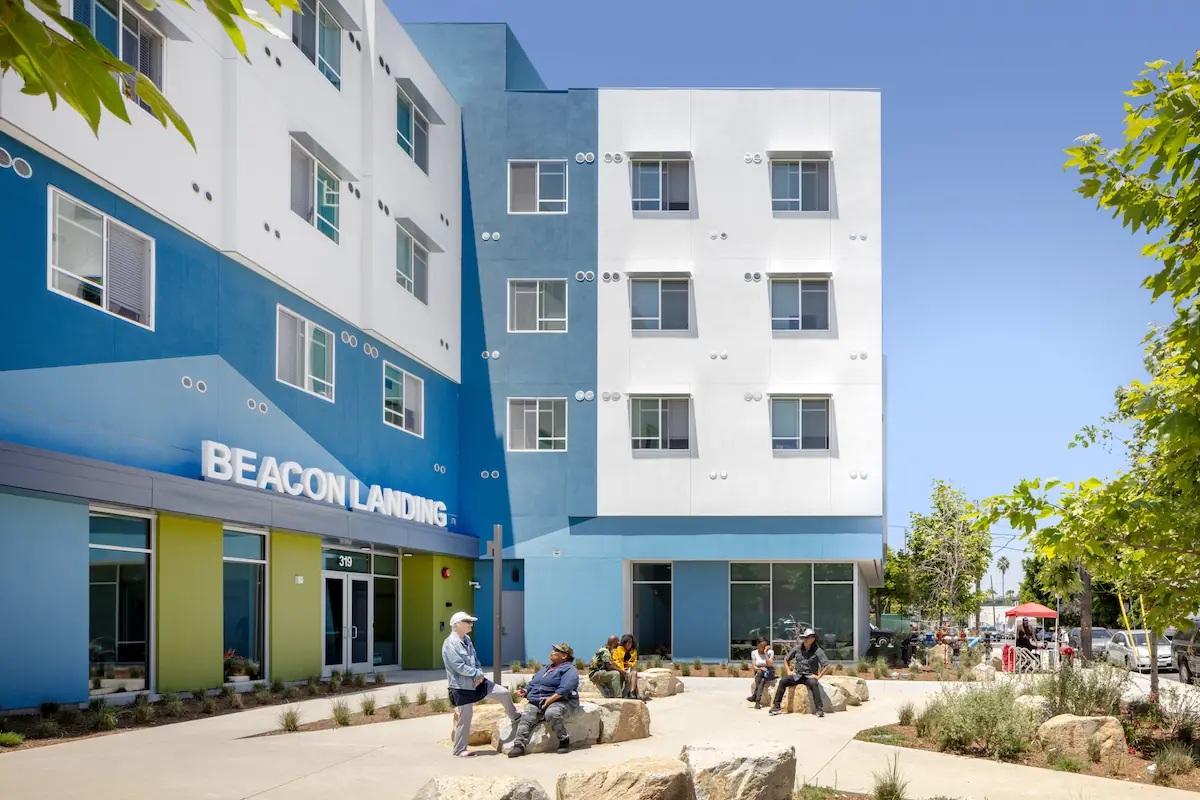
    The City of Los Angeles recently celebrated the grand opening of Beacon Landing, a new permanent supportive housing community in the San Pedro neighborhood. The property is one of five supportive housing projects sparked by the City of Los Angeles HHH Housing Challenge, which together are expected to create a total of 398 new homes for residents who have recently experienced homelessness. Beacon Landing offers 89 supportive homes and a large community flex space for events and services. 

    A project of Adobe Communities, Beacon Landing is supported by funding from HCD’s No Place Like Home and Infill Infrastructure Grant programs. Using prefabricated modular construction, project developers were able to reduce the hard costs associated with a project of this size and expedite construction timelines to rapidly produce much-needed, high-quality supportive housing. 

    All housing units within Beacon Landing are energy efficient and LEED Gold-certified. Residents can enjoy additional building amenities including onsite property management, nighttime security, laundry facilities, secure bicycle parking, and a courtyard with a beautiful view of the harbor. In addition, LA Family Housing will provide on-site supportive services that include case management, individualized service plans, substance use treatment, life skills training, meal and transportation assistance, and benefits advocacy. 

    Permanent supportive housing projects like those at Beacon Landing demonstrate how the combined efforts of state and local governments can change the lives of California’s most vulnerable residents. With voter approval Proposition 1 leading to HCD’s new Homekey+ program, more permanent supportive homes are on the horizon.

    exterior view of Beacon Landing complex

  • Success Stories
  • Affordable Housing
  • November 19, 2024
    Off
    Article
    Top