November 2024

Veteran Spotlight: Meet Jack

Off
Newsroom Default Image

United States Army veteran Jack lost his apartment due to an earthquake. After moving around and living in a motorhome for seven years, Jack found a new home at HCD-funded Puett Place in Novato.

Puett Place was supported by HCD’s Homekey and Veterans Housing and Homelessness Prevention programs.

November 18, 2024
On
Video

California and HUD Fund Workforce Training Programs for Five Counties Building Back from 2018 Wildfires

Off
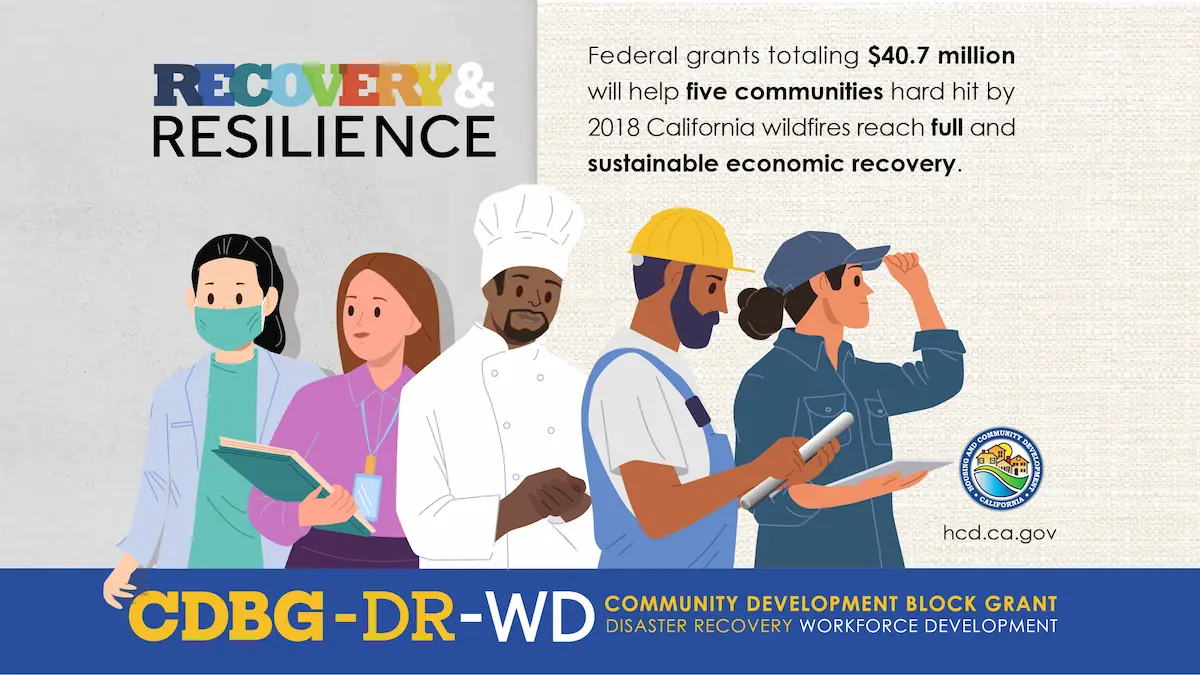
graphic image of people dressed in various occupation uniforms. Text reads With text Recovery & Resilience – Federal grants totaling $40.7 million will help five communities hard hit by 2018 California wildfires reach full and sustainable economic recovery. Community Development Block Grant Disaster Recover Workforce Development

The California Department of Housing and Community Development (HCD) today announced five federal 2018 Community Development Block Grant—Disaster Recovery Workforce Development (CDBG-DR-WD) program awards totaling nearly $40.7 million to aid in continued recovery for California communities hardest hit by the devastating wildfires of 2018.

“Even after the housing and infrastructure are rebuilt, communities hurt by wildfire can continue to suffer from trauma and economic impacts for years to come. We are grateful to the Biden Administration for its ongoing support to help Californians rebuild their lives and economies. We will keep advocating for our communities and their access to disaster relief and recovery,” said Governor Gavin Newsom.

CDBG-DR-WD grants aim to support community development and help communities reach complete economic recovery after experiencing a disaster. Awarded programs must provide free job training and supportive services to low- to moderate-income (LMI) individuals in the community, with the goal of improving job placement opportunities for residents. Eligible applicants include local jurisdictions, nonprofit organizations, post-secondary education institutions, and Local Workforce Development Boards in areas designated by the U.S. Department of Housing and Urban Development (HUD) as Most Impacted and Distressed (MID). In the case of the 2018 California wildfires, MID communities include the counties of Butte, Lake, Los Angeles, Shasta, and Ventura.

“In addition to rebuilding housing and infrastructure, fostering economic recovery is critical after a natural disaster,” said HCD Director Gustavo Velasquez. “Following disasters, many communities face a challenge in finding people locally with the skills to rebuild better and with greater resilience. We are proud to partner with HUD to create these career paths for 2018 wildfire survivors and to help these hard-hit communities grow with an eye toward a strong and sustainable future.”

“CDBG-DR provides communities with important resources to help rebuild in the worst of times. With this investment, young people and others building job skills can focus on their futures. HUD is proud to work with the State of California to ensure resilience across their communities,” said HUD Principal Deputy Assistant Secretary for Community Planning and Development Marion McFadden.

In Butte County, the Town of Paradise is a community still grappling with long-term recovery efforts in the aftermath of the devastating 2018 Camp Fire. The nearly $17.9 million grant will establish the Paradise Resilient Infrastructure and Sustainable Education Center (Paradise RISE) on the Paradise High School campus to train 500 local LMI residents in the construction trades—including specialized fields such as plumbing and electrical—or as certified nursing assistants. The award will fund facility improvements, workforce training, and supportive services for participants. Paradise RISE training providers and partners include the Paradise Unified School District, Butte College, and the Valley Contractor’s Exchange. The Northern Rural Training and Employment Consortium will provide participants with supportive and career services.

In Lake County, the Workforce Alliance of the North Bay (WANB) was awarded just over $4.7 million for the Lake Workforce Program to help better equip the region for long-term recovery and rebuilding efforts and enhance resilience to future disasters. Through the program, the Tribal EcoRestoration Alliance (TERA) will provide wildfire resilience workforce training including conservation field work, ecological management, and wildland fire and forest restoration management. The WANB will offer 100 Lake County LMI trainees a wide range of 14 supportive services, which are crucial for long-term success.

In Los Angeles County, a grant of just under $2 million will allow Tradeswomen, Inc. (TWI) and partner organization Women in Non-Traditional Employment Roles (WINTER) to provide training and employment opportunities for underserved populations in the construction trades—particularly focusing on women and other marginalized populations— through the Tradeswomen Empowerment Leadership Institute (TELi). TWI and WINTER’s additional partners include Equal Rights Advocates and Unity Christian Fellowship. TELi will combine classroom, hands-on, and hybrid learning environments with a broad range of individualized, holistic support services to prepare participants to enter the construction trades. The program also will provide access to online and in-person training and certificate courses for individuals seeking an apprenticeship in the construction trades.

In Shasta County, the City of Redding was awarded more than $8.6 million to launch its Workforce Recovery Training Program (WRTP) project, providing online, remote, virtual, and in-person training for 200 LMI residents. This project provides workforce training in trades essential to Shasta County’s disaster recovery, including general construction, culinary arts, emergency response, forest restoration and management, health care, clerical and education personnel, and entrepreneurial support. The WRTP will also offer participants 12 supportive services. The CDBD-DR-WD award will also be used to purchase three properties to serve as the training hub and a mobile unit to bring WRTP services to rural areas throughout Shasta County.

The County of Ventura received nearly $7.5 million to fund the VC HEAL project, offering workforce training for 215 LMI county residents in healthcare occupations, restoring healthcare infrastructure, creating job opportunities, promoting community well-being, strengthening disaster preparedness, and ultimately building a more resilient healthcare system and community. VC HEAL will acquire a mobile unit to reach out to communities that may have transportation barriers or difficulty accessing traditional job centers, vital for residents in rural areas of Ventura County. The mobile unit job center will also be used to target outreach efforts to specific residents or populations that have been disproportionately affected by the disaster or that have a high need for healthcare training. VC HEAL also will provide participants with supportive services.

Visit HCD’s website for more information on CDBG-DR-WD.

  • Press Release
  • Disaster Recovery
  • November 15, 2024
    Largest Grant Will Help Paradise Youth Pursue Careers in Construction and Health
    Pablo Espinoza
    Off
    HCD Media
    Deputy Director of Communications
    Article

    Veteran Spotlight: Meet George

    Off
    Newsroom Default Image

    Veteran George worked for the United States Army Security Agency in the 1960’s. Before moving to HCD-funded Puett Place, George was sleeping in his car. Now he can invite his family to visit in his new home.

    Puett Place was supported by HCD’s Homekey and Veterans Housing and Homelessness Prevention programs.

    November 13, 2024
    On
    Video

    Veteran Spotlight: Meet John

    Off
    Newsroom Default Image

    John served in the United States Navy for six years. Due to employment and health challenges, he had to move out of his apartment. John now has a new home at HCD-funded Puett Place. Puett Place was supported by HCD’s Homekey and Veterans Housing and Homelessness Prevention Program.

    November 12, 2024
    On
    Video

    A Place to Call Their Own

    Off
    Newsroom Default Image

    Delaney and her nephew live at HCD-funded Bienestar Plaza in Santa Cruz. Hear how having a home to call their own has been a blessing and gives them hope.

    Bienestar Plaza was supported by HCD’s No Place Like Home program.

    November 7, 2024
    On
    Video

    Industrial Site Revitalized into New Affordable Housing in Milpitas

    Off
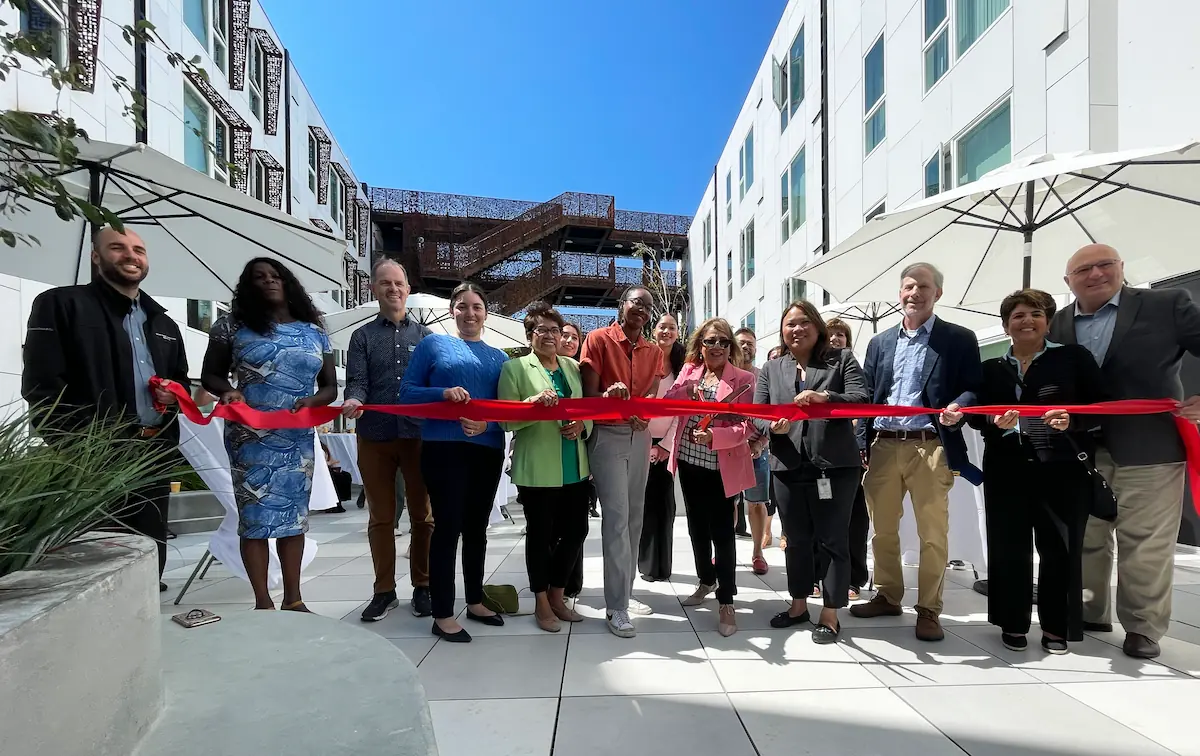
    ribbon cutting ceremony

    New affordable housing is now open in Santa Clara County! The community of Milpitas recently celebrated the grand opening of Sango Court apartments, providing 102 affordable homes for low-income individuals, families, seniors, and veterans. Half of the homes are reserved for people exiting homelessness. 

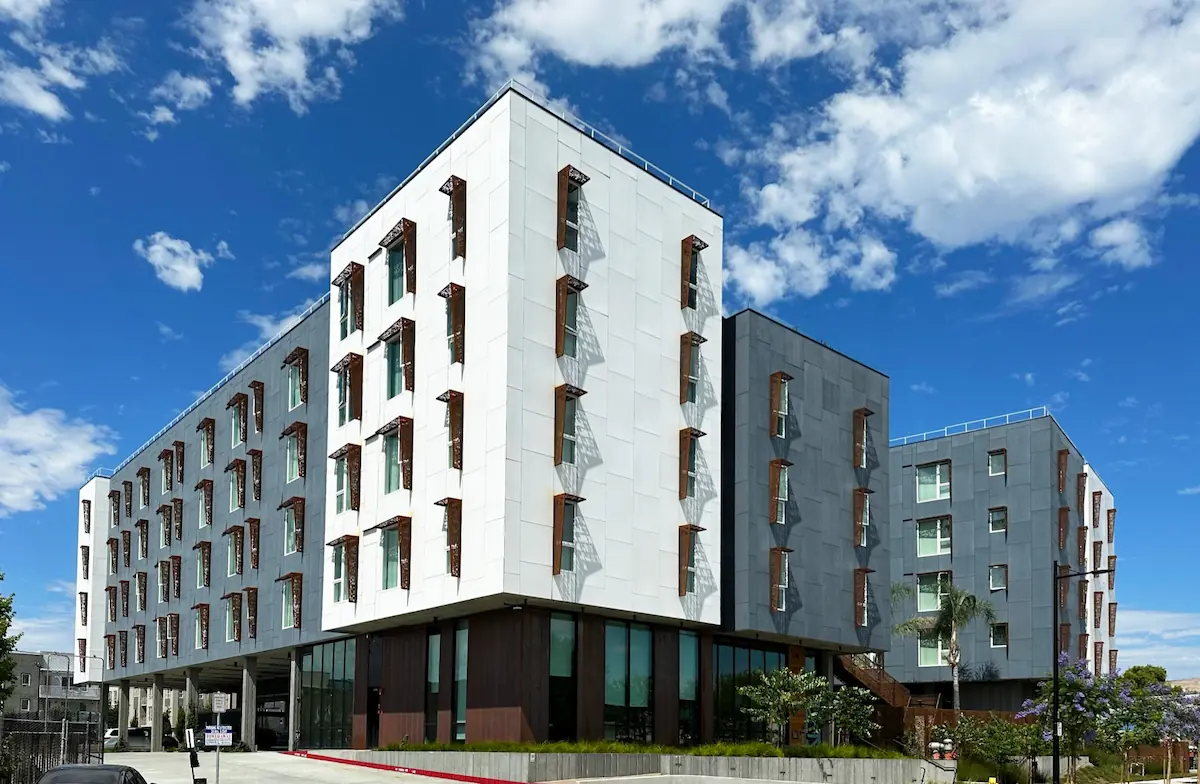
    A project of Resources for Community Development, Sango Court was built on a former industrial site using modular design and technology to help streamline construction increasing speed and reducing costs. The five-story building is part of a larger planned development of the area into a mixed-use residential neighborhood. 

    Sango Court was funded by $5.1 million from HCD’s HOME Investment Partnerships Program and $14.5 million from HCD’s Multifamily Housing Program. The transit-oriented development is located half a mile from the Milpitas BART station and is near jobs, parks, schools, and vital services. 

    The complex is all-electric and incorporates green technology including solar panels. On-site amenities include a courtyard, community room, outdoor spaces, and supportive services.


    exterior view of Sango Court complex

  • Affordable Housing
  • Success Stories
  • November 5, 2024
    Off
    Article

    HCD In Focus: Combating Homelessness Through Grand Openings, Local Investments & Community Partnerships

    Off
    Newsroom Default Image

    “HCD In Focus” is a monthly news in review that highlights the impact of HCD administered programs on the lives of Californians.

    This month’s highlights: Two milestone housing projects in Paradise and South Lake Tahoe celebrated their grand openings. Governor Newsom awarded more than $827 million to 100 communities to address homelessness. Spotlight on HCD partner and non-profit organization Mutual Housing of California and HCD employee Patty Fado – all working to make a difference.

    November 4, 2024
    On
    Video

    Governor Newsom Sues Norwalk For Unlawful Homeless Shelter Ban

    Off
    Los Angeles, CA
    Graphic of justice scales, HCD logo, and text accountability

    Governor Gavin Newsom and Attorney General Rob Bonta today filed a lawsuit against the city of Norwalk to compel the city to overturn its unlawful ordinance banning the establishment of new homeless shelters and other housing. The lawsuit alleges that the city’s ban violates numerous state laws. The lawsuit comes after multiple warnings and actions by the state, including revocation of the city’s housing element compliance. 

    “The Norwalk city council’s failure to reverse this ban, despite knowing it is unlawful, is inexcusable. No community should turn its back on its residents in need.” Governor Newsom. 

    “Today’s lawsuit should come as no surprise. Despite receiving several warnings, the City of Norwalk has refused to repeal its unlawful ban on new supportive housing for our most vulnerable residents. Enough is enough,” said Attorney General Bonta. “Every city and county in California has a legal obligation to help solve our homelessness crisis. We have not, and will not hesitate, to ensure that everyone with the power to approve or disapprove housing takes their duties seriously.” 

    “Norwalk's moratorium on housing for its most vulnerable residents is not only unlawful — It is a rejection of people's basic health, safety, and humanity,” said California Department of Housing and Community Development Director Gustavo Velasquez. “We're grateful for the Attorney General's partnership to ensure all cities and counties are held accountable when they fail to comply with state housing law. I am disappointed the city did not reverse course on its own accord, choosing instead to waste time and public resources and be forced by the court to do the right thing.” 

    The state sent Norwalk a notice of violation on September 16 after the city council adopted a 45-day urgency ordinance imposing a moratorium on emergency shelters, single-room occupancy housing, supportive housing, and transitional housing. Despite this, on September 17, the council extended that ordinance another 10 months and 15 days. The moratorium violates several state planning and fair housing laws, including the Housing Crisis Act, Affirmatively Furthering Fair Housing, and Housing Element Law. 

    In addition, Norwalk has yet to meet its housing goals as required by state law. The city has only issued permits for 175 units during this housing element cycle, a mere 3.5% of its 5,034 unit Regional Housing Needs Allocation (RHNA) – the number of units required to ensure that communities have enough housing.

    On October 3, in response to the city’s failure to repeal the ban, the state announced that it was decertifying the City of Norwalk’s housing element. The state’s action makes the city ineligible for significant housing and homelessness funding and means the city can no longer deny permits to “builder’s remedy” affordable housing projects.

    Norwalk issued the ordinance only weeks after Governor Newsom issued an executive order that, among other things, urges local governments to use the unprecedented funding provided by the state to address unsanitary and dangerous encampments within their communities and provide people experiencing homelessness in the encampments with the care, housing, and supportive services they need. Since 2019, HCD has awarded Norwalk nearly $29 million in housing and homelessness funds.

    The lawsuit was referred to the Attorney General by HCD’s Housing Accountability Unit, which was launched by Governor Newsom in 2021 to assist cities and counties in fulfilling their legal responsibilities to plan for and permit their fair share of housing, and to hold accountable those that fail to do so. This focus on accountability has in part led to a 15-year high in housing starts in California. Since its establishment, the Housing Accountability Unit has supported the development of more than 7,400 housing units, including more than 2,700 affordable units, through enforcement actions and by working with local jurisdictions to ensure compliance with housing law. In 2024 the Unit was expanded to include a focus on homelessness issues - including compliance with state laws as they relate to homeless housing.

  • Accountability
  • Press Release
  • November 4, 2024
    WHAT YOU NEED TO KNOW: After repeated warnings, California sued Norwalk for the city’s unlawful ban on homeless shelters and other housing.
    Off
    Article

    Governor Newsom Reaches Agreement With La Habra Heights On Violations Of State Housing Law

    Off
    Sacramento, CA
    Graphic of justice scales, HCD logo, and text accountability

    Governor Gavin Newsom today announced the state has entered into a stipulated judgment with the City of La Habra Heights, putting the city on an expedited timeline to submit a compliant housing element to the Department of Housing and Community Development. The new housing plan must create 244 housing units, including at least 164 that are affordable to low or very-low-income households.

    “No more excuses — every community has a responsibility to create housing and to help reduce homelessness. I am pleased that La Habra has come to the table and agreed to meet their housing goals for a community that desperately needs more affordable homes,” said Governor Gavin Newsom.

    The City of La Habra Heights is designated as a high opportunity jurisdiction by the California Tax Credit Allocation Committee and California Department of Housing and Community Development (HCD) Opportunity Area 2024 map, indicating access to good schools, less pollution, and jobs—all factors that impact long-term success for families with children. However, the city currently has only single-family homes, with no multifamily housing and zero affordable units.

    The deadline for the City of La Habra Heights to adopt a compliant housing element was October 2021.

    After repeated attempts to assist the city come into compliance, HCD’s Housing Accountability Unit — launched by Governor Newsom in 2021 — issued a Notice of Violation on March 19, 2024. HCD then worked with the Attorney General’s Office (AGO) to reach today’s agreement with La Habra Heights.

    Despite the agreement, until La Habra Heights fulfills its obligations under the agreement, the city remains subject to the “Builder’s Remedy” and cannot refuse to permit certain affordable housing projects. The city also remains ineligible to receive key state housing and homelessness funds.

    HCD, through the AGO, has now entered into five agreements over housing element compliance. The previous four were San Bernardino, Coronado, Malibu, and Fullerton.

    "This latest agreement is a key example of why it is so important that every city, big and small, is held accountable for doing its fair share to address the statewide housing need,” said HCD Director Gustavo Velasquez. “When La Habra Heights adopts a compliant housing element, it will -- for the first time ever -- make land available for multifamily and affordable housing, creating a path to opportunity for more families in this high-resource community."

    All state and local public agencies must take deliberate action to Affirmatively Further Fair Housing (AFFH) — combating disparities resulting from past patterns of segregation. Increasing supply of multifamily housing expands access to fair housing for lower-income and historically disadvantaged groups, in turn fostering more inclusive communities.

    More housing. More accountability.

    Since taking office, Governor Newsom has invested $40 billion in housing production. The state has also invested over $27 billion to help communities address homelessness.

    Governor Newsom championed the creation of the Housing Accountability Unit at HCD to ensure cities and counties fulfill their legal responsibilities to plan and permit their fair share of housing. This focus on accountability has, in part, led to a 15-year high in housing starts in California. Since its establishment, the Housing Accountability Unit has supported the development of 7,513 housing units, including 2,765 affordable units, through enforcement actions and by working with local jurisdictions to ensure compliance with housing law.

    Addressing the homeless crisis

    Today’s action also follows the Governor’s recent executive order urging local governments to quickly address encampments and provide individuals experiencing homelessness with the care, compassion, and support they need. Earlier this month, the Governor announced $130.7 million in new funding for local communities to help people experiencing homelessness in dangerous encampments, paired with robust accountability measures.

     California recently announced 37 new grant awards totaling more than $827 million to help more than 100 local communities and organizations create long-term solutions to address homelessness, with strong accountability and transparency measures and clear expectations to ensure that local strategies to address homelessness are measurable and effective.

  • Accountability
  • Press Release
  • November 1, 2024
    WHAT YOU NEED TO KNOW: Governor Newsom and Attorney General Rob Bonta have reached a settlement with La Habra Heights to bring the city into compliance with state housing law.
    Off
    Article
    Top