July 2025

FWHG Reporting & Compliance

For grants: Upon execution of your Standard Agreement, oversight of your contract is transferred to the HCD State Grant Management Section.

For loans: Upon completed construction of your project and closing of your HCD permanent loan, oversight of your project and loan is transferred to HCD’s “Asset Management and Compliance (AMC)” section.

Visit the Reporting and Compliance: Loan Programs.

FWHG Loan Closing & Fund Disbursement

Loan Closing Documents

Important Notice:  HCD is providing the following sample loan documents for general information purposes only. HCD reserves the right to make changes to its documents at any time prior to the closing of an individual loan. Final loan documents will be modified to reflect the specific terms and conditions applicable to the particular loan and property.

Governor Newsom Commits $101 Million to Jumpstart Critical Rebuilding Efforts After LA Fires

Off
Los Angeles, CA
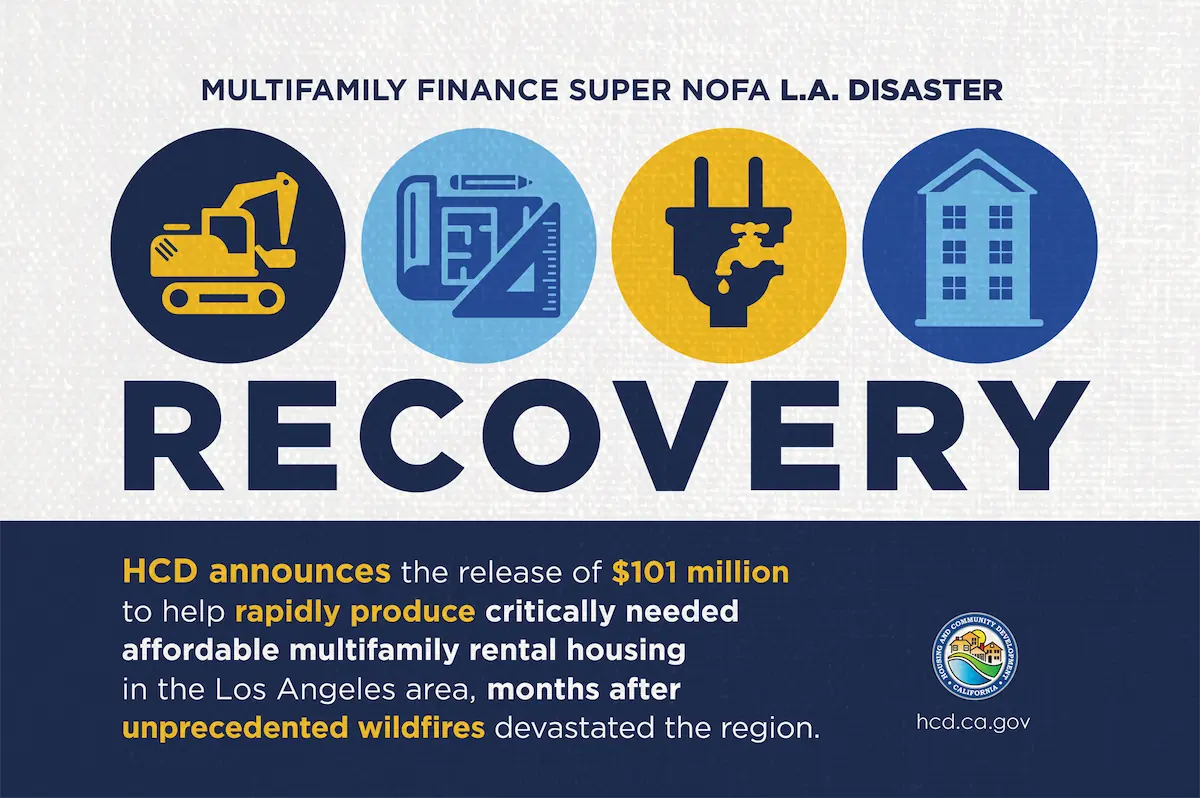
graphic with building and utility icons with text Recovery -  HCD announces the release of $101 million to help rapidly produce critically needed affordable multifamily rental housing in the Los Angeles area, months after unprecedented wildfires devastated the region.

Six months after the LA Fires, Governor Gavin Newsom and the California Department of Housing and Community Development (HCD) announced the release of $101 million to help rapidly rebuild critically needed, affordable multifamily rental housing in the fire-devastated Los Angeles region. Thousands of families are still displaced by the wildfires that raged through the Greater Los Angeles Region in January 2025, placing an incredible strain on an already tight rental market.

“Los Angeles has taken significant steps to rebuild after January’s fires, but the devastation is significant and there remains a long road ahead. Thousands of families – from Pacific Palisades to Altadena to Malibu – are still displaced and we owe it to them to help. The funding we’re announcing today will accelerate the development of affordable multifamily rental housing so that those rebuilding their lives after this tragedy have access to a safe, affordable place to come home to,” said Governor Newsom.

“The State’s special Multifamily Finance Super NOFA will galvanize the collective public-private response to the wildfires in Los Angeles County, expediting and expanding opportunities to build affordable housing for low-income residents,” said Tomiquia Moss, Secretary of the California Business, Consumer Services and Housing Agency. “By prioritizing affordable housing projects that are ready to go, these funds will accelerate household stability, climate and health outcomes in communities.” 

Today's Funding

HCD’s Multifamily Finance Super NOFA (MFSN) allows affordable housing developers to apply to multiple funding programs through a single application. In February 2025, HCD released a MFSN Notice of Funding Availability (NOFA) announcing $382 million available for development of affordable multifamily rental housing statewide. A separate $50 million Tribal MFSN was released in March 2025.

The special MFSN NOFA announced today (MFSN-LA Disaster) provides an additional $101 million in funding to support recovery and rebuilding efforts from 2025 wildfires within Los Angeles County. This MFSN-LA Disaster NOFA has been designed to meet the immediate housing needs of disaster-impacted areas and residents in Los Angeles as quickly as possible by prioritizing projects that are: close to wildfire burn areas; ready to begin construction immediately upon award; and include a resident preference for households displaced by the Los Angeles County wildfires.

“HCD has taken a program built on efficiency and further refined it specifically to help the Los Angeles region rebuild from unimaginable tragedy,” said HCD Director Gustavo Velasquez. “Our team has gone above and beyond to ensure this program is designed to provide housing stability for fire-displaced families as quickly as possible.”

This MFSN-LA Disaster NOFA provides a two-phase award process to accelerate the delivery of affordable housing. If funds remain after all applications for shovel-ready projects have been assessed, applications will continue to be accepted for all eligible projects until the funds are expended. 

Funding available through this MFSN-LA Disaster NOFA includes grants for the infrastructure needed to facilitate housing development with a focus on disaster resilience and mitigation, low-interest loans for the development of new multifamily units affordable to low-income and very low-income households, and operating subsidy reserves to support the long-term financial feasibility of the projects. All projects will be required to remain affordable for at least 55 years. 

Multifamily Finance Super NOFA (MFSN)

This year marks the third round of MFSN, which provides applicants the opportunity to apply simultaneously for a combination of awards from the Multifamily Housing Program (MHP), Supportive Housing MHP, Infill Infrastructure Grant Program, Transit-Oriented Development Program, and Veterans Housing and Homelessness Prevention Program. This is the first MFSN round to offer capitalized operating subsidy reserve funding through MHP to support operations. 

MFSN makes funds more accessible to developers (including emerging and community-based developers), enables the funding to further serve the lowest-income Californians, and increases the range of potential applicants and target populations to achieve better outcomes in health, climate, and household stability. 

Application materials for MFSN-LA Disaster will be available July 21, 2025. Applicants applying for the first phase of funding must upload all required application documents to the HCD website no later than August 21, 2025, at 4:00 p.m. PDT. 

For more information, including webinars and workshops, please visit HCD’s Multifamily Finance Super NOFA webpage.

Historic Fire Recovery

Today's announcement builds on Governor Newsom’s broader efforts to cut red tape and expedite the rebuilding of homes and businesses to support disaster survivors. 

Yesterday, the governor announced the substantial completion of the public debris removal program from more than 10,000 fire damaged parcels — marking the fastest major disaster cleanup in American history. The Governor also signed an executive order removing more barriers to rebuilding homes and schools. He also joined local officials to unveil a new blueprint for recovery, a step-by-step plan to accelerate rebuilding and provide support to impacted families and communities. The near-completion of the public debris removal program comes months ahead of schedule.

  • Disaster Recovery
  • Press Release
  • July 8, 2025
    What you need to know: The $101 million being made available today will support the development of affordable multifamily rental housing in Los Angeles, prioritizing the needs of displaced residents in the fire-devastated regions.
    Pablo Espinoza
    Off
    Deputy Director of Communications
    Article

    Six Months After Devastating Los Angeles Area Fires, State Housing Leaders Reflect on Ongoing Role in Administration’s Recovery and Rebuilding Efforts

    Off
    Sacramento, CA
    graphic of hands in a circle

    As California marks six months since unprecedented wildfires created a path of destruction in Southern California, the California Department of Housing and Community Development (HCD) is reflecting on its ongoing role in the Newsom Administration’s “all-hands-on-deck” efforts to support recovery and rebuilding for Los Angeles communities.

    “Governor Newsom’s immediate and full attention to this unprecedented crisis gave all departments the resources and flexibility to be responsive to the needs of fire survivors and put the wheels of recovery in motion,” said HCD Director Gustavo Velasquez. “We remain committed to helping impacted Los Angeles area communities rebuild and meet the critical housing need of residents at all income levels.”

    In the immediate aftermath of fires that displaced thousands of Los Angeles area households, HCD dispatched numerous team members to support residents at Disaster Recovery Centers in Pasadena, the City of Los Angeles, and Altadena.

    HCD dispatched personnel to the California Office of Emergency Services (CalOES) State Operations Center and communicated real-time updates on impacted mobilehome parks in Los Angeles County. As soon as it was safe to enter impacted areas, HCD assessed the conditions of mobilehomes and manufactured homes in three mobilehome parks destroyed by the fires and reported data through CalOES.

    Behind the scenes, program staff reached out to HCD-funded properties across the region to assess damages and determine needs for which they could provide assistance or resources.

    HCD made, and kept, an immediate and unwavering commitment to be as responsive and flexible as statute allowed and to work in partnership with stakeholders to address near- and long-term challenges.

    To that end, HCD extended funding application deadlines for the HOME Investments Partnership (HOME) program, the Homeownership Super NOFA, and Homekey+. Fire-impacted entities were given more time to apply to the Emergency Solutions Grants (ESG) program, and the already closed HOME American Rescue Plan (HOME-ARP) Re-Entry Housing NOFA was re-opened. In addition to extending the deadline to apply to the Permanent Local Housing Allocation (PLHA), HCD allowed fire-impacted jurisdictions to amend their existing five-year PLHA plan to support fire recovery efforts consistent with the program’s eligible uses.

    When the $382 million Multifamily Finance Super NOFA was released in mid-February, it was announced that HCD would begin discussions with fire-impacted communities and other stakeholders to inform the development of a separate $96 million special MFSN NOFA to support recovery and rebuilding in Los Angeles. Additional funds have since been identified for the soon-to-be-released NOFA.

    HCD also offered extensions to fire-impacted communities on annual or biannual reporting requirements; Funding Disbursement Request deadlines; and the deadline for fiscal reports for the Homeless Housing, Assistance, and Prevention (HHAP) Program; Encampment Resolution Fund (ERF) Program, and Family Homelessness Challenge (FHC) Grant Program. HHAP and grantees needing to pivot their funding plans to support emergency response and recovery within eligible uses were offered expedited review of modifications; ERF grantees received the same offer for needed budget amendments. Deadlines for fire-impacted communities were also extended for housing element rezones and responses to enforcement letters from HCD’s Housing Accountability Unit.

    In late January, when the U.S. Department of Housing and Urban Development (HUD) allocated $8 million in Rapid Unsheltered Survivor Housing (RUSH) funding in response to the wildfires—including $3 million to the state—HCD’s partnership with the Los Angeles County Development Authority allowed for the funds to be awarded quickly. HCD coordinated with HUD, Los Angeles County, and other local grantees to organize technical assistance and peer sharing calls so resources for individuals facing homelessness during and following the disaster could be deployed without delay. The $3 million in federal RUSH funds passing through HCD will help a Pasadena-area nonprofit rapidly re-house fire survivors experiencing homelessness. 

    In the days, weeks, and months following the wildfires, Governor Newsom enacted a series of Executive Orders in close collaboration with fire-impacted communities to assist fire survivors and facilitate recovery. Fire-impacted jurisdictions have credited these orders with making a significant positive impact on rebuilding and recovery efforts. The orders allowed HCD to take additional actions to support recovery efforts:

    • In alignment with Governor Newsom’s Executive Order N-23-25, HCD moved to support residents displaced by the fires and experiencing homelessness by prioritizing them on waiting lists for HCD-funded affordable rental housing for which they otherwise meet eligibility requirements. HCD conducted a survey of all HCD-funded housing projects in Los Angeles County to identify projects with vacant units. Of the 239 HCD responses received, 141 properties reported a total of 723 vacant units available June 2025. HCD shared the list of properties with vacancies with Los Angeles County to facilitate a coordinated approach to matching residents displaced by the wildfires with potential housing opportunities.
    • HCD collaborated closely with local jurisdictions and other state agencies to implement two executive orders (N-4-25, paragraphs 4-6; and N-9-25, paragraph 7) that:
      • Facilitate rapid, safe, and cost-effective rebuilding and recovery for those impacted by the fires, and
      • Supplied local governments with standards for the use of mobilehomes, manufactured homes, recreational vehicles, and mobilehome parks as temporary housing.

    Beyond these and other internal changes made to most effectively and efficiently support fire recovery and rebuilding efforts, HCD took the lead on the State Housing Task Force (HTF) and established the Joint Field Office on January 20, 2025. With leadership and support from the California Business, Consumer Services and Housing Agency, the State HTF was charged with coordinating with local, state, and federal partners to support the short-term, intermediate, and long-term housing goals for survivors of the 2025 wildfires.

    On February 12, 2025, the State HTF integrated with the Los Angeles County Housing Task Force to form the Joint County-State Housing Task Force. The Joint HTF provided oversight and management for two working groups: the Pre-Disaster Unhoused Working Group, and the Shelter Transition Working Group. These teams met daily to find temporary housing solutions for displaced disaster survivors staying in American Red Cross congregate shelters, and to find interim housing solutions for people in the shelters who had been experiencing homelessness prior to the fires. By March 3, 2025, all American Red Cross congregate shelters were closed, and 86 individuals experiencing homelessness before the fires were successfully rehoused through the efforts of the Pre-Disaster Unhoused Working Group.

    As emergency response shifted into short- and medium-term recovery, the Joint HTF set up two additional working groups: the Senior Reverse Mortgage Working Group, and the Affordable Housing Financing Working Group. The Senior Reverse Mortgage Working Group is focused on helping older adults affected by the fires understand their existing reverse mortgage and the implications of property damage or loss. The Affordable Housing Financing team is working with various county departments on a range of objectives for long-term housing recovery for future state and federal collaboration.

    The Disaster Recovery team from HCD’s Division of Federal Financial Assistance will join federal, state, and local officials later this week for a discussion organized by HUD’s Housing Recovery Support Function (RSF) with a focus on addressing disaster housing issues with solutions that are feasible, enduring, and resilient. As states and communities look to the federal government for assistance in housing both disaster survivors and others who live in recovering communities, the Disaster Recovery team’s experience with wildfire recovery will be critical to guiding how Housing RSF coordinates and effectively integrates available housing-related resources, addresses conflicting policy/program issues, and identifies gaps in service and assistance delivery.

  • Disaster Recovery
  • Press Release
  • July 7, 2025
    Pablo Espinoza
    Off
    Deputy Director of Communications
    Article

    Local Housing Trust Fund (LHTF) Program

    The LHTF program provides matching funds to local and regional housing trust funds dedicated to the creation, rehabilitation, or preservation of affordable housing, transitional housing and emergency shelters.

    Renovated San Luis Obispo Apartments Open to Seniors with Limited Income

    Off
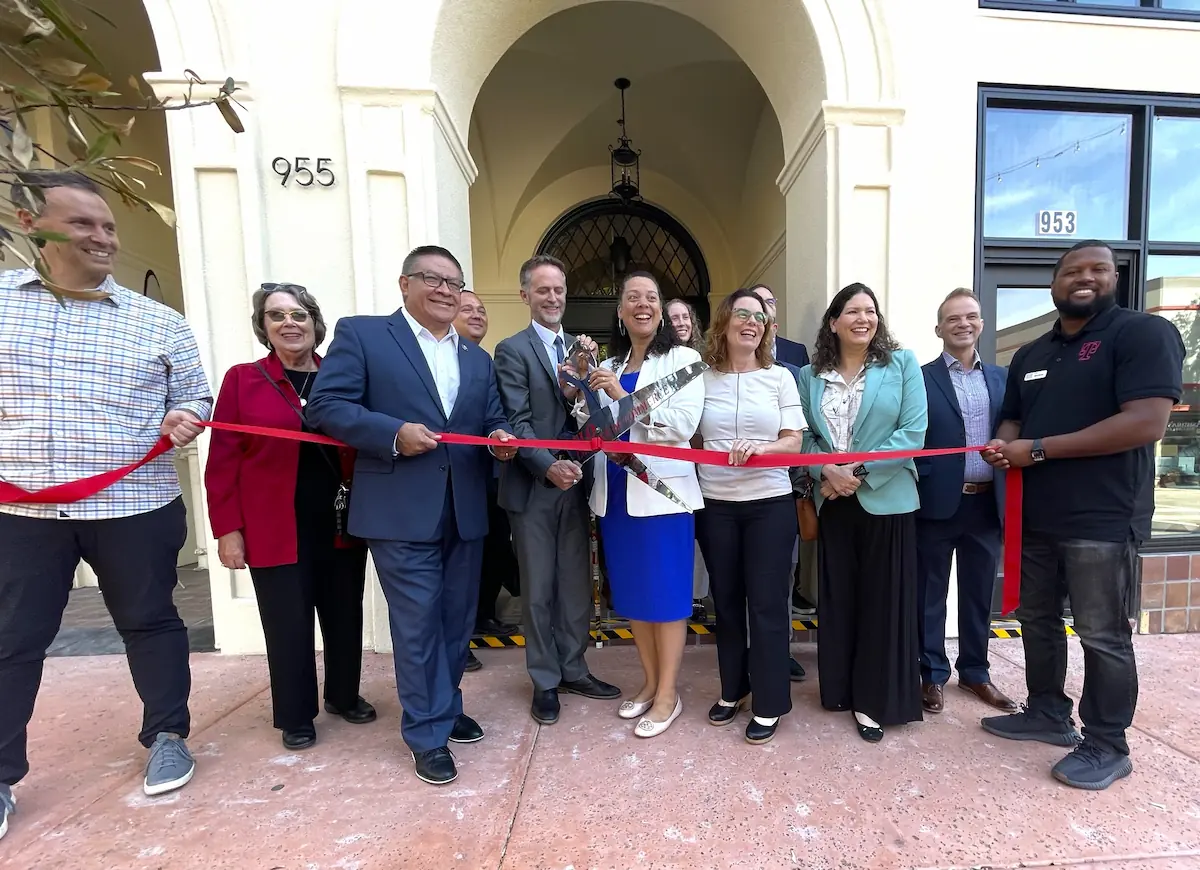
    ribbon-cutting ceremony

    The City of San Luis Obispo recently celebrated the grand re-opening of the Anderson Hotel Apartments, a 101-year-old structure providing 66 homes for extremely low-income seniors and people with disabilities. 

    The original Anderson Hotel was converted into senior housing in 1978. Recent renovations by the Housing Authority of San Luis Obispo were made to protect the health and safety of residents, including seismic reinforcements, plumbing and electrical upgrades, new windows, and other structural improvements. 

    The Anderson Hotel Apartments renovation was supported by $11.6 million from HCD’s Homekey program. Homekey, along with HCD’s new Homekey+ program, are designed to create avenues of funding for supportive housing communities like this across California. The renovation project also included city, county, and federal funding. 

    “This is what you get when all of our community, all our partners, come together for a common goal, and that is to house some of the most vulnerable in our communities,” said Congressman Salud Carbajal. 

    The Anderson Hotel Apartments is 100 percent affordable and available to extremely low-income seniors, with additional vouchers available for rental assistance. Forty homes within this complex are specifically reserved for people exiting homelessness.


  • Homekey
  • Success Stories
  • July 3, 2025
    Off
    Article

    Joe Serna, Jr. Farmworker Housing Grant Program (FWHG)

    The FWHG program helps fund new construction, rehabilitation, and acquisition of owner-occupied and rental units for agricultural workers, with a priority for lower income households. Financial assistance is available as deferred-payment loans for multifamily housing new construction or rehabilitation and grants for single-family new construction or owner-occupied rehabilitation programs.

    Top