
Homekey+
What is Proposition 1?
California voters passed Proposition 1, which included $6.38 billion in funding to develop and
California voters passed Proposition 1, which included $6.38 billion in funding to develop and
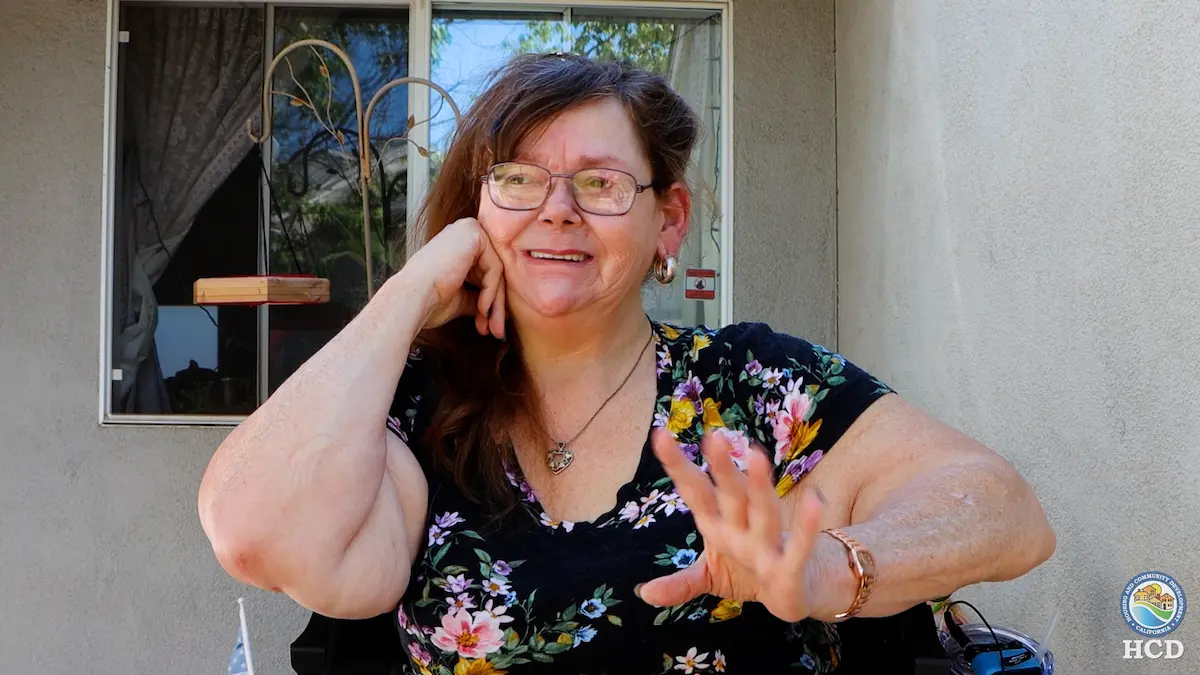
East of Eaton is an affordable housing community in Chico California. Open since 1992, the East of Eaton property needs many repairs, including safety upgrades.
HCD’s Portfolio Reinvestment Program provides strategic investments to help preserve California’s existing affordable housing. With help from PRP, East of Eaton will be able to address its many maintenance needs, ensuring it remains safe, livable, and affordable for decades to come.
Watch the video below to learn more about PRP and hear directly from the community it serves.
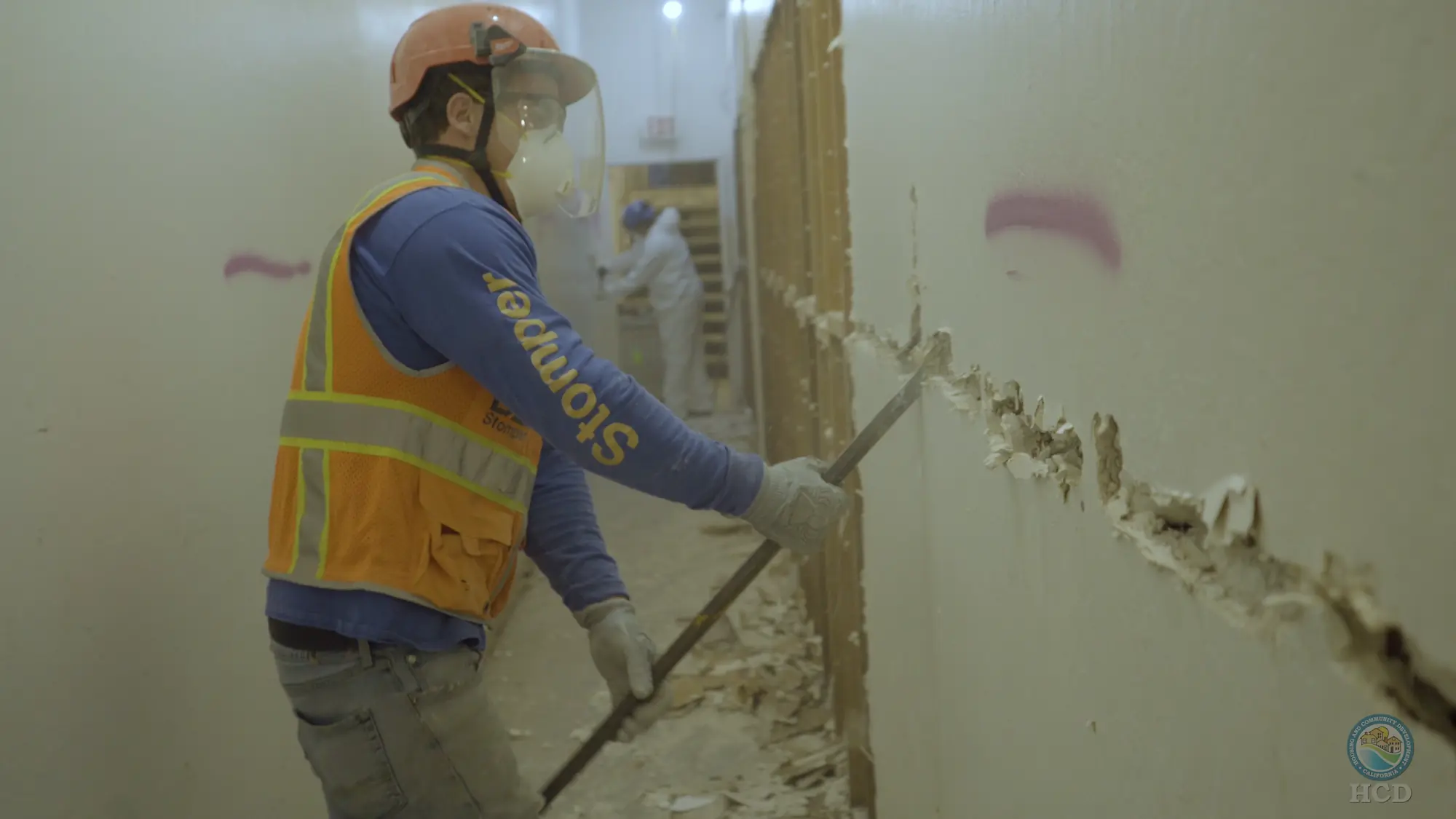
Preserving existing affordable homes is vital to addressing California’s housing and homelessness crisis. As housing properties age, they require costly repairs and upgrades, and with little funds for maintenance, some properties have fallen in disrepair.
HCD’s Portfolio Reinvestment Program (PRP) works to preserve affordable housing by extending affordability agreements and providing special financing, including to help fund repairs and upgrades.
Sacramento’s historic Sequoia Hotel is one such project. Build in 1906, the property requires substantial rehabilitation and renovation. With funding from HCD’s PRP program, The Sequoia is being brought back to life as permanent supportive housing.
Watch the video to learn how the PRP program will help ensure this property remains safe, livable and affordable for generations.
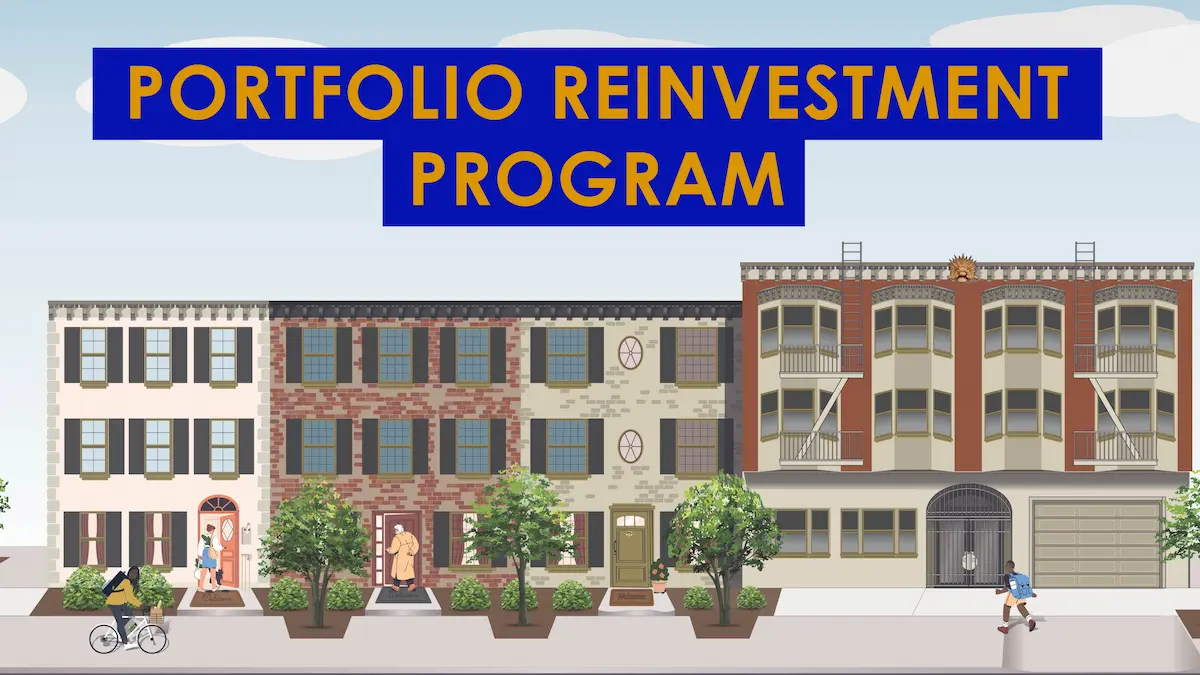
Preserving existing affordable homes is vital to addressing the state’s housing and homelessness crisis.
HCD-funded housing developments must keep their homes affordable for a number of years. But when these affordability agreements end, homes are in danger of converting to market rate and raising their rents, and residents are in fear of losing their homes. In addition, as these properties age, they require costly repairs and upgrades, and with little funds for maintenance, some properties have fallen in disrepair.
Watch the video below to learn how HCD’s Portfolio Reinvestment Program provides strategic investments to help keep HCD-funded properties safe, livable and affordable for years to come.
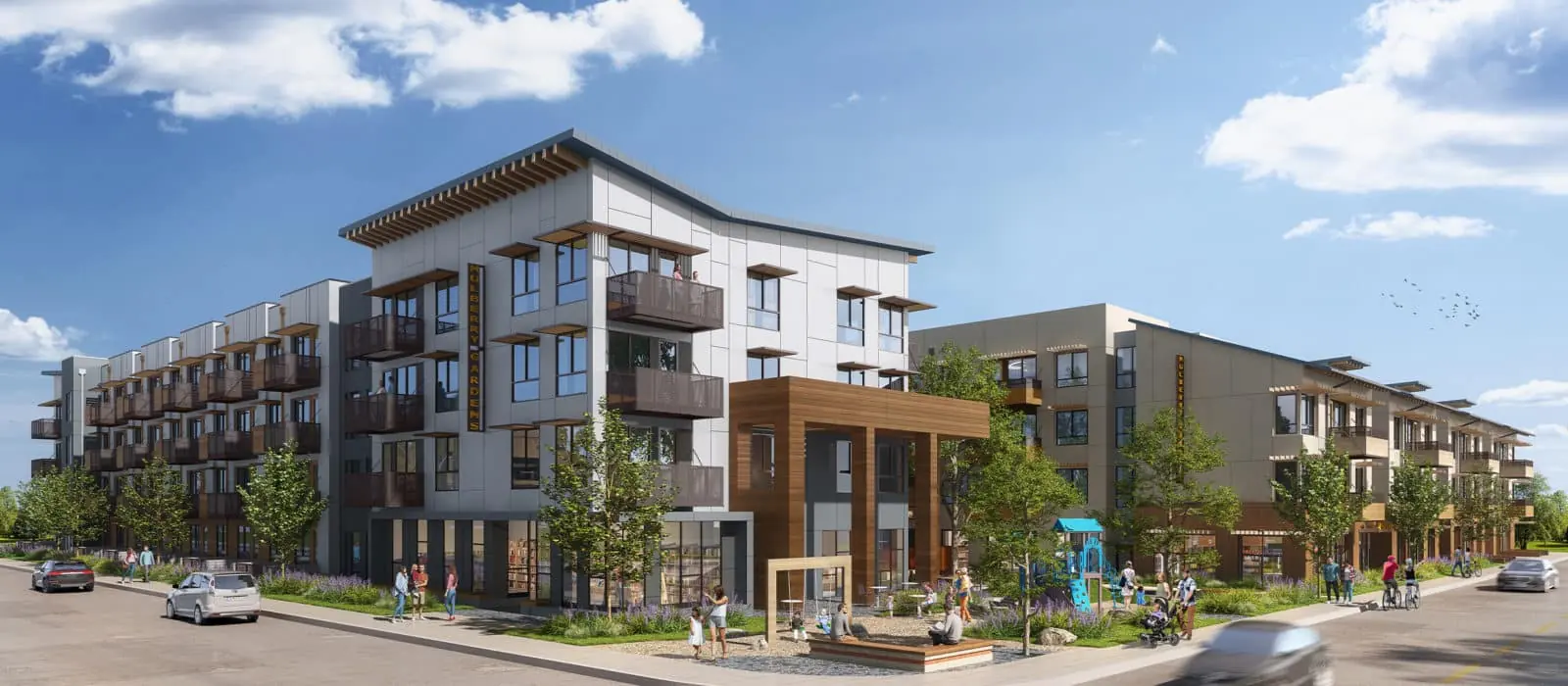
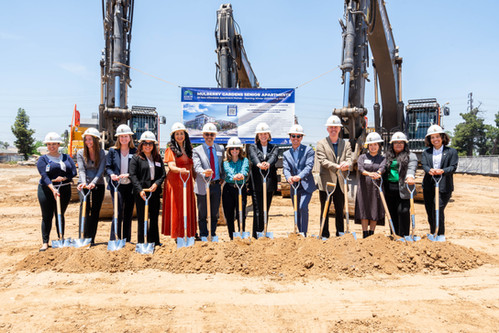
California Department of Housing and Community Development (HCD) Director Gustavo Velasquez joined California Department of General Services (DGS) Director Ana Lasso, City of Riverside Mayor Patricia Lock Dawson, developers, and community leaders to celebrate the groundbreaking of Mulberry Gardens Senior Apartments, the first affordable housing development on excess state land to begin construction in Southern California.
In 2019, Governor Gavin Newsom issued an executive order directing HCD and DGS to address the state’s housing crisis by identifying underutilized state-owned sites for development of affordable housing. Being built on the site of a former California Department of Forestry and Fire Protection headquarters, Mulberry Gardens Senior Apartments will provide 58 new affordable homes for low-income seniors earning between 30-50% Area Median Income.
“We are proud to support the Mulberry Gardens Senior Apartments project, an example of how strategic use of state excess land can create sustainable, affordable housing solutions,” said Director Velasquez. “This project not only addresses the urgent need for affordable homes in Riverside, but also sets a precedent for future developments. By leveraging state resources effectively, we can enhance quality of life for California seniors on a fixed income while fostering inclusive communities of opportunity."
A project of Eden Housing, Mulberry Gardens is supported by nearly $9 million from HCD’s Infill Infrastructure Grant (IIG) and Excess Site Local Government Matching Grants (LGMG) Programs. This project is Phase 1 of a larger affordable housing complex, which will eventually provide an additional 150 affordable homes for low-income families. Phase 2 of the project, Mulberry Gardens Family Apartments, has been awarded $8.7 million from IIG and $8.1 million from LGMG. Phase 2 was also awarded nearly $28 million from the Affordable Housing and Sustainable Communities program jointly administered by HCD and the Strategic Growth Council.
The Mulberry Gardens projects will have various amenities including a community room, laundry facilities, and a mail room, along with outdoor amenities including seating and gathering spaces, a bocce ball court, and pedestrian walking routes. Based on the City of Riverside Active Transportation Plan, the project will also construct new sidewalks, bike lanes, bus shelters, crosswalks, and street trees. The development is located less than a mile from downtown Riverside and is near transit and vital services and amenities.

Sacramento leaders and community members gathered for the grand opening of Central Sacramento Studios. Hear how this Homekey project makes a difference in the lives of our most vulnerable residents.
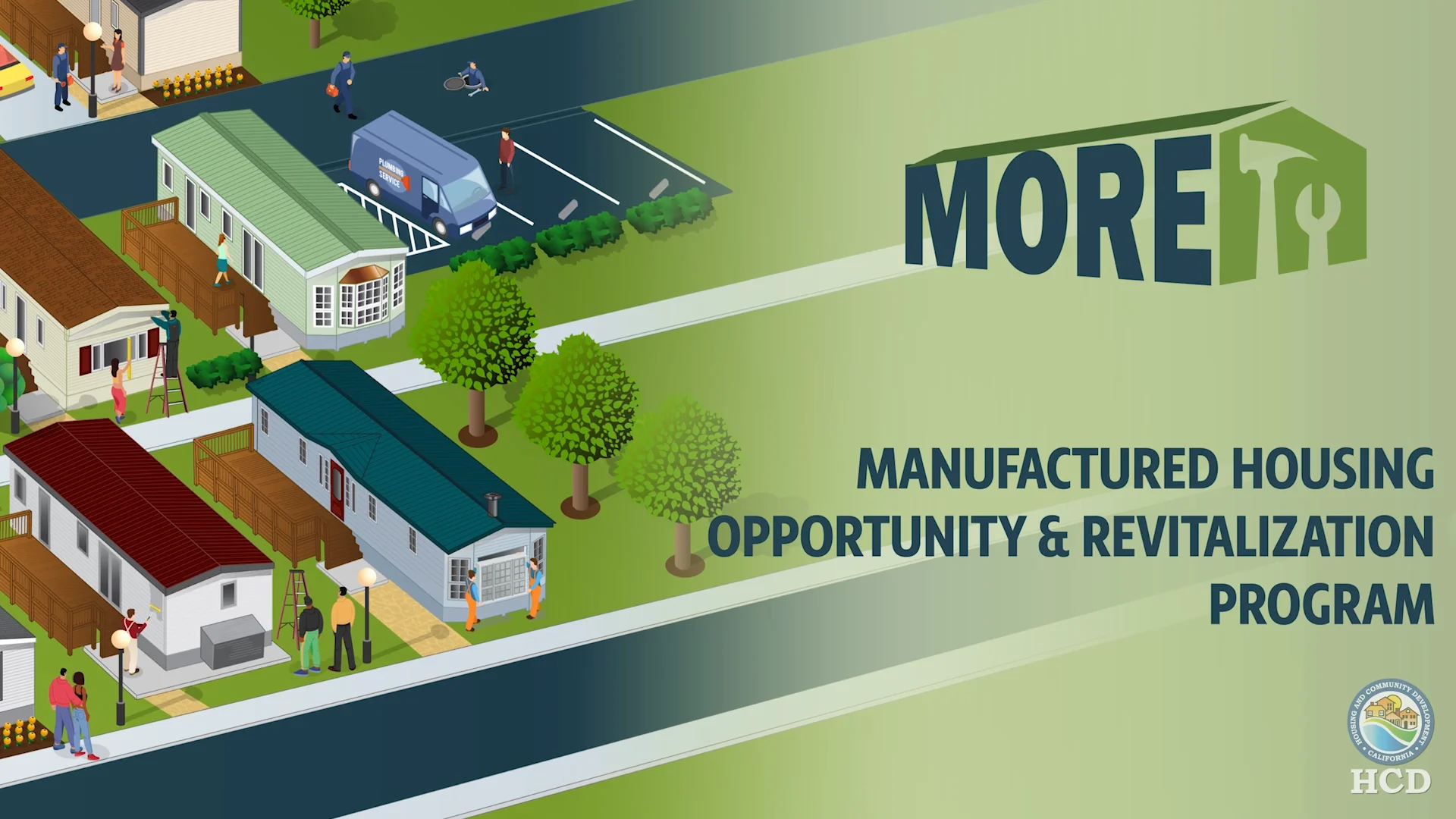
Manufactured and mobilehomes are a significant source of affordable housing and homeownership for many Californians. Preserving this housing option is critical to meeting the state’s housing needs. But many mobilehomes and mobilehome parks are old and in need of repairs or replacement without the funds necessary to complete them.
To remedy this, HCD recently launched the Manufactured Housing Opportunity and Revitalization Program (MORE). MORE is the only known state-sponsored program that provides funding to help mobilehome owners and mobilehome park owners make critical health and safety repairs to ensure residents have a safe place to call home.
Watch the video below to hear directly from the communities this program serves.
Watch more videos in the series on YouTube or on HCD’s video page.
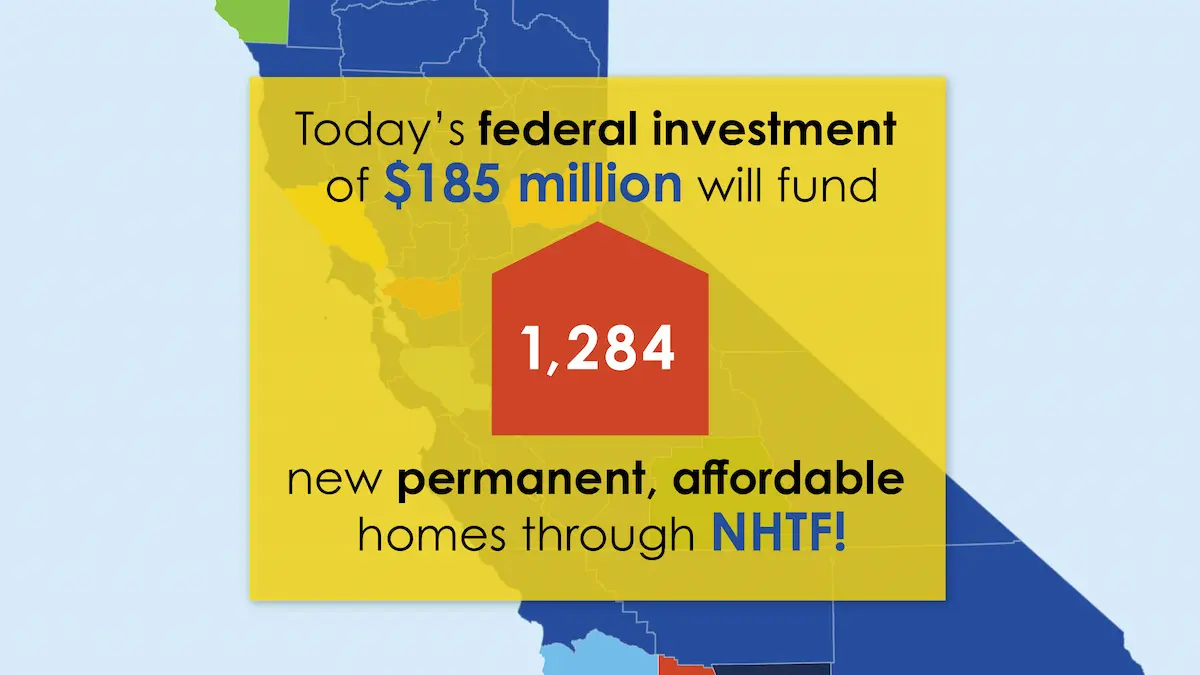
The California Department of Housing and Community Development (HCD) today announced awarding federal funds to create 1,284 new affordable rental homes for extremely low-income Californians in 18 projects across the state.
Through the National Housing Trust Fund (NHTF) Program, the U.S. Department of Housing and Urban Development (HUD) allocates funds to states for new construction or rehabilitation of safe, affordable housing, with an emphasis on permanent supportive homes for those experiencing or at risk of homeless. HCD administers NHTF in California, making awards in the form of a deferred-payment or forgivable loan, or grants in the case of projects on Native American Lands.
“I’m proud to see National Housing Trust Fund dollars at work in the State of California,” said HUD’s Deputy Assistant Secretary for Grant Programs, Claudia Monterrosa. “We are excited to see the impact of these funds across the state as communities increase the supply of permanent affordable housing for extremely low-income individuals and families in partnership with the California Department of Housing and Community Development.”
“This demonstrated commitment from the Biden Administration to house Californians at the lowest income levels—along with our amazing working relationship with HUD—are vital to addressing the crisis of housing affordability facing our great state,” said HCD Director Gustavo Velasquez. “These loans and grants will allow us to provide generational stability for people most in need, providing them the foundation from which to pursue dreams and goals that may once have seemed unattainable.”
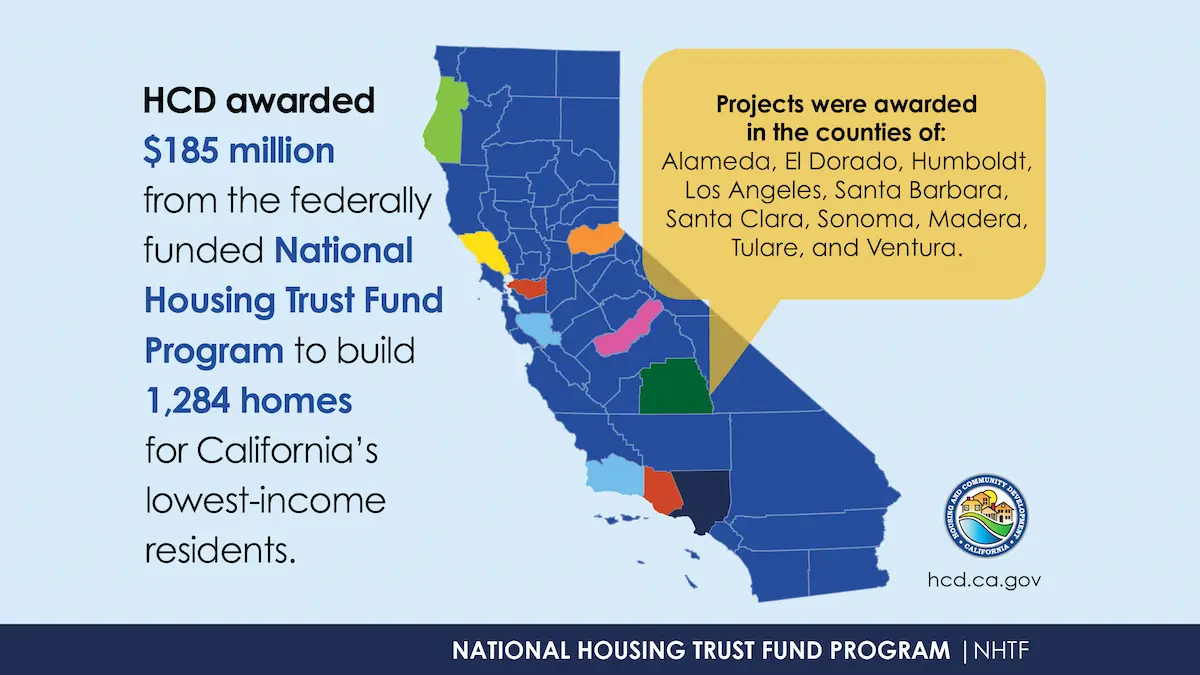
In total, the $185 million in federal NHTF awards announced today will fund 1,284 new affordable homes across California, with 764 of those reserved for extremely low-income residents—defined as those earning up to 30% of Area Median Income.
Most properties funded by NHTF are bound to a 55-year affordability covenant, meaning these homes will support generations of families. For NHTF projects on Native American Lands, the affordability covenant is for 50 years.
Visit HCD online to learn more about the National Housing Trust Fund Program and today’s awarded projects.
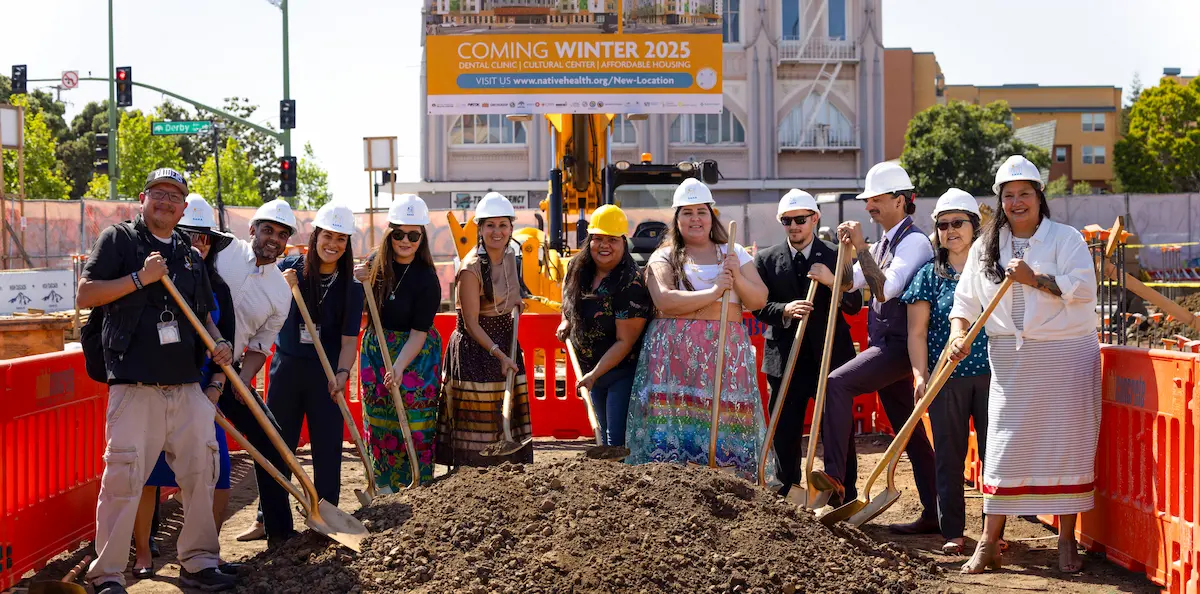
A groundbreaking ceremony was held recently in Oakland’s Fruitvale Neighborhood, marking the commencement of construction of new affordable housing, a 14,000 square foot community center, and a clinical facility. The 3050 International project, developed by Satellite Affordable Housing Associates (SAHA), will include 76 affordable homes reserved for households earning 20-50 percent of Area Median Income. The project is aimed at supporting the chronically homeless, individuals with special needs, and those in need of mental health services.
“Housing is a critical part of a person’s health. Someone who is housed is much more likely to be healthy and stay healthy,” said Business, Consumer Services and Housing Agency Deputy Secretary of Housing Sasha Kergan. "Projects like this show that concurrent investments in healthcare, prevention, and permanent housing work to address housing and the homelessness crisis.”
The 3050 International project is supported by $6.6 million from HCD’s No Place Like Home Program, supplementing affordable housing units set aside for persons with serious mental illnesses who are chronically homeless, homeless, or at-risk of being chronically homeless. This directly aligns with voter-approved Proposition 1, which ensures California’s most vulnerable residents receive the permanent homes and supportive services they need to thrive. All supportive services for this mixed-use development will be provided by LifeLong Medical Care.
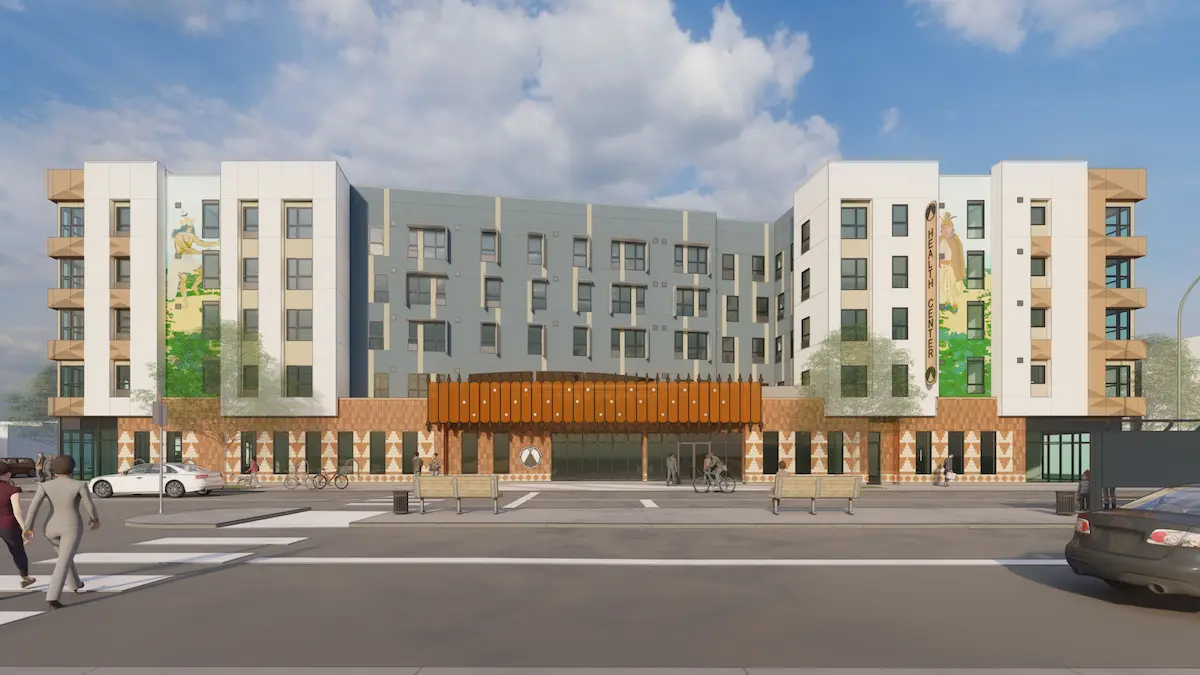
At the groundbreaking, SAHA — in partnership with the Native American Health Center — gave event guests a first look at what is to become a five-story, state-of-the-art facility, including a cultural center, community events center, behavioral health services clinic, and dental care clinic.
This community upgrade also was supported by HCD‘s Infill Infrastructure Grant Program, which provided more than $6 million in infrastructure funding to make this project a reality.
This event is open to the public.
Please contact HCD Careers at careers@hcd.ca.gov for more information.