Single Family Disaster Recovery - Environmental Review
This page contains Environmental Public Noticing and Environmental Assessments required for Single Family Disaster Recovery and Mitigation Programs.
This page contains Environmental Public Noticing and Environmental Assessments required for Single Family Disaster Recovery and Mitigation Programs.
The OOM Program, administered by Ventura County, provides grants to eligible households in Ventura County for wildfire and flood mitigation retrofits on owner-occupied properties to increase resilience during future wildfire or flood disasters.
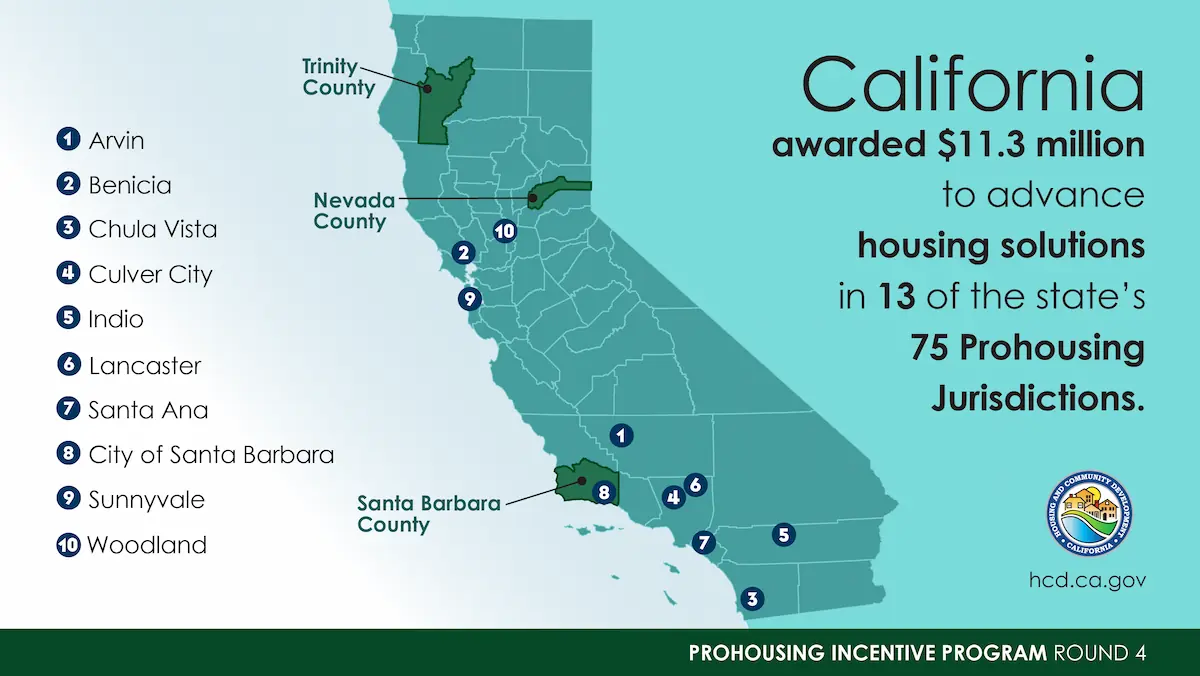
Governor Gavin Newsom today announced 13 California communities which have earned the state’s coveted Prohousing Designation will receive $11.3 million in new state funding to create new affordable housing. These communities have gone above-and-beyond in their efforts to create housing for residents of all income levels. Through programs such as the prohousing designation, increased accountability, and foundational reforms – California is reversing a decades-in-the-making housing shortage and reducing homelessness.
“Investing in our communities by creating more homes is an investment in California's future — fostering greater stability, strengthening families, and building more resilient communities for generations to come. Through strong local partnerships, we’re delivering results and creating more opportunities for Californians to have a safe, affordable place to call home,” said Governor Gavin Newsom.
The funding was awarded through the fourth round of the Prohousing Incentive Program. Administered by the California Department of Housing and Community Development (HCD), the program has awarded $70.3 million in funds to help scale up innovative local housing solutions.
“In California, it pays to be prohousing, and this award is proof,” said California Housing and Homelessness Secretary Tomiquia Moss. “Our Prohousing Designation Program is a national leader in embracing creative solutions to increasing affordable housing development. Thanks to the incredible work of our local prohousing partners across the state, these funds will directly lead to more affordable homes, rapid rehousing services, and emergency shelters, benefitting countless Californians now and in the years to come.”
Today’s awardees include the cities of Arvin, Benicia, Chula Vista, Culver City, Indio, Lancaster, Santa Ana, Santa Barbara, Sunnyvale, Woodland, and the counties of Nevada, Santa Barbara, and Trinity.
The state awards the Prohousing Designation to cities and counties that demonstrate they are going above and beyond to do their part in addressing the state’s crisis of housing affordability and homelessness by enacting bold, locally driven policies that accelerate housing production, lower costs, and expand opportunity. Prohousing policies include streamlining multifamily housing development, up-zoning in places near jobs and transit to reduce emissions, and creating more affordable homes in places that historically or currently exclude households of color and those earning lower incomes.
Seventy-five California jurisdictions now hold HCD’s Prohousing Designation, making them eligible for the PIP program – and other state funding opportunities. PIP awards go to the jurisdictions tackling California’s decades-old housing crisis—in the form of additional funding for housing and community development activities. Since October 2025, ten California jurisdictions have earned the Prohousing Designation for the first time. They include the cities of Arvin, Benicia, Chico, Culver City, Fort Bragg, Marina, Sand City, and Santa Barbara, and the counties of Santa Barbara and Trinity. Over that same period, the cities of Fontana, Oakland, Roseville, Sacramento, and West Sacramento were redesignated as Prohousing designees.
“Prohousing communities are embracing real, forward-thinking solutions, and this designation signals to residents, builders, and funders that these communities are ready to get homes built by cutting red tape.” said HCD Director Gustavo Velasquez. “These PIP funds acknowledge the proactive choices they have made and help them scale up innovative solutions to get more homes built at all income levels.”
In addition to today’s announcement, Governor Newsom is creating a structural and foundational model across the state that will have positive impacts for generations to come.
The Governor is streamlining and prioritizing building new housing, funding new shelters, housing, and supports, addressing mental health and its impact on homelessness through voter-approved Proposition 1, and creating new pathways for those who need it most through updated conservatorship laws and a new CARE court system. California is also addressing encampments statewide to help get people off the streets and into care.
In addition to celebrating good work by communities with prohousing designations, Governor Newsom and the legislature have created strong accountability measures to ensure that communities who fail to plan and create housing for their residents can face the consequences. Governor Newsom established HCD’s Housing Accountability Unit in 2021 to ensure that every community is meeting its obligations to plan for housing and follow state housing laws. In 2024, Governor Newsom expanded the unit’s oversight to also include monitoring cities’ and counties’ efforts to address homelessness. The Accountability Unit has “unlocked” 13,988 housing units, including over 3,960 affordable units, that may otherwise have been stuck in the local planning process.
All this work is creating positive results.
California’s investments have created immediate, measurable results and the critical foundation necessary to finally solve California’s housing and homelessness crisis. Governor Newsom’s policies have had a significant impact:
In addition, Governor Newsom is addressing a housing shortage that has been decades in the making. Since 2019:
Visit HCD's website for more information on the Prohousing Designation Program and the Prohousing Incentive Program.
What you need to know: California continues its steadfast and transformational approach to creating more housing and reducing homelessness, with $11.3 million in awards to advance innovative solutions in prohousing communities.
Senate Bill 597 (Statutes of 2024, Chapter 861) (SB 597) requires HCD to consult with specific state agencies and non-governmental stakeholders to help develop recommendations regarding building standards for the installation of rainwater catchment systems for nonpotable uses in newly constructed residential dwellings. SB 597 requires HCD to develop a report of recommendations to the Legislature by January 1, 2027.
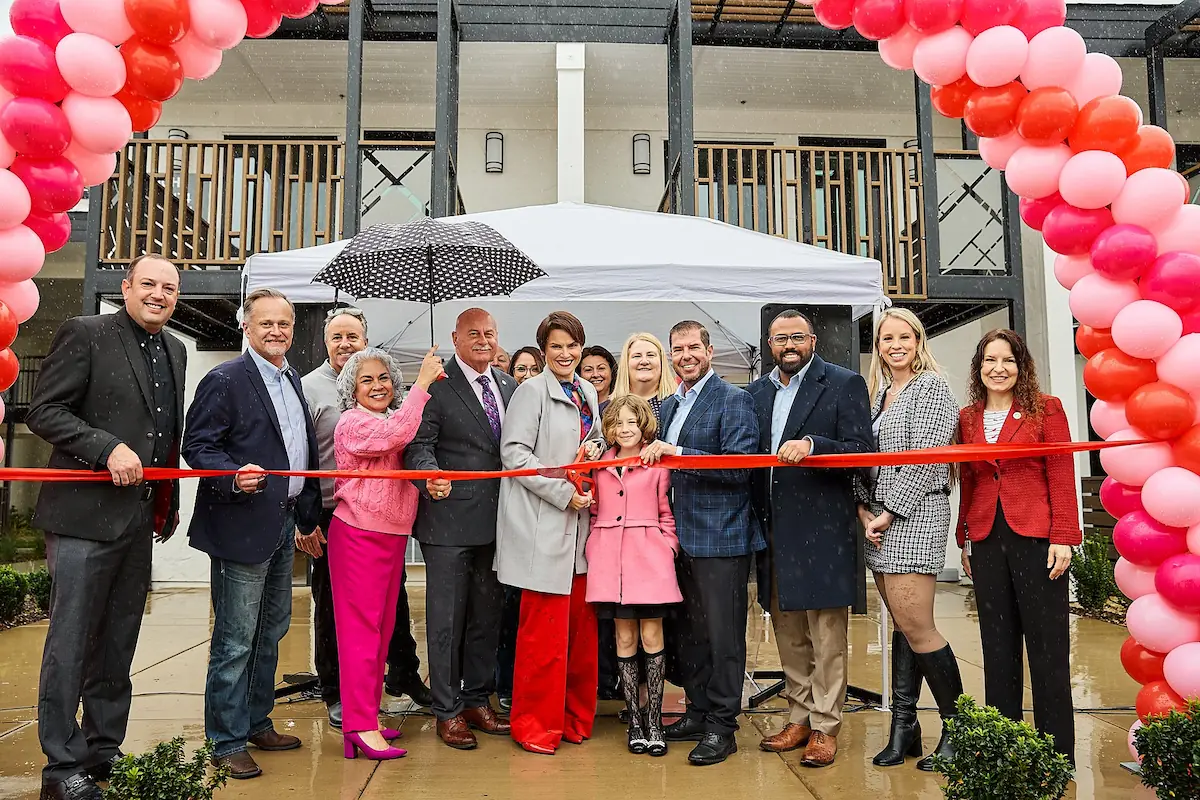
Fresno is making meaningful progress toward creating safe, stable, affordable housing for families and individuals in need recently opening two new HCD-funded housing communities, with additional developments underway to bring hundreds of permanent supportive homes to the region and help more people get off the streets.
Crossroads Village has added 143 permanent supportive homes for households earning up to 30 percent of the Area Median Income (AMI). Located next door to an elementary school, developer UPholdings partnered with Fresno Unified School District (FUSD) and the Fresno Teachers Association (FTA) to reserve 20 homes for families in the school system exiting homelessness. FUSD and FTA are covering rental costs for these units.
Originally used as interim housing, Crossroads Village was upgraded to serve as permanent supportive housing with $67.8 million in funding from HCD’s Housing for a Healthy California, No Place Like Home (NPLH), and California Housing Accelerator programs. Residents have access to on-site services and indoor and outdoor community spaces including a community room, computer room, laundry room, barbecue areas and a swimming pool. The complex is located near public transit and essential services.
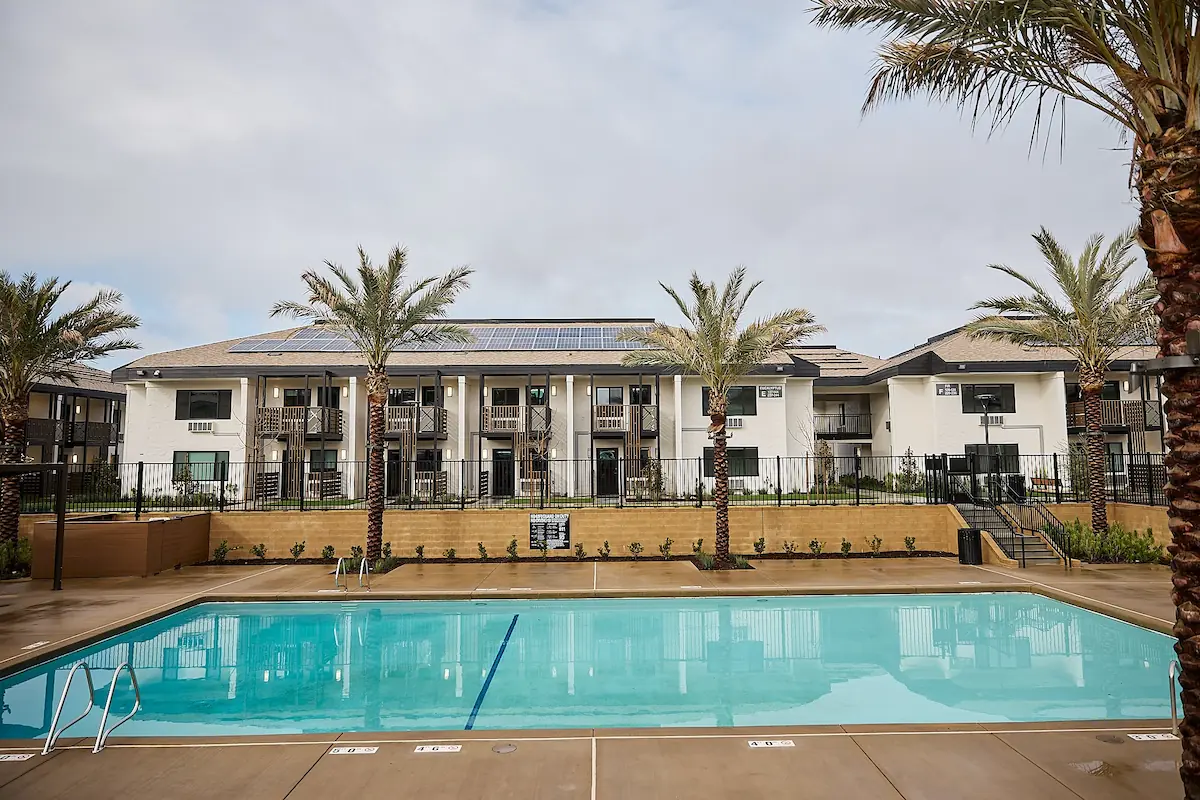
Manzanilla Commons, a former hotel, combined adaptive reuse and new construction to create 63 new affordable homes, with 32 permanent supportive homes reserved for families exiting or at risk of homelessness.
Located within a mile of the Fresno Zoo, the gated community was supported by $5.3 million from HCD’s Homekey program. A project of Fresno Housing, Manzanilla Commons features a community services building with over 2,000 square feet for property management, resident and supportive services, and event space.
In addition to the community building, on-site amenities include a laundry facility, children’s playground, basketball court, and dog park.
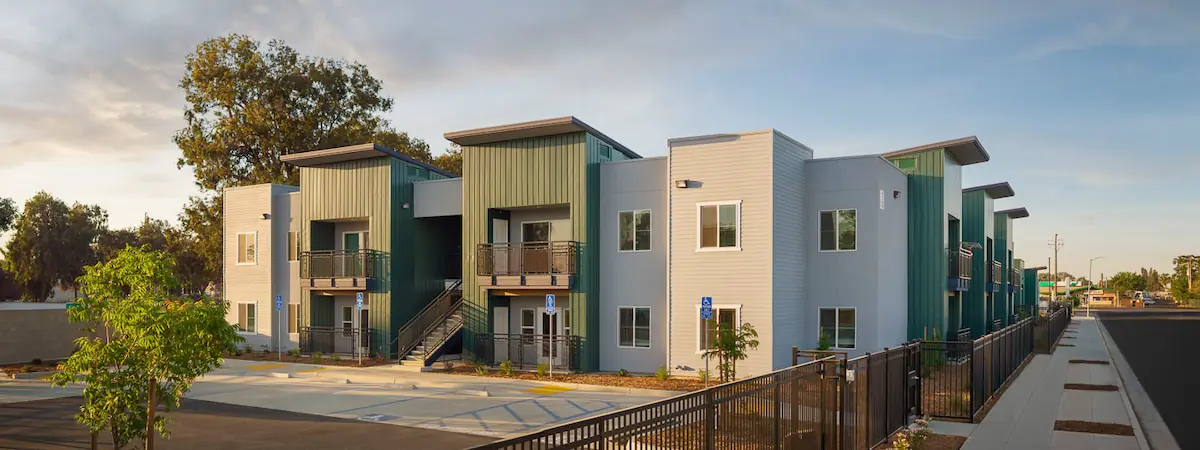
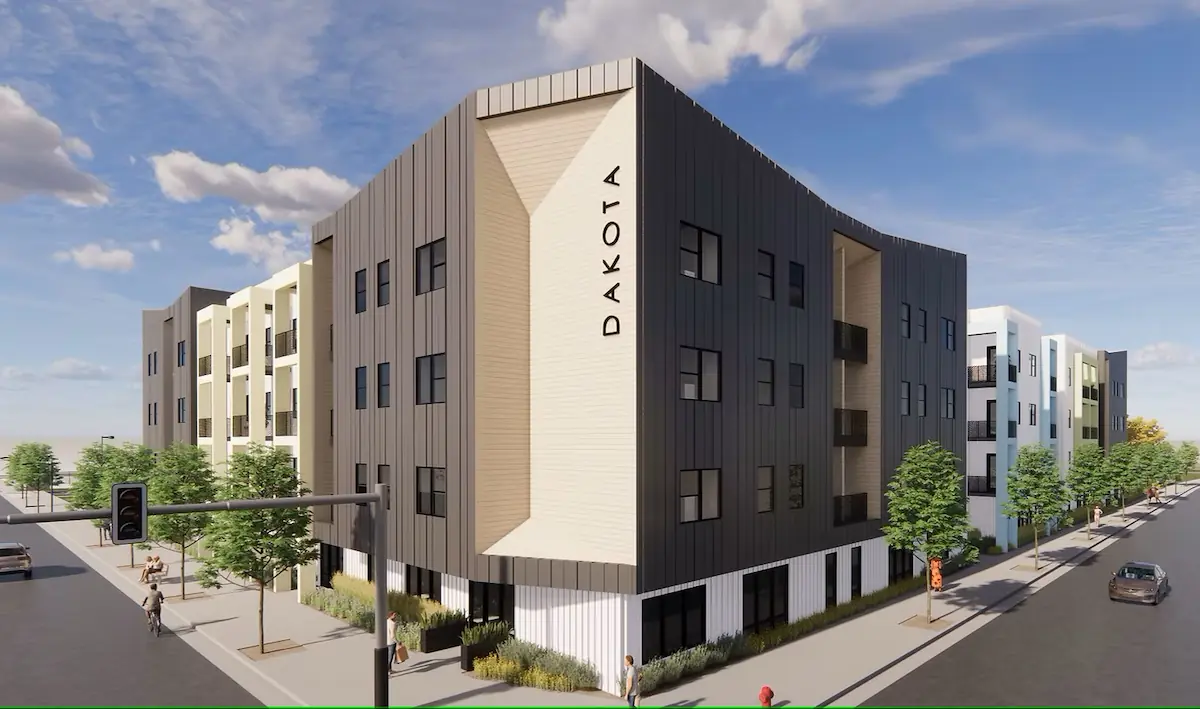
Once home to the Smugglers Restaurant and Lounge and later used as a rapid rehousing center during the COVID-19 pandemic, this infill site is being redeveloped into Dakota, an affordable housing community providing 114 permanent supportive homes for low-income individuals, veterans, and families.
Dakota was funded by $49 million from the Affordable Housing and Sustainable Communities program jointly administered by HCD and the Strategic Growth Council, and $4.2 million from HCD’s Infill Infrastructure Grant and HOME Investment Partnerships programs. The development will include wraparound services from Fresno Mission City Center and a free on-site medical clinic operated by Family Healthcare Network. On-site amenities include laundry rooms, a fitness room, community room, and outdoor community spaces.
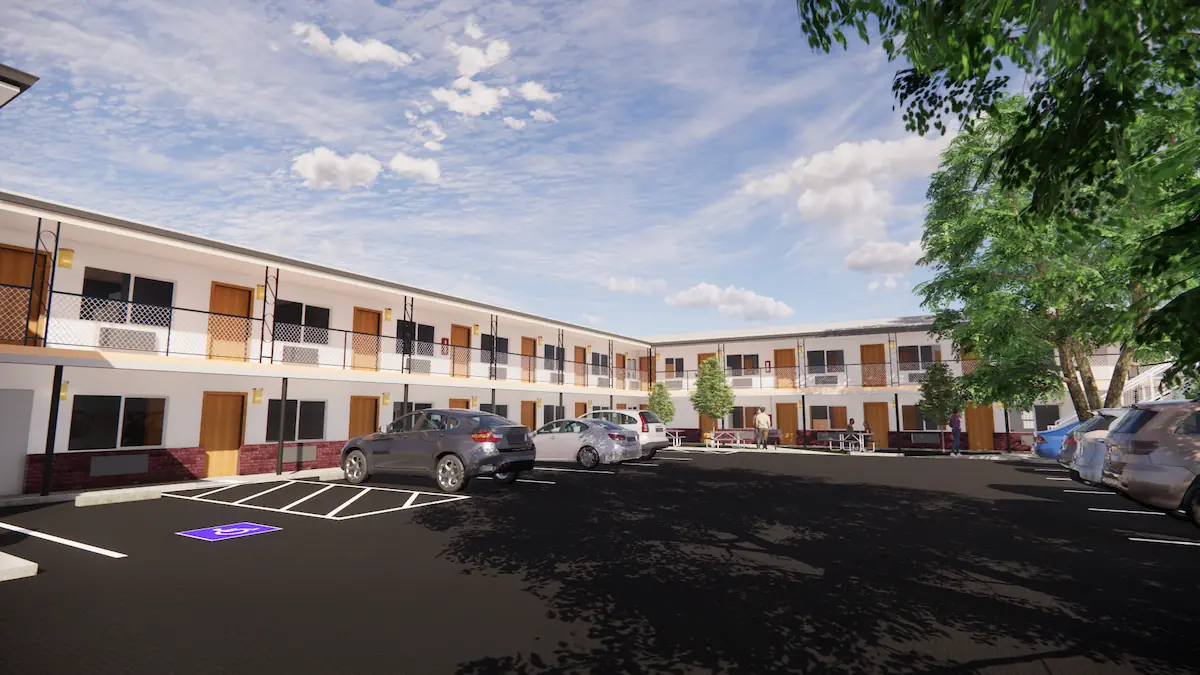
Mosaic at The Mural District will transform a former Econo Lodge Inn into 25 studio apartment homes for low- income households, including 12 homes reserved for people exiting or at risk of homelessness and earning 30% or less of AMI.
A project of Fresno Housing, Mosaic at the Mural District was supported by $3.3 million from HCD’s NPLH program.
Located near transit, grocery stores and essential services, the complex will also offer residents access to shared community spaces including a community room, community kitchen, laundry room, and barbecue area.

Hear from members of the San Pasqual Band of Mission Indians who are now living in new manufactured homes thanks to $7 million in funding from HCD’s Manufactured Housing Opportunity & Revitalization (MORE) Program. The MORE program awards will help replace 22 homes on the reservation and help fund the repair and rehabilitate of 93 additional homes.
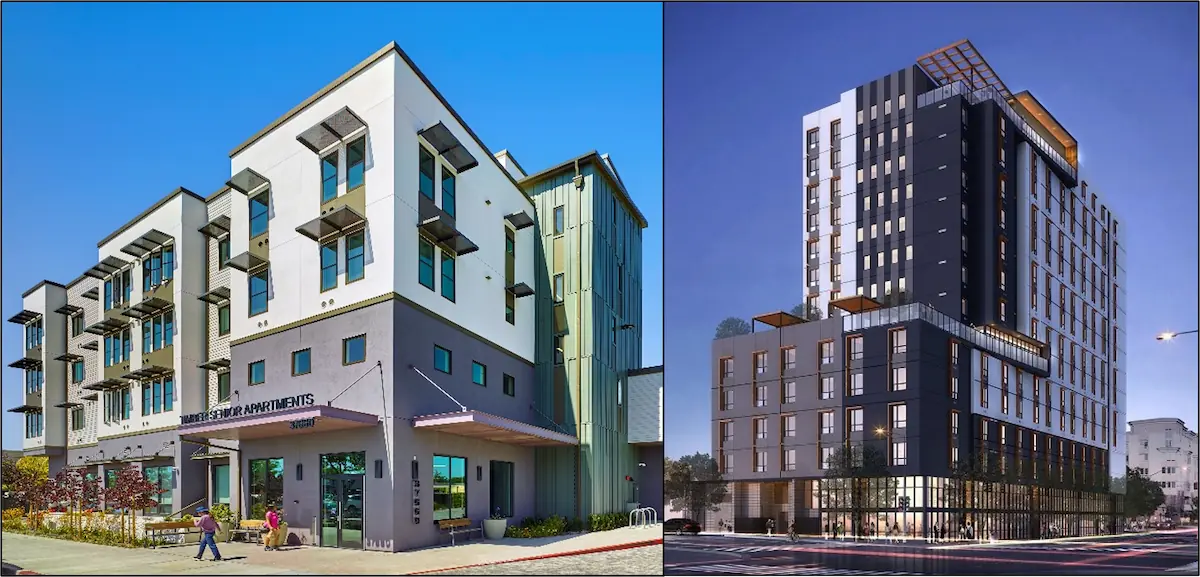
Governor Gavin Newsom today announced a nearly $239 million investment to help bring 20 construction-ready affordable rental housing developments with 1,700 homes to market for Californians. These new projects underwent a streamlined approval process to keep development on track and cut red tape – continuing the state’s work to reverse a decades-in-the-making housing shortage, and reverse the nationwide homelessness crisis.
“California is reversing decades of housing inaction by making historic investments to build more homes, faster. Today’s announcement will help bring more housing to communities across the state, lower costs, and create greater stability. Working in partnership with the Legislature, we’re backing that investment with reforms that cut red tape, expand financing opportunities, and accelerate housing production. Those efforts are delivering results: more housing moving forward, more affordable homes being built, and more Californians gaining access to the stability and shelter they deserve,” said Governor Gavin Newsom.
In April, the California Department of Housing and Community Development (HCD) announced a Multifamily Housing Program (MHP) Gap Funding Notice of Funding Availability (NOFA), California’s first-ever NOFA focusing on construction funding gaps. The state’s nearly $239 million investment supports bringing more multifamily housing to low-income Californians to achieve better outcomes for health, climate, and household stability.
“California can’t afford to stall when it comes to ending the state’s affordable housing crisis,” said California Housing and Homelessness Secretary Tomiquia Moss. “Approving these important funds quickly and efficiently ensures much-needed affordable rental homes across the state can get past the planning phase, start construction, and open their doors to families in need.”
New ready-to-build projects were reviewed through a streamlined process, allowing awards to be announced in just four months, providing projects with the momentum and predictability to swiftly move to construction.
The funds were awarded to projects that have not yet received tax-exempt bond financing or low-income tax credits and have a commitment to developing affordable housing for lower income Californians.
“This innovative funding solution directly confronts cost challenges that have stalled critically needed affordable housing communities in California,” said HCD Director Gustavo Velasquez. “I am tremendously proud that our team could use the streamlined processes we have developed to make these projects whole so quickly.”
In addition to today’s announcement, Governor Newsom is creating a structural and foundational model across the state that will have positive impacts for generations to come.
The Governor is streamlining and prioritizing building new housing, funding new shelters, housing, and supports, addressing mental health and its impact on homelessness through voter-approved Proposition 1, and creating new pathways for those who need it most through updated conservatorship laws and a new CARE court system. California is also addressing encampments statewide to help get people off the streets and into care. All this work is creating positive results.
California’s investments have created immediate, measurable results and the critical foundation necessary to finally solve California’s housing and homelessness crisis. Governor Newsom’s policies have had a significant impact:
In addition, Governor Newsom is addressing a housing shortage that has been decades in the making. Since 2019:
For more information on awards, including a complete list of awardees, please visit HCD online at: https://www.hcd.ca.gov/funding/supernofa
What you need to know: Governor Gavin Newsom today announced a nearly $239 million investment to quickly bring 20 shovel-ready affordable rental housing developments with 1,700 homes to California residents.
HCD’s No Place Like Home (NPLH) program helps fund the development of permanent supportive housing for individuals and families who are experiencing homelessness and living with mental health challenges. Below are some recent new communities made possible by HCD funding through NPLH. With HCD’s new Homekey+ program, created thanks to voter approval of Proposition 1, more permanent supportive homes like these are on the horizon.
River Grove
Located in Oakhurst, River Grove is a new affordable housing community that provides 70 supportive homes for low-income families and individuals in Madera County. A project of Self-Help Enterprises, River Grove received $7.4 million from NPLH and more than $3.5 million from HCD’s Infill Infrastructure Grant program.
Rancho Colus
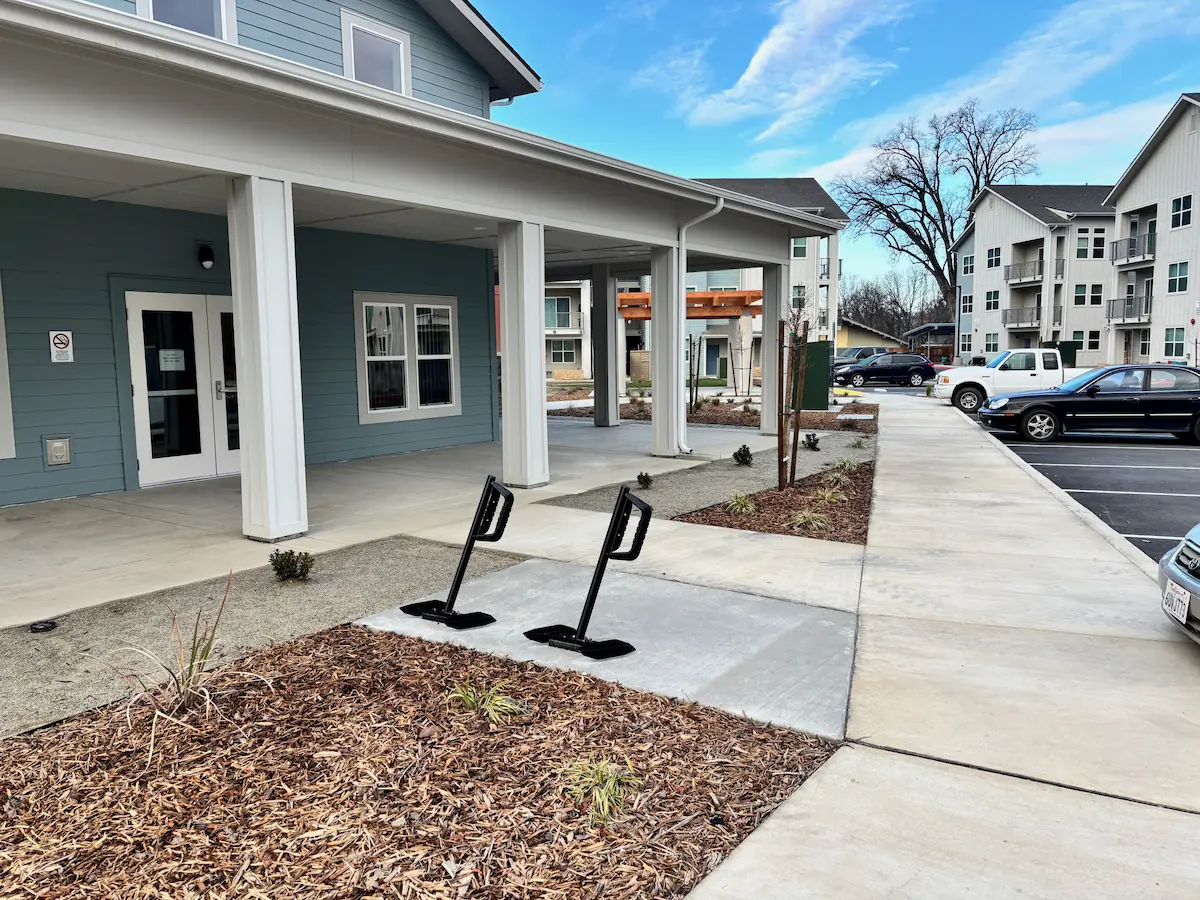
Supported by $3.6 million from NPLH, Rancho Colus brings 49 much-needed affordable homes for working families to Colusa County. A project of the Regional Housing Authority and the John Stewart Company, the complex includes indoor and outdoor community spaces and on-site supportive services.
Archways
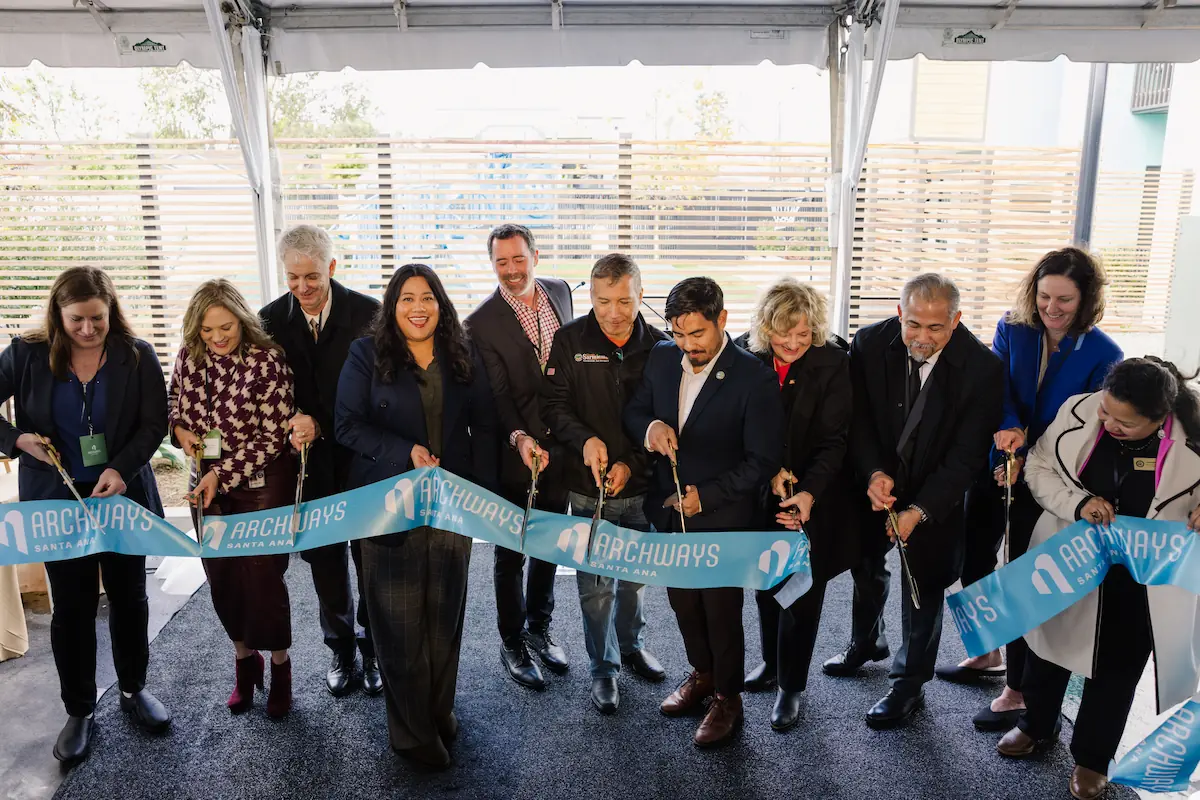
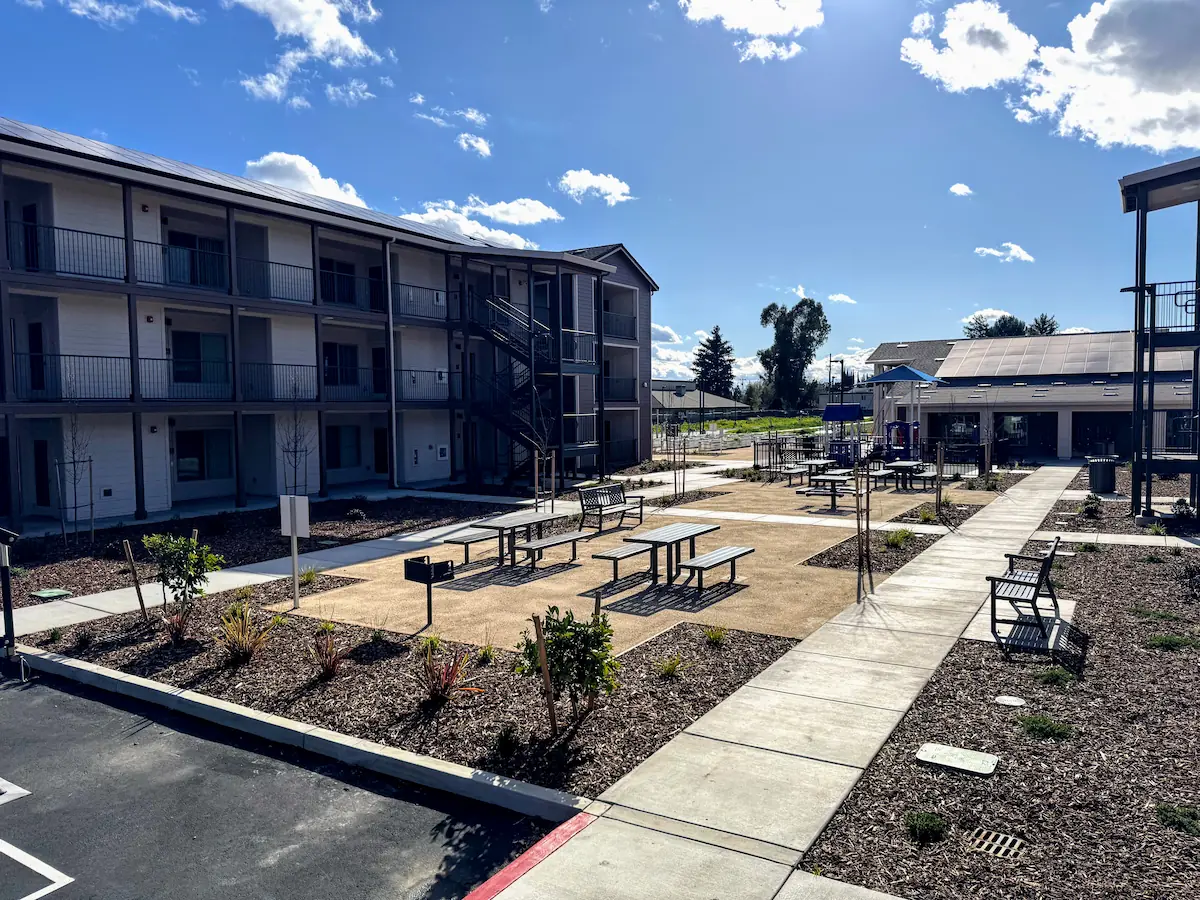
Located in the Prohousing City of Santa Ana, Archways provides 85 new affordable homes for low-income individuals and families, including 23 permanent supportive homes for people exiting chronic homelessness and ten homes reserved for vulnerable transitional age youth. A project of Community Development Partners, the 100-percent affordable housing community was made possible by more than $7.3 million in NPLH funds. On-site amenities include a laundry room, community room, community kitchen, computer room, picnic area, and playground. The community is located near public transit, schools, jobs, and essential services.
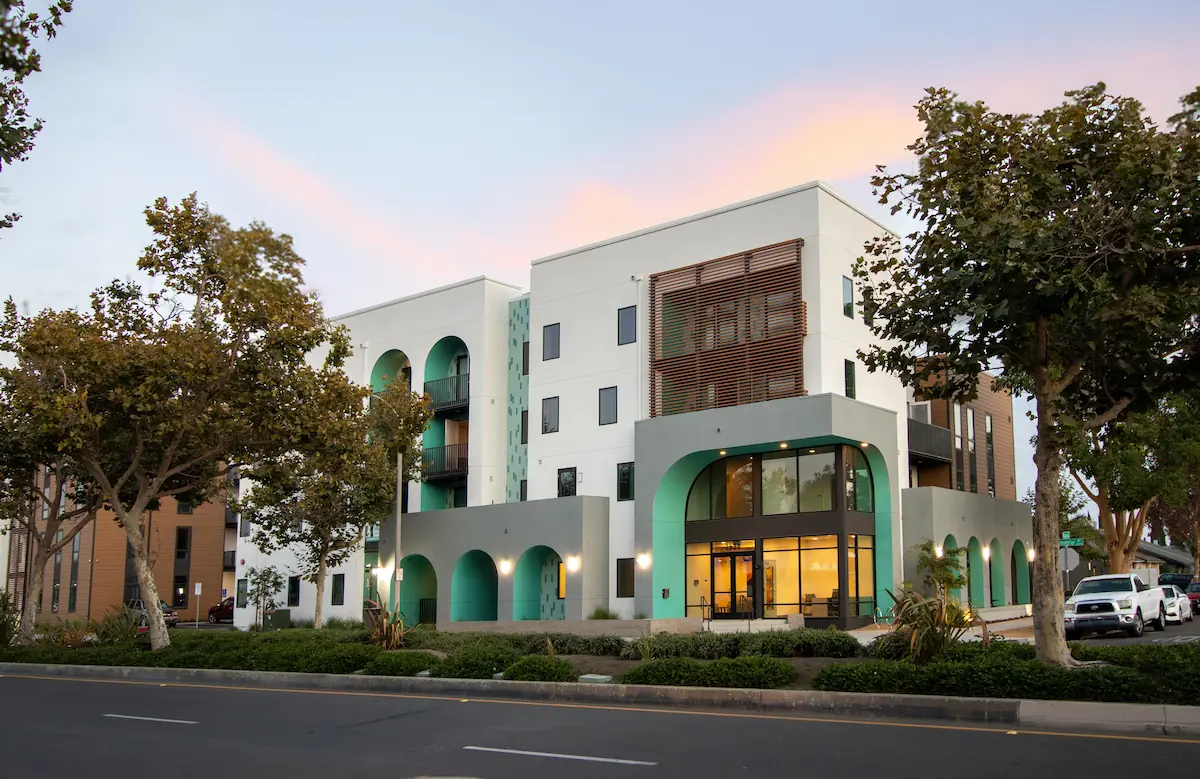
Villa St. Joseph
Supported by more than $5.6 million from NPLH, this adaptive reuse project provides 50 homes for seniors exiting or at risk of homelessness. A project of Mercy Housing, Villa St. Joseph is located on the site of a former convent next to the St. Joseph Medical Center in the City of Orange. Residents have access to on-site community spaces and supportive services.
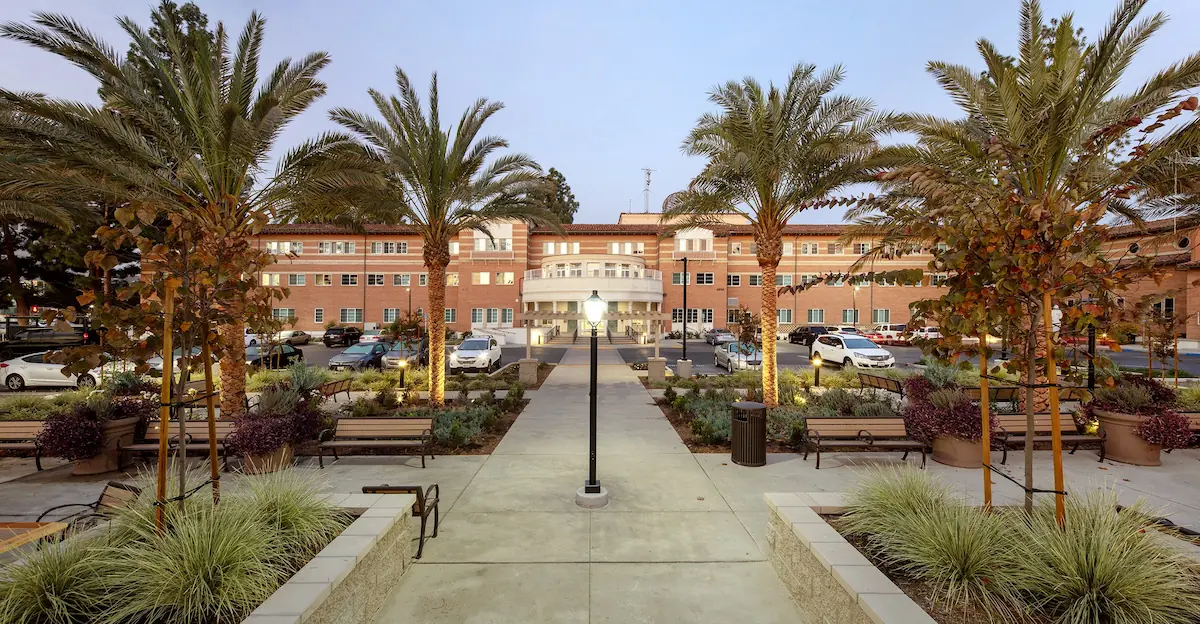
Verana Hill Family Homes
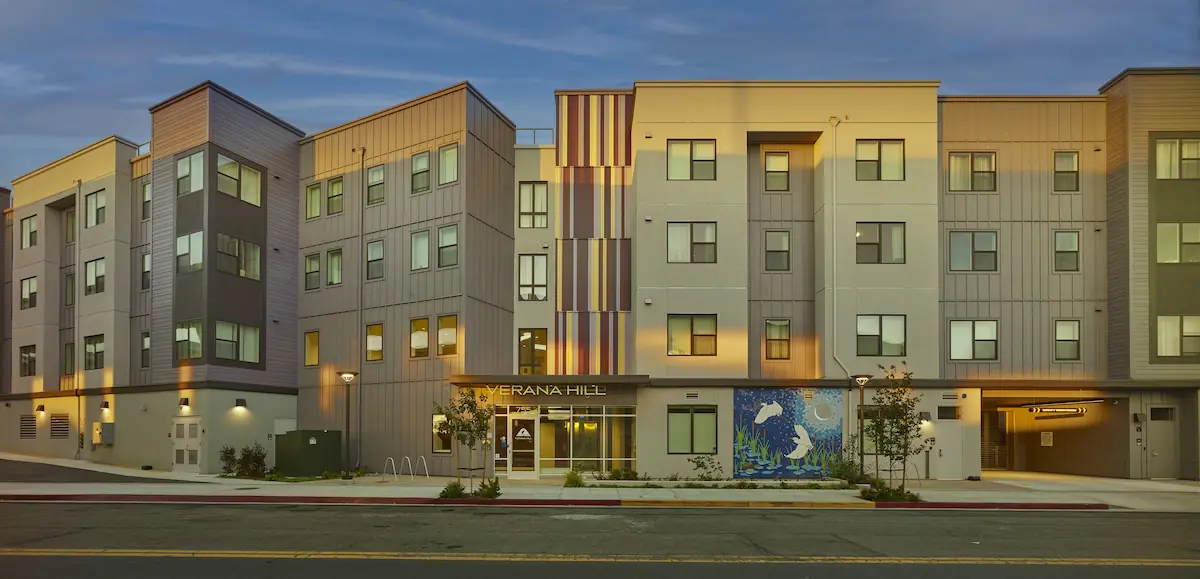
Built on an underutilized, vacant lot in Albany, Verana Hill Family Homes brings 62 new homes for low-income seniors and families to Alameda County. Built by SAHA Homes and supported by more than $9.4 million in NPLH funds, the complex provides residents with on-site indoor and outdoor community spaces and is located near transit, schools, jobs, and essential services.\