September 2024

McFarland Celebrates New Affordable Housing

Off
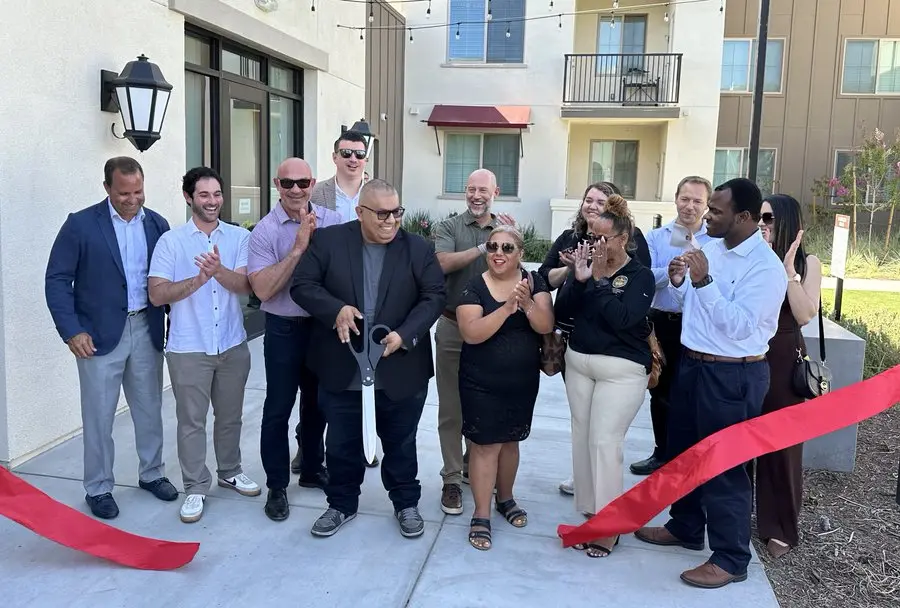
Sherwood Family Apartments ribbon-cutting ceremony

The Kern County community of McFarland recently celebrated the grand opening of new affordable housing! Sherwood Family Apartments provides 80 affordable homes to low- and extremely low-income families. 

This new apartment community was made possible by more than $16 million from the Affordable Housing and Sustainable Communities Program, which is jointly administered by HCD and the California Strategic Growth Council. The complex was built on vacant infill land surrounded by residential properties and businesses.

A net-zero energy project of Milestone Housing, Sherwood Apartments has onsite services and amenities including a 5,000-square foot community garden, tech room, and clubhouse and is near schools, parks, jobs, and public transit. 

The project includes substantial transportation upgrades including bike lanes, pedestrian pathways, lighting, bike storage, sidewalks, and a CalVans carpool service program. Residents will also have the opportunity to participate in on-site workforce development courses operated by Fresno State University and the City of McFarland.

  • Affordable Housing
  • Success Stories
  • September 23, 2024
    Off
    Article

    Governor Newsom Signs Housing Package and Releases Homekey+ Program Summary

    Off
    Newsroom Default Image

    California Governor Gavin Newsom signed a bipartisan housing package and released the program summary of Homekey+ to house and support veterans and other Californians experiencing behavioral health challenges.

    Read more: Governor Newsom signs bipartisan housing package and launches Prop 1 Homekey+ initiative

    September 20, 2024
    On
    Video

    Governor Newsom signs bipartisan housing package and launches Prop 1 Homekey+ initiative (Video)

    Off
    Governor Gavin Newsom surrounded by dignitaries signing legislative housing bills.

    WHAT YOU NEED TO KNOW: Governor Newsom signed into law a comprehensive bipartisan housing package to build on California’s long-term strategy to help address homelessness and housing scarcity. The Governor also announced the release of guidance on up to $2.2 billion in funding for Homekey+ permanent supportive housing — with half reserved for veterans — to be made available ahead of schedule through Proposition 1.

    SAN FRANCISCO — Governor Gavin Newsom today signed a new bipartisan legislative package to strengthen California’s laws addressing the housing and homelessness crisis. The laws represent a comprehensive effort to streamline housing production, and hold localities accountable to state housing law.

    Governor Newsom also announced the release of new program guidance for up to $2.2 billion in funding through Proposition 1 to build permanent supportive housing for veterans and other individuals with mental health and/or substance use disorder challenges who are at risk for or experiencing homelessness. The program, known as Homekey+, will extend the successful Homekey model by emphasizing the acquisition and rehabilitation of existing buildings or other project types that can be quickly converted or constructed into permanent affordable housing. Applications will open in November and funding will be continuously distributed beginning in May 2025. Detailed information and a fact sheet can be found HERE.

    "No more excuses. California is taking action to fix the decades-long homelessness, housing, and mental health crises. These new laws — paired with the state's unprecedented resources — will deliver more housing, get people off the streets, and provide life-changing support that will benefit all Californians," said Governor Newsom.

    The legislation will add to California’s ongoing efforts to address the decades-long housing and homelessness crisis and create foundational changes that will build strong communities now and in the future.

    What these new laws do: 

    • Mandate that locals plan for housing for extremely vulnerable residents, including people experiencing homelessness and other acutely and extremely low-income individuals.
    • Increase accountability for local governments by creating stricter timelines and more robust requirements for local governments to report on housing progress and provide clear notice to the public.
    • Strengthen enforcement and penalties by imposing monetary penalties on cities and counties that fail to adopt housing element revisions or approve housing developments and ensuring effective consequences for those who fail to comply with state housing law.
    • Streamline housing production by reducing regulatory barriers, promoting housing near transit, and providing incentives for senior housing, student housing, and accessory dwelling units.

    What the Prop 1 funding for new Homekey+ housing does:

    • Creates more than 4,000 new permanent housing units, paired with services, for people with mental health and housing challenges
    • Dedicates housing for veterans with half of the units reserved for veterans with behavioral health needs
    • Builds new housing faster by leveraging the proven Homekey conversion model

     Why this matters

    California continues to address a decades-long homelessness and housing affordability crisis. According to the most recent verified data, in 2023 roughly 181,000 Californians experienced homelessness, with approximately 90,000 people in unsheltered conditions. Although there are many reasons why someone may lose access to housing, the lack of available affordable homes in California is a key driver. Most people who enter homelessness are rent-burdened and cite economic hardship such as increased rent or housing costs. Adding to the inventory of available housing is an essential part of the state’s strategy to address this challenge. 

    Lack of affordable housing, quality mental health and addiction services, and homelessness are all part of the same problem — and much of the responsibility to address these problems directly falls on local jurisdictions. New accountability and more enforcement are needed to ensure taxpayer dollars are spent effectively.

     Laying a strong foundation to create housing for all

    Since taking office, Governor Newsom, in partnership with the Legislature, has invested over $40 billion to boost affordable housing and more than $27 billion to address homelessness and elevated the urgency of solving the housing and homelessness crisis. Governor Newsom has advanced significant laws and made structural policy changes that will create lasting and long-term positive impacts to provide Californians with housing access. 

    These policy changes require cooperation from local jurisdictions to create enough housing units for every California resident. The Governor has enacted dozens of CEQA reforms into law and championed the creation of the Housing Accountability Unit at the California Department of Housing and Community Development to ensure cities and counties fulfill their legal responsibilities to plan and permit their fair share of housing. The unit has “unlocked” more than 7,500 housing units for California families by working with local jurisdictions or by taking actions to enforce. This focus on accountability has, in part, led to a 15-year high in housing starts in California.

    Today’s announcement also follows Governor Newsom’s recent executive order that, among other things, urges local governments to use the unprecedented state funding to address unsanitary and dangerous encampments within their communities and provide people experiencing homelessness in the encampments with the care and supportive services they need.

    California’s mental health transformation

    California is modernizing the behavioral health delivery system to improve accountability, increase transparency, and expand the capacity of behavioral health care facilities for Californians. Proposition 1, which was passed by voters in May 2024, includes two parts: a $6.4 billion Behavioral Health Bond for treatment settings and housing with services, and historic reform of the Behavioral Health Services Act (BHSA) to focus on people with the most serious illnesses, substance disorders, and housing needs. More information about California’s transformation of our entire mental health and substance use disorder system can be found at mentalhealth.ca.gov

    Governor Newsom signed the full list of housing bills below:

    Preventing and Ending Homelessness

    • AB 3093 by Assemblymember Chris Ward — Land use: housing element
    • AB 799 by Assemblymember Luz Rivas — Interagency Council on Homelessness: funding: state programs
    • SB 7 by Senator Catherine Blakespear — Regional housing need: determination
    • SB 1395 by Senator Josh Becker — Shelter crisis: Low Barrier Navigation Center: use by right: building standards 

    Accountability 

    • AB 1886 by Assemblymember David Alvarez — Housing Element Law: substantial compliance: Housing Accountability Act
    • AB 1893 by Assemblymember Buffy Wicks — Housing Accountability Act: housing disapprovals: required local findings
    • AB 2023 by Assemblymember Sharon Quirk-Silva — Housing Element: Inventory of Land: Substantial Compliance: Rebuttable Presumptions
    • SB 1037 by Senator Scott Wiener — Planning and zoning: housing element: enforcement
    • AB 1413 by Assemblymember Phil Ting — Housing Accountability Act: disapprovals: California Environmental Quality Act
    • AB 2667 by Assemblymember Miguel Santiago — Affirmatively furthering fair housing: housing element: reporting
    • SB 393 by Senator Steven M. Glazer — Civil actions: housing development projects
    • SB 450 by Senator Toni Atkins — Housing development: approvals 

    Housing Streamlining and Production 

    • AB 2243 by Assemblymember Buffy Wicks — Housing development projects: objective standards: affordability and site criteria
    • AB 2488 by Assemblymember Phil Ting – Downtown revitalization and economic recovery financing districts: City and County of San Francisco
    • AB 2199 by Assemblymember Marc Berman — California Environmental Quality Act: exemption: residential or mixed-use housing projects
    • AB 2694 by Assemblymember Christopher M. Ward — Density Bonus Law: residential care facilities for the elderly
    • SB 312 by Senator Scott Wiener— California Environmental Quality Act: university housing development projects: exemption
    • SB 1123 by Senator Anna Caballero — Planning and zoning: subdivisions: ministerial review
    • SB 1211 by Senator Nancy Skinner — Land use: accessory dwelling units: ministerial approval 

    Transparency and Efficiency 

    • AB 1053 by Assemblymember Jesse Gabriel — Housing programs: multifamily housing programs: expenditure of loan proceeds
    • AB 2117 by Assemblymember Jim Patterson —-Development permit expirations: actions or proceedings.
    • AB 2430 by Assemblymember David Alvarez — Planning and zoning: density bonuses: monitoring fees
    • AB 2553 by Assemblymember Laura Friedman - Housing development: major transit stops: vehicular traffic impact fees
    • AB 2663 by Assemblymember Timothy S. Grayson — Inclusionary housing: fees: reports
    • AB 2926 by Assemblymember Ash Kalra – Planning and zoning: assisted housing developments: Notice of expiration of affordability restrictions
    • SB 937 by Senator Scott Wiener – Development projects: fees and charges 

    Housing Protections 

    • AB 2801 by Assemblymember Laura Friedman — Tenancy: security deposits
    • AB 2747 by Assemblymember Matt Haney – Tenancy: credit reporting
    • SB 611 By Senator Caroline Menjivar — Residential rental properties: fees and security
    • SB 900 by Senator Tom Umberg — Common interest developments: repair and maintenance 

    Tribal Housing 

    • AB 1878 by Assemblymember Eduardo Garcia — Housing programs: tribal housing program
    • SB 1187 by Senator pro tem Mike McGuire — Housing programs: Tribal Housing Reconstitution and Resiliency Act
  • Press Release
  • September 19, 2024
    More housing. More accountability. More transparency.

    Off
    Article

    Governor Newsom’s housing and homeless accountability unit unlocks 7,500+ new housing units

    Off
    Graphic of justice scales, HCD logo, and text accountability

    What you need to know: Since 2022, Governor Newsom’s Housing Accountability Unit has “unlocked” more than 7,500 housing units for California families, meaning the unit has ensured these new homes are approved for development by working with local jurisdictions or by taking actions to enforce California law. This summer, Governor Newsom expanded the unit’s oversight to also include monitoring cities' and counties’ efforts to address homelessness. The unit announced its first action this week with a Notice of Violation against the city of Norwalk.

     SACRAMENTO — Governor Gavin Newsom’s Housing Accountability Unit has taken strong action against cities and counties that fail to build more housing, unlocking more than 7,500 housing units for California. Earlier this year, Governor Newsom expanded the responsibility of the unit to hold cities and counties accountable when they fail to adequately address homelessness. Earlier this week, the Housing Accountability Unit announced its first action on homelessness after issuing a notice of violation to the city of Norwalk for its unlawful moratorium on building homeless shelters or supportive housing.

    “There is no community in our state that is exempt from doing its part to address homelessness and create new housing. Whether by helping communities understand housing law or by countering NIMBY attacks, we will continue pressing forward to hold localities accountable for building their fair share of housing and helping individuals experiencing homelessness. We all have a role to play to ensure every Californian has a place to call home," said Governor Newsom.

    Governor Newsom launched the Housing Accountability Unit in 2021 to assist cities and counties in fulfilling their legal responsibilities to plan for and permit their fair share of housing and to hold accountable those who fail to do so. In 2024 the Unit was expanded to include a focus on homelessness issues – including compliance with state laws as they relate to homeless housing — doubling down on an aggressive strategy to help build more homes and get people into housing.

    “Whether housed or unhoused, we are all Californians bound to each other as we create a California for All,” said Secretary of the Business, Consumer Services and Housing Agency Tomiquia Moss. Thanks to the collective action of cities and counties across the state, last year California housed over 73,000 Californians experiencing homelessness – including seniors, young adults, families with young children, veterans. We need the commitment and accountability of everyone if we are to continue to make progress. It is time for all cities to say yes to essential shelter and housing and diligently uplift residents by providing the services they need to be sheltered and housed in community.”

    This focus on accountability has, in part, led to a 15-year high in housing starts in California. Since its establishment, the Housing Accountability Unit has supported the development of 7,513 housing units, including 2,765 affordable units [mclist.us7.list-manage.com], through enforcement actions and by working with local jurisdictions to ensure compliance with housing law.

    The unit has taken 540 accountability actions to date, including filing four lawsuits.

    “Our Housing Accountability Unit’s priority is to ensure the law is being followed and we are protecting the right of people to have a home,” said Department Housing and Community Development (HCD) Director Gustavo Velazquez. “We’ll continue to work in partnership and assist local jurisdictions that understand this. For those that do not, and try to circumvent the law with total disregard to the detrimental impact on their communities HCD will not hesitate to use all tools at our disposal, including taking them to court, to ensure housing is being built for Californians at all income levels. With the Governor’s expansion of our responsibilities and focus, we’ll redouble our efforts to ensure accountability.”

    Addressing the homelessness crisis 

    • This week, the Housing Accountability Unit issued a Notice of Violation to the city of Norwalk for passing an ordinance banning the development of new homeless shelters – only weeks after Governor Newsom called on localities to utilize access to unprecedented funding to get people off the street and into shelter. This Notice of Violation warns Norwalk that should it not reverse course, California’s Department Housing and Community Development (HCD) may take further action, including referring the matter to the Attorney General’s office for litigation.

    Ensuring communities plan for their housing needs 

    • In 2023, the Governor’s Office and California Attorney General filed suit against Huntington Beach for failing to plan for its fair share of housing in violation of California’s Housing Element Law. The Governor and Attorney General recently announced the successful outcome of this case, with the San Diego Superior Court ruling that Huntington Beach must plan for additional housing units.
    • Last fall, the state reached a settlement with the wealthy beachside city of Coronado, which resisted its obligation to meet its legally required Regional Housing Needs Allocation. Coronado recently adopted a compliant housing element, and as a result, the city has planned for 912 new housing units.
    • Under threat of litigation by the state, the city of San Bernardino agreed to update its housing plan to meet state-mandated goals, as well as amended its local density bonus to conform with state law. San Bernardino recently adopted a compliant housing element.
    • The state also secured settlements with the cities of Malibu and Fullerton, which have agreed to update their housing elements by this fall.

    Saving housing projects from NIMBY attacks

    • When the city of Elk Grove attempted to block a supportive housing project despite approving a market-rate housing project in the same area, the Housing Accountability Unit stepped in — not only helping the developer to secure approval for the project in a higher-resource area, but also securing an agreement with the city to identify and rezone a new site for additional affordable housing development.
    • California secured a win in the trial court against Anaheim when it violated multiple state housing laws in denying Grandma’s House of Hope, a well-established local nonprofit, a permit for a transitional housing project for women with health disabilities who had recently experienced homelessness.
    • Earlier this year, La Cañada Flintridge – an affluent Southern California city of 20,000 residents – attempted to block a “Builder’s Remedy” project that would create 80 mixed-income housing units. Thanks to the state’s actions, the trial court ordered the city to reverse its denial of the project.

    Transforming unused land to much-needed housing 

    • In July 2024, HCD secured a settlement agreement with Moreno Valley to resolve allegations that the city violated the Surplus Land Act. Through the settlement, the city has committed that at least 100 of the homes built on the property will be affordable. The city will also pay a statutory penalty.

    Visit HCD's website for more information on the Housing Accountability Unit.

  • Accountability
  • Press Release
  • September 18, 2024
    Off
    Article

    Governor Newsom warns Norwalk to reverse its unlawful ban on new homeless shelters and supportive housing

    Off
    Graphic of justice scales, HCD logo, and text accountability

    WHAT YOU NEED TO KNOW: The Department of Housing and Community Development today sent a Notice of Violation to the city of Norwalk for the city’s unlawful ban on the development of new homeless shelters and other housing sites. Governor Newsom cites the city’s move as “counterproductive” and “immoral” as the state continues to address the decades-long homelessness crisis.

    SACRAMENTO- In response to the city of Norwalk’s recently adopted ordinance banning the establishment of new homeless shelters and other housing, the California Department of Housing and Community Development (HCD) issued the city a Notice of Violation (PDF). The notice warns the city of impending legal action should the city’s decision not be reversed. 

    “It is unfathomable that as our state grapples with a homelessness crisis, Norwalk would pass an ordinance banning the building of homeless shelters. It is counter-productive and immoral for any community to throw up their hands and say they’ve done enough while they still have people in need. We can’t leave people in dangerous and unsanitary encampments — the city of Norwalk needs to do its part to provide people with shelter and services.” Governor Gavin Newsom.

    The state sent Norwalk the notice after the city council on August 6 adopted a 45-day urgency ordinance imposing a moratorium on emergency shelters, single-room occupancy housing, supportive housing, and transitional housing. On September 17, the council will consider whether to extend that ordinance another 10 months and 15 days. The moratorium violates several state planning and fair housing laws, including the Housing Crisis Act, the Anti-Discrimination in Land Use Law, Affirmatively Furthering Fair Housing, and Housing Element Law.

    In addition, Norwalk has failed to meet its housing goals as required by state law. The city has only issued permits for 175 units during this housing element cycle, a mere 3.5% of its 5,034 assigned Regional Housing Needs Allocation (RHNA), or the number of units required to ensure that communities have enough housing.

    “The City of Norwalk’s disingenuous moratorium equates badly needed homes for people struggling the most with liquor stores and payday loans,” said HCD Director Gustavo Velasquez. “In doing so, they are harming their own community and blatantly violating a myriad of state housing laws. The only option is to repeal the moratorium and move past this regrettable episode.”

    The Notice of Violation warns that if Norwalk does not repeal the ordinance, HCD may refer the matter to the Attorney General’s Office for litigation and may revoke housing element compliance. HCD found the housing element in compliance in November 2023. Norwalk has until September 23 to respond.

    “At a time when many Californians are struggling to keep a roof over their heads or lack housing altogether, banning new emergency shelters and new supportive housing not just defies common sense — it is unlawful,” said Attorney General Rob Bonta. “Norwalk’s residents — indeed all Californians — should be outraged. If necessary, my office stands ready to take legal action against Norwalk.” 

    Norwalk issued the ordinance only weeks after Governor Newsom issued an executive order that, among other things, urges local governments to use the unprecedented funding provided by the state to address unsanitary and dangerous encampments within their communities and provide people experiencing homelessness in the encampments with the care, housing, and supportive services they need. Since 2019, HCD has awarded Norwalk nearly $29 million in housing and homelessness funds.

    The notice was issued by HCD’s Housing Accountability Unit, which was launched by Governor Newsom in 2021 to assist cities and counties in fulfilling their legal responsibilities to plan for and permit their fair share of housing, and to hold accountable those that fail to do so. This focus on accountability has in part led to a 15-year high in housing starts in California. Since its establishment, the Housing Accountability Unit has supported the development of more than 7,400 housing units, including more than 2,700 affordable units, through enforcement actions and by working with local jurisdictions to ensure compliance with housing law. In 2024 the Unit was expanded to include a focus on homelessness issues - including compliance with state laws as they relate to homeless housing.

    View the notice of violation (PDF).

  • Accountability
  • Press Release
  • September 16, 2024
    Off
    Article

    CDBG – Supporting Community Safety, Housing and Wellness

    Off
    Marysville firefighter

    A new fire engine and a homeless shelter are just two investments made possible with the Community Development Block Grant Program.

    For fifty years, CDBG has benefited communities by providing funding for infrastructure, housing, healthcare, safety, and more. With funding from the U.S. Department of Housing and Urban Development, CDBG has helped communities such as the City of Marysville purchase modern fire safety equipment to protect their residents, and the County of San Benito provide shelter and wrap-around services for their most vulnerable.

    Watch the video to learn more about the CDBG program and hear from the communities it serves.

  • Success Stories
  • September 16, 2024
    Off
    Video

    CDBG – Helping California’s King City Thrive

    Off
    children playing in a circle with their hands up

    King City is a small, disadvantaged community in Monterey County. With funding from HCD’s Community Development Block Grant program, King City was able to invest in their community, helping them improve infrastructure and safety and support their younger generation.

    For fifty years, CDBG, with funding from the U.S. Department of Housing and Urban Development, has helped communities throughout the nation thrive. 

    Watch the video below to hear from the community and learn more about two important CDBG projects in King City – the development of accessible sidewalks and a youth center program which has helped lower crime in the community.

  • Success Stories
  • September 12, 2024
    On
    Video

    CDBG – 50 Years of Helping Communities Thrive

    Off
    photo of Albert, a resident of a CDBG-funded project in San Benito County

    Since 1974, the Community Development Block Grant program has benefited communities throughout the nation. Through important investments to support infrastructure, housing, healthcare, safety, economic development, public services and more, CDBG has helped communities grow and thrive.

    With funding from the U.S. Department of Housing and Urban Development, HCD has awarded more than $1.3 billion dollars through CDBG, improving the lives of more than 350,000 Californians.

    Watch the video to learn more about the CDBG program and the impact it has on the community.

  • Success Stories
  • September 9, 2024
    On
    Video

    Affordable Housing for Veterans and Families Exiting Homelessness Breaks Ground in San Francisco

    Off
    Rendering of 2250 Irving. Courtesy of Pyatok Architects

    The City and County of San Francisco has broken ground on a new affordable housing development, moving the needle on the goal to break ground on almost 3,000 units this year. 2550 Irving Street will be a 100-percent affordable housing development in San Francisco’s Sunset neighborhood, providing 90 new affordable homes for households earning up to 75 percent of Area Median Income. Thirty-seven of those units are designated for formerly homeless families and veterans. 

    This new development, a Tenderloin Neighborhood Development Corporation project, was made possible by funding from both the Mayor’s Office of Housing and Community Development and HCD’s Multi-Family Housing Program (MHP). The project also received an Infill Infrastructure Grant, bringing HCD’s contribution to more than $36 million.

    “Projects like 2550 Irving meet HCD’s goals of helping families remain—and thrive—in high-resource neighborhoods while reducing emissions by connecting residents to jobs and opportunity through proximity to transit,” said HCD Director Gustavo Velasquez. “With so many units dedicated to our deserving veterans and to families who had faced homelessness in the Sunset District, this development with its communal outdoor spaces will provide a true sense of home and community for residents.”

    2550 Irving Street will include 2,250 square feet of ground floor community-focused space, supporting neighborhood activities and providing office space for exclusive use by the Sunset Chinese Cultural District. The site is one block from Golden Gate Park and close to libraries, schools, transit opportunities, and the Veterans Administration hospital.

  • Affordable Housing
  • Success Stories
  • September 6, 2024
    Off
    Article

    Governor Newsom and Attorney General Bonta announce settlement resolving Elk Grove’s unlawful denial of housing project

    Off
    Graphic of justice scales and text accountability

    WHAT YOU NEED TO KNOW: California has held Elk Grove accountable for the city’s denial of a supportive housing project in violation of state law. Today Elk Grove has agreed to a settlement with the state requiring the city to undergo additional state monitoring, identify and rezone a new site for affordable housing development in a high-resource area, and pay the state’s attorneys’ fees

    SACRAMENTO - California Governor Gavin Newsom, Attorney General Rob Bonta, and California Department of Housing and Community Development (HCD) Director Gustavo Velasquez today announced a settlement with the City of Elk Grove resolving California’s lawsuit against the city for the city’s unlawful denial of a proposed supportive housing project for lower-income households at risk of homelessness.

    “We can’t solve California’s homelessness crisis without creating new housing and supportive services. Elk Grove is not immune to this challenge, and the city's decision to block these efforts — wasting valuable time and resources — is especially shameful. We expect Elk Grove to follow the law — continued refusal will not be tolerated," said Governor Gavin Newsom.

    The state filed the lawsuit after the city of Elk Grove, facing NIMBY pressure, denied the 67-unit supportive housing project on the basis that it did not meet the city’s zoning standards, despite the fact that the city had recently approved a similar project for market-rate housing. The project would have been located in Elk Grove’s historic district, a high-resource area critical to the state’s goal of providing communities of opportunity for people of all incomes. The project would have — provided off-site and on-site services to assist residents in maintaining housing and maximizing their ability to live and work in the community.

    On May 1, 2023, California sued the city for violations of state laws, including Senate Bill 35 (SB 35), the Housing Accountability Act (HAA), and fair housing laws intended to prohibit discriminatory land use practices, including the Nondiscrimination in Land Use Law and the Affirmatively Furthering Fair Housing statute (AFFH).

    Although the city ultimately reached a separate settlement agreement with the development to move the project to another part of Elk Grove, the city’s basis for denying the project remains unlawful, created unnecessary delays for its community members seeking supportive housing, and resulted in the more than year-long legal battle that could have been avoided, had Elk Grove done the right thing and approved the project in accordance with state law.

    As part of today’s settlement with the state, Elk Grove agrees to be subject to reporting requirements to monitor its future compliance with state housing law, identify an additional site for low-income housing development, and pay the State $150,000 in attorneys’ fees and other costs.

    “This settlement reflects what I’ve said all along: California’s housing laws are not optional. Local governments that violate our laws to deny affordable housing opportunities to Californians will be held accountable,” said Attorney General Rob Bonta. “While I am pleased that this is now behind us, and that Elk Grove ultimately approved even more homes for those most in need, the city’s refusal to do the right thing over and over again cannot be swept under the rug. These are not ordinary times. Millions of Californians are struggling to keep a roof over their heads or lack housing altogether. Every local government therefore has both a legal and moral responsibility to help us meet the moment. If other cities believe they are exempt from that task, Governor Newsom, HCD Director Velasquez, and I will continue reminding those cities that they are in the wrong.”

    “California needs a broad spectrum of housing solutions to address decades of inaction and underinvestment. This agreement reaffirms the importance of working together – at all levels of government and community – to provide affordable and dignified housing options that Californians deserve,” said Business, Consumer Services, and Housing Agency (BCSH) Secretary Tomiquia Moss. “I am proud of HCD’s Housing Accountability Unit’s commitment to working in partnership with local jurisdictions to achieve results that impact the lives of so many Californians.”

    “This is a victory in the state’s efforts to expand the availability of much-needed supportive housing, consistent with California’s strong legacy upholding fair housing rights for people with disabilities and for those experiencing or at risk of homelessness,” said Gustavo Velasquez, Director of HCD. “We are resolute to see that every community in our state affirmatively furthers fair housing and expands integrative communities of opportunities. Our team will work with the City of Elk Grove to ensure this settlement is the first step in a lasting commitment to housing residents in need.”

    Prior to the filing of the lawsuit, HCD issued a Notice of Violation on October 12, 2022, warning the city that its denial of the Oak Rose Apartments violated state law, and Attorney General Bonta sent a letter on March 16, 2023, urging the city to reconsider its unlawful denial of the Oak Rose Apartments or face the legal consequences. A copy of the settlement agreement can be found here.

  • Accountability
  • September 4, 2024
    Off
    Article
    Top