
October 2024

California launches new program to improve public safety by reducing homelessness and recidivism

Off
Sacramento, CA
HCD, in partnership with CDCR, aims to combat homelessness and recidivism through a $16 million Reentry Housing Pilot Project.

Governor Newsom today launched a first-of-its-kind program to improve public safety — with new federally funded investments to create long-term supportive housing and comprehensive wrap-around services for individuals exiting incarceration. The funding opportunity is collaboratively administered by the California Department of Housing and Community Development (HCD) and the California Department of Corrections Rehabilitation (CDCR). The agencies are now accepting proposals for efforts aimed at reducing the risk of homelessness and recidivism for people who were formerly incarcerated and are reentering society, for the mutual benefit and safety of the individuals being housed and the communities to which they return.

“Ensuring that those exiting our prison system have the resources and housing they need makes us all safer,” said Governor Gavin Newsom. “We are grateful for this federal funding to help us reduce homelessness and support those looking for a clean start.”

Formerly incarcerated individuals are nearly 10 times more likely than the general public to experience homelessness. However, formerly incarcerated individuals are often excluded from participating in public and affordable housing programs. Studies also indicate reductions in recidivism may occur when formerly incarcerated individuals can secure housing.

In a concerted effort to lower barriers to housing for people exiting correctional institutions or programs in California, HCD and CDCR will partner to implement the federally funded HOME American Rescue Plan (HOME-ARP) Reentry Housing Pilot Project (RHPP), backed with $16 million from the U.S. Department of Housing and Urban Development. The aim is to lower the rate of homelessness among formerly incarcerated and justice-involved populations, while increasing success in securing employment, furthering education, and helping establish links to health care—all of which lower rates of recidivism.

“Too often, people leaving prison face a life sentence of housing instability,” said HCD Director Gustavo Velasquez. “Our communities and society are all better for it when we choose to lay the foundation for successful reentry, and housing is the first most critical cornerstone for a more hopeful future.”

“CDCR knows firsthand how homelessness impacts California communities and is committed to enhancing public safety and promoting successful community reintegration,” said CDCR Secretary Jeff Macomber. “Housing stability is an important aspect to successful reentry, and this groundbreaking effort in partnership with HCD will provide a valuable opportunity to address these challenges.”

CDCR offers numerous wraparound resources to facilitate successful community reintegration. Research shows that education and employment opportunities for formerly incarcerated individuals have a positive impact on recidivism rates and help them avoid reoffending. Resources for housing, substance use disorder, and other needs such as life skills, jobs, and education are all important in attaining long-term sustainable change.

Building on those efforts, the Governor is directing HCD and CDCR to work together to add a final step for reentry services, which will provide permanent supportive housing linked to comprehensive, evidence-based programs and services that support successful outcomes and long-term stability.

“The Reentry Housing Pilot Project will provide safe and stable homes, along with permanent supportive services to people exiting the justice system,” said Business, Consumer Services and Housing Agency Secretary Tomiquia Moss. “Stable housing is a crucial foundation for everyone, including those who were formerly incarcerated. The pilot program will enable them to secure employment, receive necessary health care and reunite with their families. These opportunities and tools serve to benefit both individuals and our communities so we can all succeed.”

Successful applicants for HOME-ARP-RHPP funding must have extensive experience in developing and operating transitional housing and permanent supportive housing for the reentry population. Funds may be used to acquire, rehabilitate, and/or construct permanent housing for individuals exiting a CDCR institution or program who are placed under CDCR parole supervision.

Applications for this competitive program are being accepted now and must be submitted by 5:00 p.m. PST on December 31, 2024. HCD will hold an RHPP Notice of Funding Availability and Application Webinar. Interested parties may sign up to be notified about this and other HCD-administered federal programs. Pre-application consultations will be available beginning November 4. Native American Entity Applicants are encouraged to participate in an optional pre-application technical assistance meeting to discuss their options, including any potential modifications or waivers.

Initial HOME-ARP Reentry Housing Pilot Project awards are anticipated in early summer of 2025. Read more about the program and eligibility requirements.

More housing. More accountability.

Since taking office, Governor Newsom has invested $40 billion in housing production. The state has also invested more than $27 billion to help communities address homelessness.

Governor Newsom championed the creation of the Housing Accountability Unit at HCD to ensure cities and counties fulfill their legal responsibilities to plan and permit their fair share of housing. This focus on accountability has, in part, led to a 15-year high in housing starts in California. Since its establishment, the Housing Accountability Unit has supported the development of 7,513 housing units, including 2,765 affordable units, through enforcement actions and by working with local jurisdictions to ensure compliance with housing law.

Addressing the homeless crisis

This also follows the Governor’s recent executive order urging local government to quickly address encampments and provide individuals experiencing homelessness with the care, compassion, and support they need. Earlier this month, the Governor announced $130.7 million in new funding for local communities to help people experiencing homelessness in dangerous encampments, paired with robust accountability measures.

California recently announced 37 new grant awards totaling more than $827 million to help more than 100 local communities and organizations create long-term solutions to address homelessness, with strong accountability and transparency measures and clear expectations to ensure that local strategies to address homelessness are measurable and effective.

  • Affordable Housing
  • Homelessness
  • Press Release
  • October 31, 2024
    WHAT YOU NEED TO KNOW: California is announcing a new state program using $16 million in federal funds to help improve public safety and reduce recidivism by creating long-term supportive housing and support for people exiting incarceration.
    Off
    Article

    South Lake Tahoe's Biggest Affordable Housing Complex Opens

    Off
    Newsroom Default Image

    Further utilizing an Executive Order to prioritize developing housing on excess state lands, Governor Gavin Newsom, joined by Tomiquia Moss, Secretary of California’s Business, Consumer Services and Housing agency joined by HCD officials, announced that a new affordable housing project in South Lake Tahoe is opening 68 units to residents. Sugar Pine Village, which will eventually grow into a 248-unit community, transforms what was once vacant state-owned land into affordable housing for families and workers in the Tahoe region.

    October 17, 2024
    On
    Video

    California Gives Locals Tools to Combat Homelessness

    Off
    Newsroom Default Image

    Governor Gavin Newsom announced $827.5 million in regional HCD grants through the Homeless Housing, Assistance and Prevention (HHAP) program to create permanent housing, preserve interim housing, and combat the crisis of unsheltered homelessness decades in the making.

    Governer Newsom awards more than $827 million to help communities address homelessness.

    October 29, 2024
    On
    Video

    Governor Newsom Awards More Than $827 Million to Help Communities Address Homelessness

    Off
    Los Angeles, CA
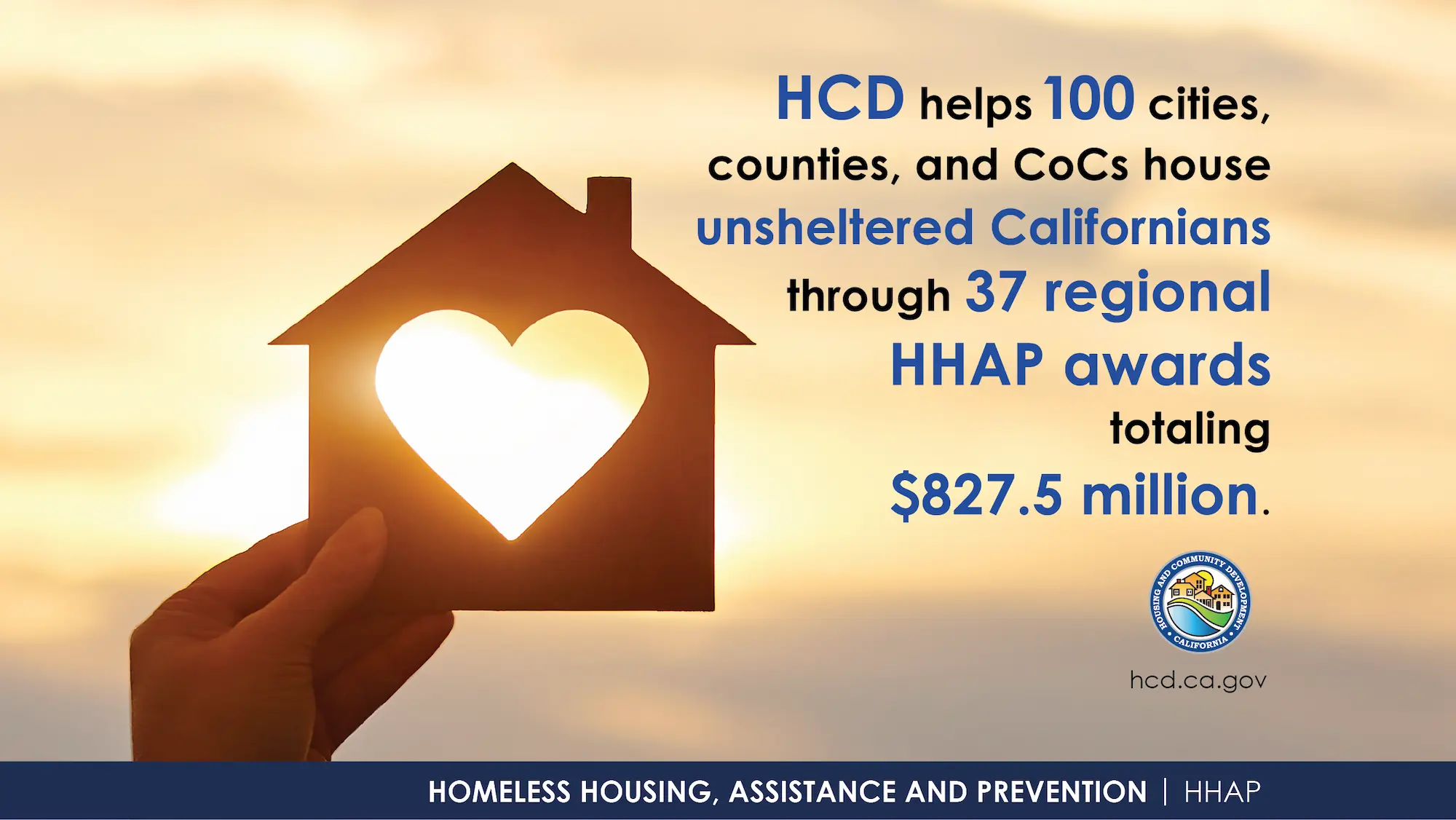
    HCD helps 100 cities, counties, and cocs house unsheltered Californians through 37 regional HHAP awards totaling 827.5 million.

    Expanding California’s unprecedented support for local efforts to create long-term solutions to address homelessness, Governor Gavin Newsom today announced that 37 regional grantees representing 100 local communities and organizations statewide will receive more than $827 million in new state investments to create new housing, shelter and support for those experiencing homelessness. The funding comes with strong accountability measures and reporting requirements to ensure funding is used effectively and outcomes can be tracked and measured.

    “Our unprecedented commitment to end homelessness can only be realized at the local level when everyone does their part to address this crisis on the streets,” said Governor Newsom. We’ve given our local partners the tools and resources they need — it’s time to end this crisis now. These new funds represent the hard work, accountability, and strategic planning needed to address homelessness with real, long-lasting results.”

    Investing in impactful solutions to address homelessness

    California has made unprecedented investments to address the housing and homelessness crises, with $40 billion invested to help communities create more housing and $27 billion provided to communities to help prevent and end homelessness. Today’s new grant awards are part of the state’s Homeless Housing, Assistance and Prevention (HHAP) program, which provides flexible grant funding to help communities support people experiencing homelessness by creating permanent housing, rental and move-in assistance, case management services, rental subsidies, among other eligible uses.

    These HHAP Round 5 awards are the first HHAP awards made since HCD took over administration of the program from the California Interagency Council on Homelessness (Cal ICH) on July 1, 2024. HCD and Cal ICH team members worked collaboratively on the transition since September 2023.

    “Our HCD team is honored to take on this expanded role in identifying and supporting effective regional solutions for Californians struggling with unsheltered homelessness,” said HCD Director Gustavo Velasquez. “Not only will this funding provide additional resources, but with the leadership of the Legislature and the administration, this program also ensures that every dollar spent delivers meaningful outcomes, with a clear focus on reducing homelessness to create lasting change. HCD will continue to apply our strong focus on accountability to maximize this critical investment for our state.”

    Greater accountability

    As a condition of receiving the funding, the awardees must agree to increased accountability, transparency, and compliance measures. These new measures will help enhance the ability for these state investments to drive real, measurable results and will help improve the tracking of data and outcomes. This ensures that grant recipients remain accountable and protects state funding.

    Regional approach

    Grantees were required to work regionally on these applications. Cities, counties, and Continuums of Care were required to explicitly commit to coordinating with one another, clearly stating who was responsible for which parts of their joint regional homeless efforts, as a condition of receiving funding. This will drive coordination and make sure homelessness is solved regionally - not treated as a problem that stops at the city limits.

    Greater transparency

    Grantees will report monthly fiscal progress that will be available live on HCD website through the HHAP fiscal dashboard. Grantees will also upload HHAP program outcomes to the California Homeless Data Integration System on a quarterly basis.

    More support

    This round of HHAP funding embraces an inclusive process — helping California regions to assess and build on their existing capacity to address their unique homelessness challenges, transition homeless individuals and families into affordable permanent housing, and support those individuals and families in maintaining stable permanent housing. The funding requires grantees to commit to addressing racial inequities in homelessness, prioritize permanent housing rather than temporary shelters, and include people with lived experience of homelessness in program design.

    “The HHAP Round 5 grants demonstrate how the state can support and amplify regional strategies and coordination to help our most vulnerable residents move into safe and stable housing,” said Business, Consumer Services and Housing Secretary Tomiquia Moss. “The accountability in this round of funding ensures we are empowering local partners to design local solutions to prevent and end homelessness, and produce measurable results. By working together to address the unique needs in their communities we get that much closer to reducing unsheltered homelessness across the State.”

    HHAP funds build on ongoing state investments and are intended to be paired strategically with other state, local, and federal funds, including other HCD programs like Homekey+.

    Care, compassion, collaboration

    Today’s announcement follows the Governor’s executive order urging local governments to adopt policies and plans consistent with the California Department of Transportation’s (CalTrans) existing encampment policy.

    Prioritizing encampments that pose a threat to the life, health, and safety of the community, CalTrans provides advance notice of clearance and works with local service providers to support those experiencing homelessness at the encampment, and stores personal property collected at the site for at least 60 days. Earlier this month, Governor Newsom also provided local communities with $131 million, as part of the state’s $1 billion of Encampment Resolution Funds to address homelessness, to help local governments address homeless encampments and provide shelter, care, and support.

    As required by the Governor’s executive order, the California Interagency Council on Homelessness today is releasing new guidance to assist local communities in addressing encampments. The guidance provides local communities with best practices for resolving encampments and connecting individuals in encampments with services and housing.

    HHAP funding provided by region

    Local communities and organizations are required to coordinate and apply together through Regionally Coordinated Homelessness Action Plans. The 37 California regions awarded HHAP funds today have approved plans that demonstrated a commitment to the priorities of creating permanent housing solutions and sustaining existing interim housing.

    The $827.5 million in funding will be provided to specified local governments, including cities and counties, as well as Continuums of Care in the following regions:

    • Alameda region — $55.9 million
    • Amador, Calaveras, Mariposa, and Tuolumne regions — $2.06 million
    • Contra Costa region — $6.68 million
    • Del Norte, Lassen, Modoc, Plumas, Shasta, Sierra, and Siskiyou region — $7.1 million
    • Fresno and Madera region — $25.76 million
    • Humboldt region — $4.67 million
    • Imperial region — $3.67 million
    • Inyo and Mono region — $247,950
    • Kern region — $11.17 million
    • Kings and Tulare region — $4.14 million
    • Lake region — $1.3 million
    • Los Angeles region — $380.36 million
    • Marin region — $3.15 million
    • Mendocino region — $1.784 million
    • Merced region — $2.21 million
    • Monterey and San Benito region — $6.23 million
    • Napa region — $1.43 million
    • Placer region — $2 million
    • Riverside region — $21.35 million
    • Sacramento region — $53.2 million
    • San Bernardino region — $11.82 million
    • San Diego region — $58.84 million
    • San Francisco region — $43.46 million
    • San Joaquin region — $14.07 million
    • San Luis Obispo region — $4.32 million
    • San Mateo region — $5.24 million
    • Santa Barbara region — $5.32 million
    • Santa Clara region — $56.77 million
    • Santa Cruz region — $5.08 million
    • Solano region — $3.38 million
    • Sonoma region — $6.38 million
    • Stanislaus region — $5.89 million
    • Tehama region — $856,554
    • Ventura region — $6.88 million
    • Yolo region — $2.08 million
    • Yuba/Sutter region — $1.96 million
    • Yuba region — $751,895
  • Press Release
  • Homelessness
  • Affordable Housing
  • Homekey
  • October 29, 2024
    Pablo Espinoza
    Off
    HCD Media
    Deputy Director of Communications
    Article

    San Francisco Makes Crucial Changes to Housing Policy to Earn Prohousing Designation

    Off
    Sacramento, CA
    Photo of San Francisco housing and skyline.

    One year after being the subject of an unprecedented review of policies and practices impeding housing development, San Francisco has made critical changes to earn the Prohousing Designation, the California Department of Housing and Community Development (HCD) announced today.

    Exactly one year ago today, HCD released the San Francisco Housing Policy and Practice Review (PPR). A first of its kind investigation into a local government’s barriers to housing production, the PPR required San Francisco to implement 18 actions that resolve inconsistencies with state law and accelerate housing production.

    In August, HCD reported on San Francisco’s progress implementing several key reforms as a result of HCD’s ongoing monitoring and technical assistance. Since then, San Francisco has continued to make critical changes, bringing the city up to date on the implementation of the PPR’s required actions. As a result, San Francisco has met all threshold requirements and achieved a qualifying score to receive HCD’s Prohousing Designation.

    “I applaud the City of San Francisco for recognizing the critical importance of supporting communities by accelerating the development of housing for all income levels,” said Business, Consumer Services and Housing Secretary Tomiquia Moss. “By leveraging the tools and technical assistance provided by HCD, San Francisco has shown a commitment to eliminating barriers to build affordable, transit-friendly housing options for all.”

    Increasing availability of housing statewide is critical to improving quality of life for all Californians—and to addressing a crisis of homelessness decades in the making. The Prohousing Designation Program recognizes cities and counties that demonstrate a commitment to policy that breaks down barriers to housing development. By earning the Prohousing Designation, communities receive access to Prohousing Incentive Program grants and additional points in the scoring of competitive housing, community development, and infrastructure funding programs administered by HCD. Fifty-one California communities have earned this distinction—nearly one tenth of California’s cities and counties.

    “The City and County has made significant progress in accelerating housing development and removing obstacles that delay approval,” said HCD Director Gustavo Velasquez. “San Francisco has shown that it is serious about structural change, and I trust that—in collaboration with HCD—San Francisco will continue to take the steps necessary to produce and preserve housing for individuals and families at all income levels.”

    "We are proud that the state has recognized San Francisco as a Prohousing city," said Mayor London Breed. "This has taken a lot of work locally to change our laws and get to yes on housing, as well as a strong partnership with our state leaders to deliver on key reforms. Working together, we are showing how San Francisco can be a leader on building new housing and be a more affordable city for all."

    In its Prohousing application, San Francisco demonstrated a commitment to building innovative housing types, reducing barriers to homeownership, and encouraging sustainable development. For example, to encourage smart growth, San Francisco has eliminated parking requirements for residential development. No parking minimums apply in any district or for any use type. All commercial districts within the city now permit residential and mixed uses, encouraging redevelopment of existing properties into additional housing. Finally, San Francisco passed legislation to allow the creation of Enhanced Infrastructure Financing Districts that can be used to finance the development of infrastructure necessary for large-scale housing projects. This legislation allows projects to proceed to development by bridging financing gaps and allowing underlying infrastructure to be built.

    HCD is committed to continuing its partnership with San Francisco to ensure ongoing implementation of the PPR’s required actions, Prohousing policies, housing element programs, and state housing laws to encourage housing development.

    For more information about the Prohousing Designation Program, visit https://www.hcd.ca.gov/planning-and-community-development/prohousing-designation-program.

  • Press Release
  • Prohousing
  • Accountability
  • October 25, 2024
    One year after a review critical of barriers to housing production, San Francisco has implemented key reforms to increase housing
    Pablo Espinoza
    Off
    HCD Media
    Deputy Director of Communications
    Article

    Monterey County Welcomes New Affordable Housing for Farmworkers

    Off
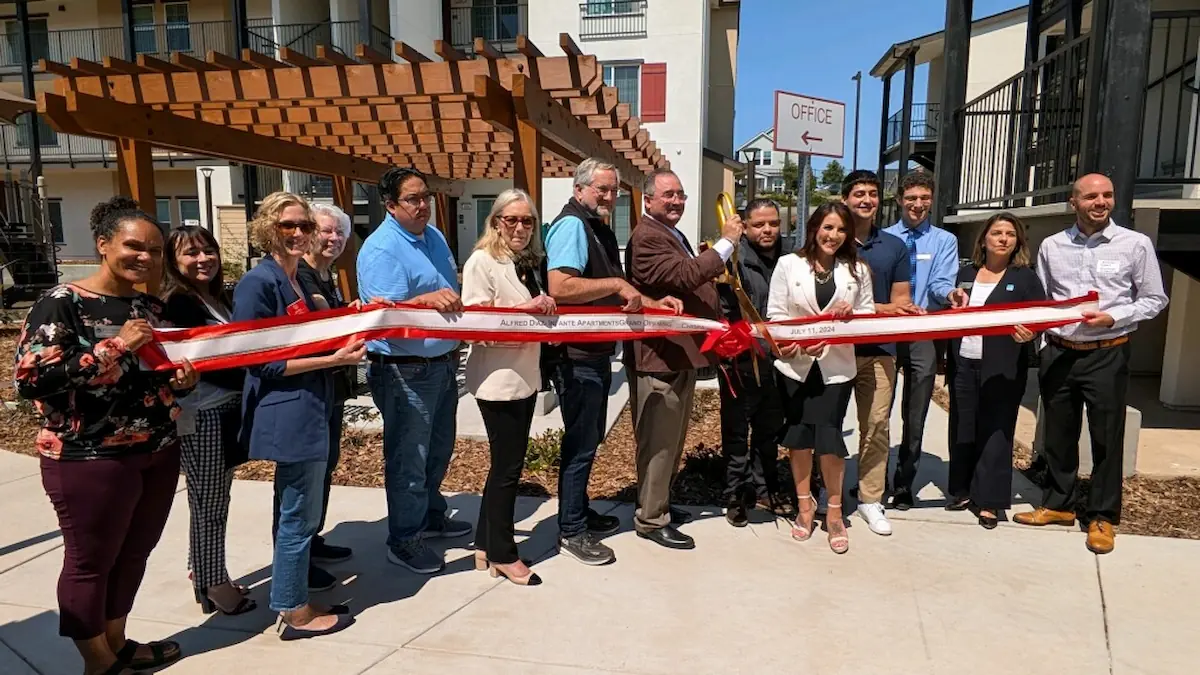
    ribbon cutting ceremony

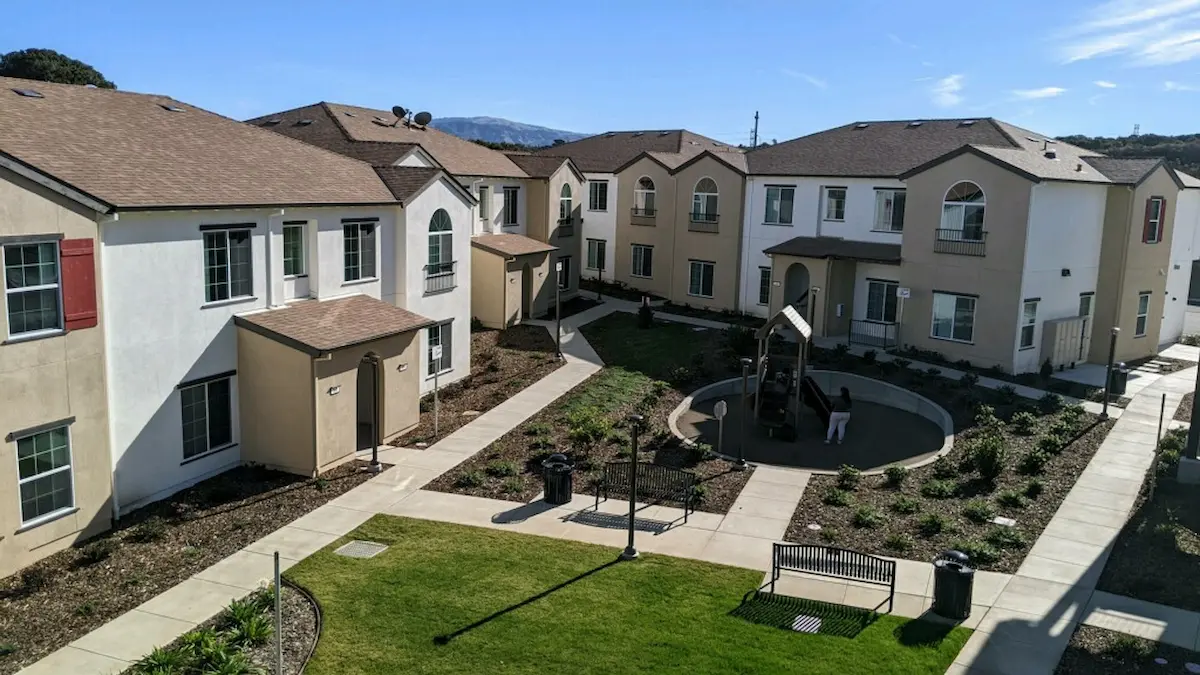
    Community members and local leaders recently gathered for the grand opening ceremony of Alfred Diaz-Infante Apartments – new affordable housing in Monterey County. Alfred Diaz-Infante Apartments in East Garrison provides 66 homes for low-income residents, with 43 reserved for agricultural workers and their families. 

    A project of the Community Housing Improvement Systems and Planning Association (CHISPA), the complex is named after former CHISPA President Alfred Diaz-Infante who passed away in 2021. Diaz-Infante grew up in Salinas and was the child of farmworker parents. He dedicated most of his working life to providing affordable housing for low- and moderate-income households. 

    Alfred Diaz-Infante Apartments is supported by more than $7.5 million from HCD’s Joe Serna Jr. Farmworker Housing Grant Program. The all-electric building has on-site services and amenities including a community room, a patio and children play areas. The complex is also located near jobs, schools, public transit and vital services.


    alfred diaz-infante apartments complex exterior aerial view

  • Affordable Housing
  • Success Stories
  • October 23, 2024
    Off
    Article

    Groundbreaking of Affordable Housing in LA Marks Environmental and Housing Win

    Off
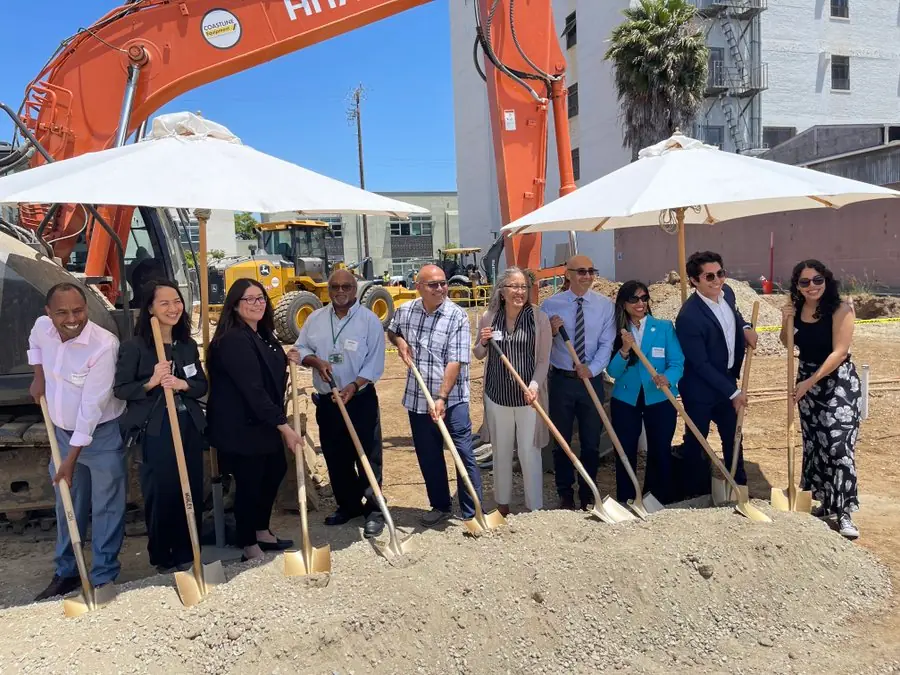
    Groundbreaking ceremony with golden shovels.

    HCD Director Gustavo Velasquez joined community members and local leaders in celebrating the start of construction for a project in Los Angeles that addresses both environmental justice and the critical need for affordable housing. Located on a former oil drilling site, The Arlington will provide 84 supportive homes for low-income residents, with half reserved for individuals and families who are exiting homelessness.

    A project of TSA Housing, The Arlington was supported by $22 million from HCD’s Multifamily Housing and Infill Infrastructure Grant programs. The Arlington will provide homes for individuals and families earning half or less of the Area Median Income, and is located near transit, parks, grocery stores, medical services, and other vital amenities. 

    In addition to addressing the problem of homelessness and providing much-needed affordable housing, this project represents the state’s commitment to equity and the environment. In 2021, California Governor Gavin Newsom signed into law the Cleanup in Vulnerable Communities Initiative to address historical environmental injustices in disadvantaged communities. This enabled community and state partners to obtain funding to help support the clean-up of the land. After extensive remediation, the lot is now safe to become housing. 

    The Arlington will have common areas, a fitness room, a laundry room and outdoor spaces for residents. The Arlington will also provide on-site supportive services including case management, financial management, parenting education, and employment services. With voter approval of Proposition 1, which will fund HCD’s new Homekey+ program, more permanent supportive homes will be available in the years to come.

    rendering of the project

  • Affordable Housing
  • Success Stories
  • October 21, 2024
    Off
    Article

    Lives Are Changed for the Better Thanks to HCD Partnerships

    Off
    Newsroom Default Image

    The California Department of Housing and Community Development works hand in hand with our nonprofit partners to overcome obstacles to affordable housing development. Learn more about our partnership with one such organization, Mutual Housing, and what that collaborative work has meant to residents like Verna.

    October 18, 2024
    On
    Video

    New affordable housing community built on vacant state land in South Lake Tahoe opens for residents

    Off
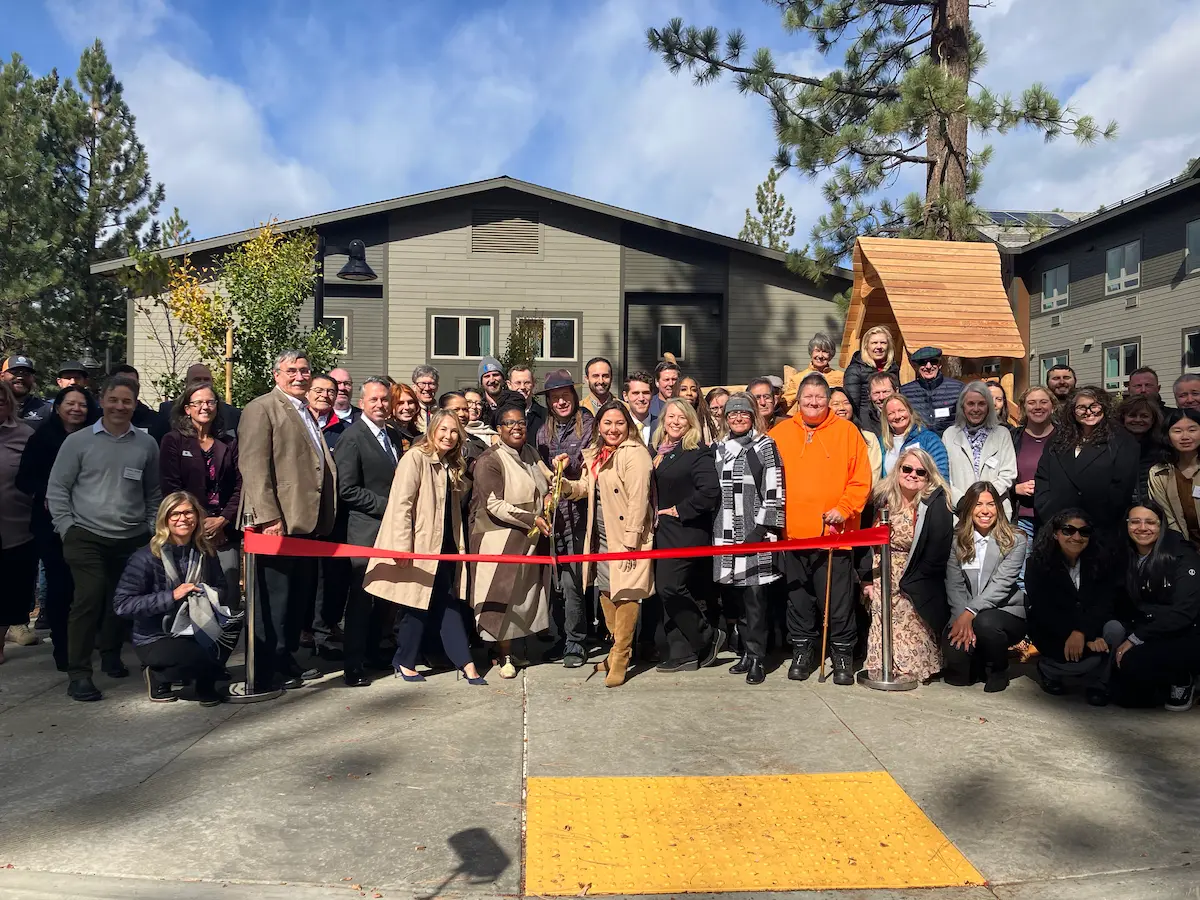
    HCD, BCSH, DGS, developers and community leaders celebrate the ribbon-cutting of Sugar Pine Village Phase 1A in South Lake Tahoe on October 17, 2024.

    Further utilizing an executive order to prioritize developing housing on excess state lands, Governor Gavin Newsom today announced that a new affordable housing project in South Lake Tahoe is opening 68 units to residents. Sugar Pine Village, which will eventually grow into a 248-unit community, transforms what was once vacant state-owned land into affordable housing for families and workers in the Tahoe region.

    “Today we advance our strategy of transforming underutilized state properties into thriving affordable living communities for Californians. Sugar Pine Village opens the door to more affordable living in South Lake Tahoe, creating hundreds of new homes,” said Governor Newsom. “I congratulate and extend my thanks to Related California and the Saint Joseph Community Land Trust, as well as the state agencies who led the way by quickly transforming this state property into a place where many families can call home.”

    Sugar Pine Village is the first of its kind as the largest affordable housing project in the history of South Lake Tahoe. Today marks the completion of the first stage of the project, creating 68 affordable units.

    The project supports the local Tahoe workforce by offering affordable housing within the region and is projected to help reduce traffic in and out of the community — helping with transportation and the environment.

    “These affordable housing projects are stand-out examples of the state working together to ensure that every Californian has a place to call home,” said Department of General Services Director Ana M. Lasso. “With Sugar Pine Village, DGS is proud to be part of creating a sustainable and inclusive community that reflects the values of South Lake Tahoe.”

    Developed by Related California, the completed stage announced today includes 12 studios, 12 one-bedrooms, 23 two-bedrooms, and 21 three-bedroom units. All 248 units will be affordable to low-income families.

    “This landmark affordable housing project brings us one step closer to providing housing for all residents of South Lake Tahoe,” said Government Operations Agency Secretary Amy Tong. “I’m proud of the state’s ongoing efforts in making affordable housing a priority as we work towards a brighter California for All.”

    Sugar Pine Village is all-electric, constructed with modular units and incorporates environmentally friendly building practices. Amenities include parks, walking trails, and community gathering spaces.

    "California's Excess Sites program is an extraordinary initiative that allows us to reimagine how underutilized state land can help us build affordable housing and healthier communities," said Business, Consumer Services and Housing Agency Secretary Tomiquia Moss. "Sugar Pine Village is an example of how state, regional and local partnerships can lead to new housing opportunities and can have a tremendous and positive impact on the community. The re-envisioning of this state-owned site into housing will help hundreds of working families struggling with housing security access dignified and affordable homes."

    The next stage of the Sugar Pine Village project, which includes an additional 60 units, is already underway and is anticipated to open in October 2025.

    “It’s inspiring to see Sugar Pine Village open its doors and provide urgently needed housing to the South Lake Tahoe community,” said Ann Silverberg, CEO of Related California’s NorCal Affordable and Northwest Divisions. “This is a major milestone for building high-quality housing efficiently and affordably, and we look forward to welcoming more residents into their new homes when additional phases are complete. Thank you to Governor Newsom, the State of California, the City of South Lake Tahoe, the Tahoe Regional Planning Agency, and our many other partners for their collaboration.”

    This Tahoe development marked the second project to complete construction for the Excess Sites Program under Governor Newsom’s executive order. To date, 49 sites have been identified as suitable and available for housing statewide. There are currently 20 sites under development or having completed construction, with those sites yielding approximately 4,500 units. An additional 29 sites were identified as additional excess properties this year and will be offered to developers shortly for proposals.

    Earlier this month, the state celebrated an award to transform a dated Department of Motor Vehicles (DMV) building in San Francisco into a modern DMV office paired with 372 new homes for low-income families.

    How we got here
    In 2019, Governor Newsom issued an executive order calling on HCD and DGS to address the state’s affordable housing crisis by identifying underutilized state-owned sites for the development of affordable housing, taking into account factors such as proximity to job centers, amenities, and public transit.

    Creating affordable housing for all Californians
    Since taking office, Governor Newsom has invested $40 billion in housing production and enacted dozens of CEQA reforms into law. The state has also invested more than $27 billion to help communities address homelessness.

    In July 2024, Governor Newsom issued an executive order to support efforts to transform undeveloped and underutilized infill sites and buildings into housing. This order helps communities build thriving downtown cores and new housing near transportation hubs and job centers — creating more housing options for Californians while further aligning the state’s housing and climate goals.

    In addition, Governor Newsom championed the creation of the Housing Accountability Unit at HCD to ensure cities and counties fulfill their legal responsibilities to plan and permit their fair share of housing.

  • Press Release
  • Excess Sites
  • Affordable Housing
  • October 17, 2024
    Sugar Pine Village to provide 248 new affordable homes
    Off
    Article
    Top