May 2026

New Single-Family Rehabilitation and Reconstruction Program helps Homeowners Rebuild after the 2023 and 2024 Severe Storms

Off
Sacramento, CA
couple looking onto house being built

The California Department of Housing and Community Development (HCD) today announces the launch of a new round of funding through the ReCoverCA Single-Family Rehabilitation and Reconstruction (ReCoverCA) Program, a housing recovery effort to help homeowners and landlords repair or rebuild homes damaged in declared federal disasters. The current round applies to homes damaged by severe storms from February through July of 2023 and January 2024. 

Applications for the program open today. Homeowners are encouraged to apply early, as funding is limited. 

ReCoverCA is funded by the U.S. Department of Housing and Urban Development (HUD) through the Community Development Block Grant–Disaster Recovery (CDBG-DR) program. This round of ReCoverCA funding will provide financial assistance to eligible households in Monterey, San Benito, Santa Cruz, Tulare, Tuolumne, and San Diego counties, and the Hoopa Valley Indian Reservation, which were significantly impacted by flooding, mudslides, and landslides during the 2023 and 2024 storms. 

The program is designed to help eligible homeowners return to safe, stable housing. Depending on need, assistance may be used to: 

  • Repair storm-damaged homes 
  • Rebuild homes that cannot be repaired 
  • Replace certain manufactured or mobilehomes 
  • Reimburse eligible repair or rebuilding costs already paid 

Homeowners may qualify based on storm-related damage, income, and occupancy requirements. In general, applicants must have owned and lived in the home at the time of the eligible declared disaster, and the home must remain their primary residence. Some landlords may also qualify if they agree to rent to income-eligible households at affordable rates. 

The ReCoverCA program is part of California’s ongoing effort to support long-term recovery in communities affected by recent disasters. HCD is working with local governments and community partners to help ensure residents are aware of and can access available assistance. 

Homeowners and landlords can learn more about eligibility and how to apply by visiting the RecoverCA webpage.

  • Disaster Recovery
  • Press Release
  • May 14, 2026
    Off
    Article

    California Marks Infrastructure Week, Celebrates Major Milestones in Construction of 197 New Affordable Homes

    Off
    Sacramento, CA
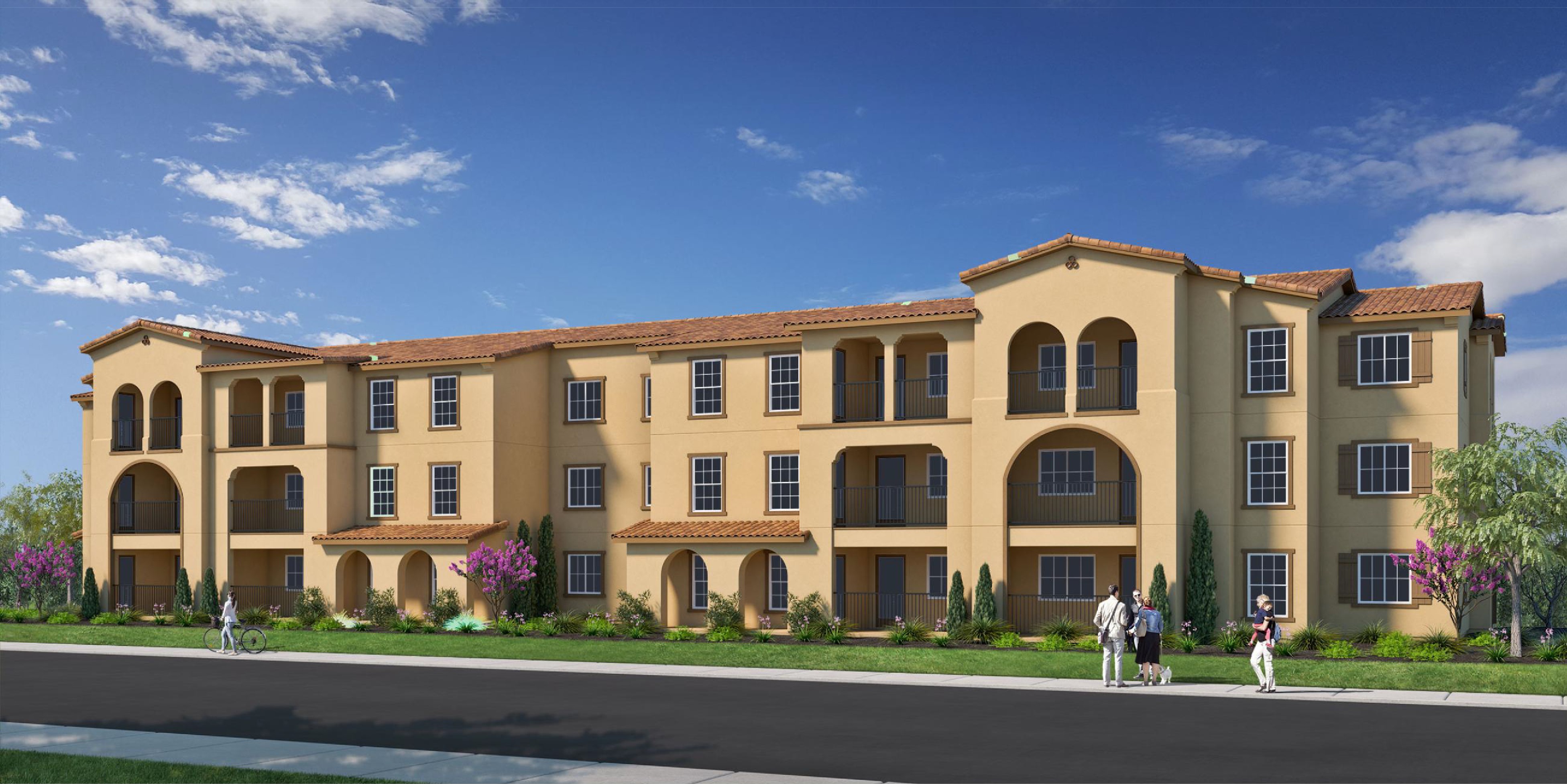
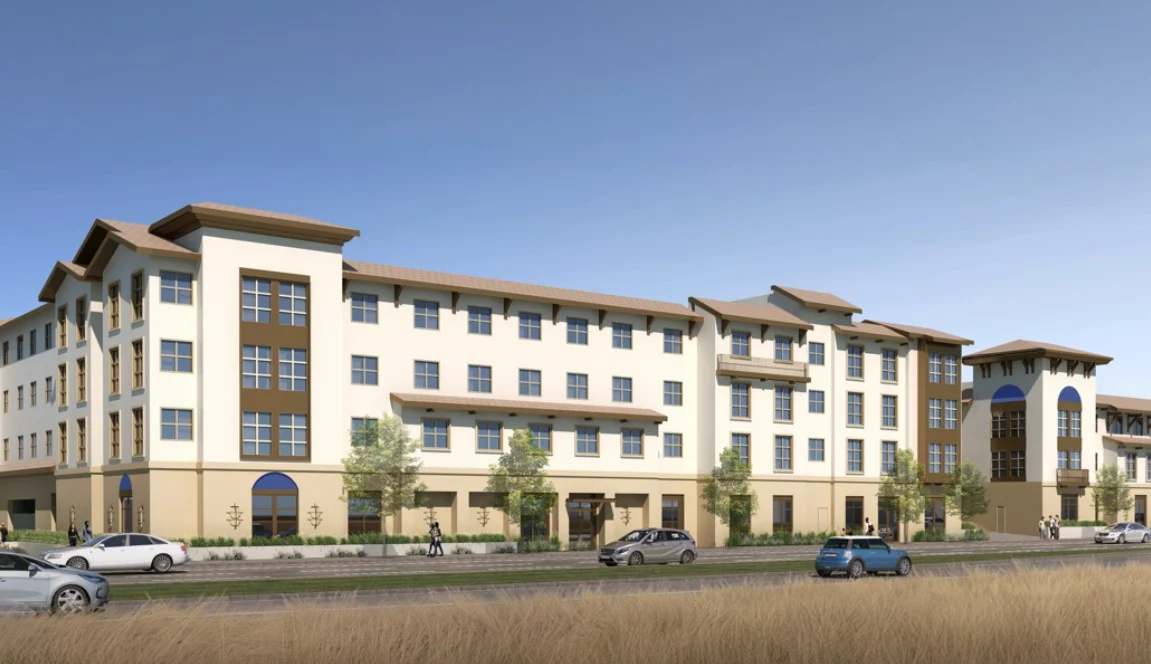
    rending of Palm Villas

    Two cities in two regions of the state marked major milestones today with developments that are bringing a total of 197 affordable homes to communities. 

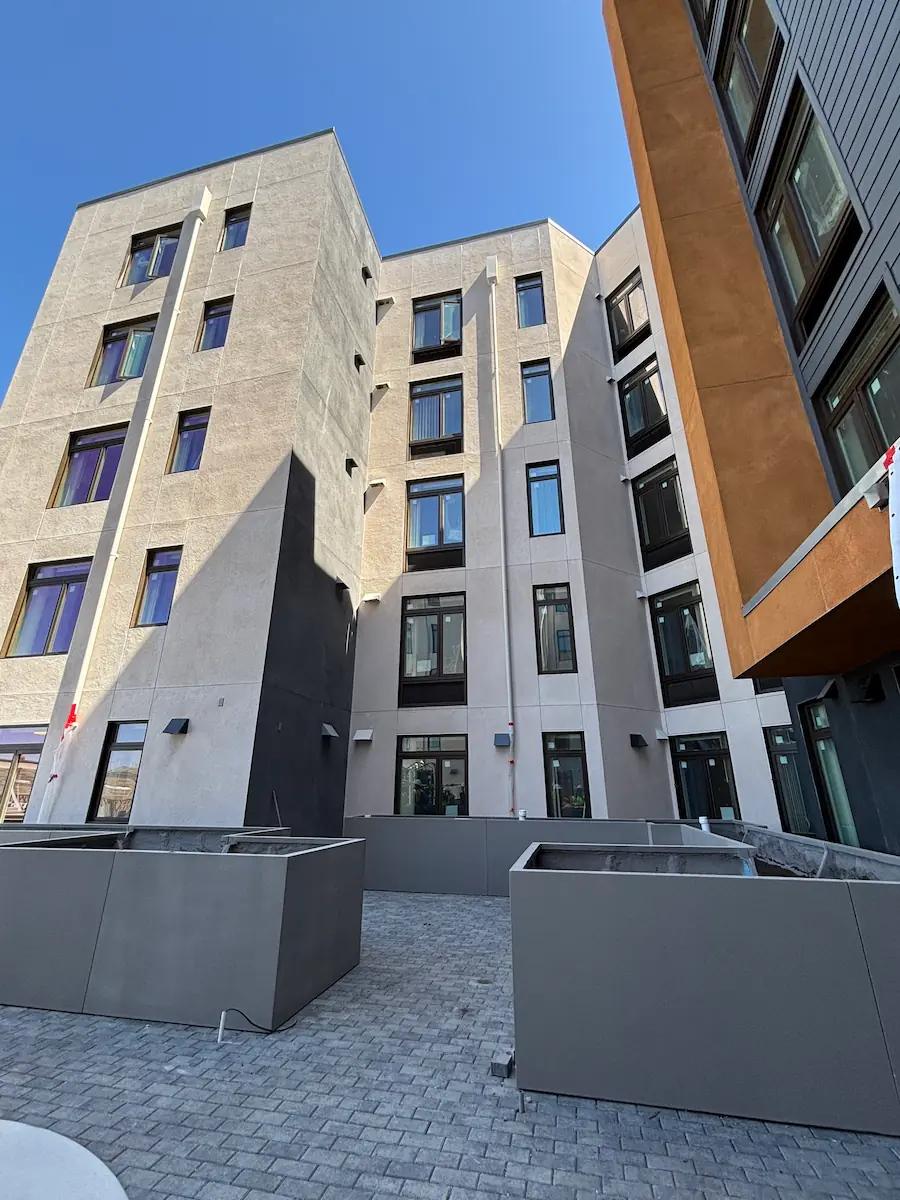
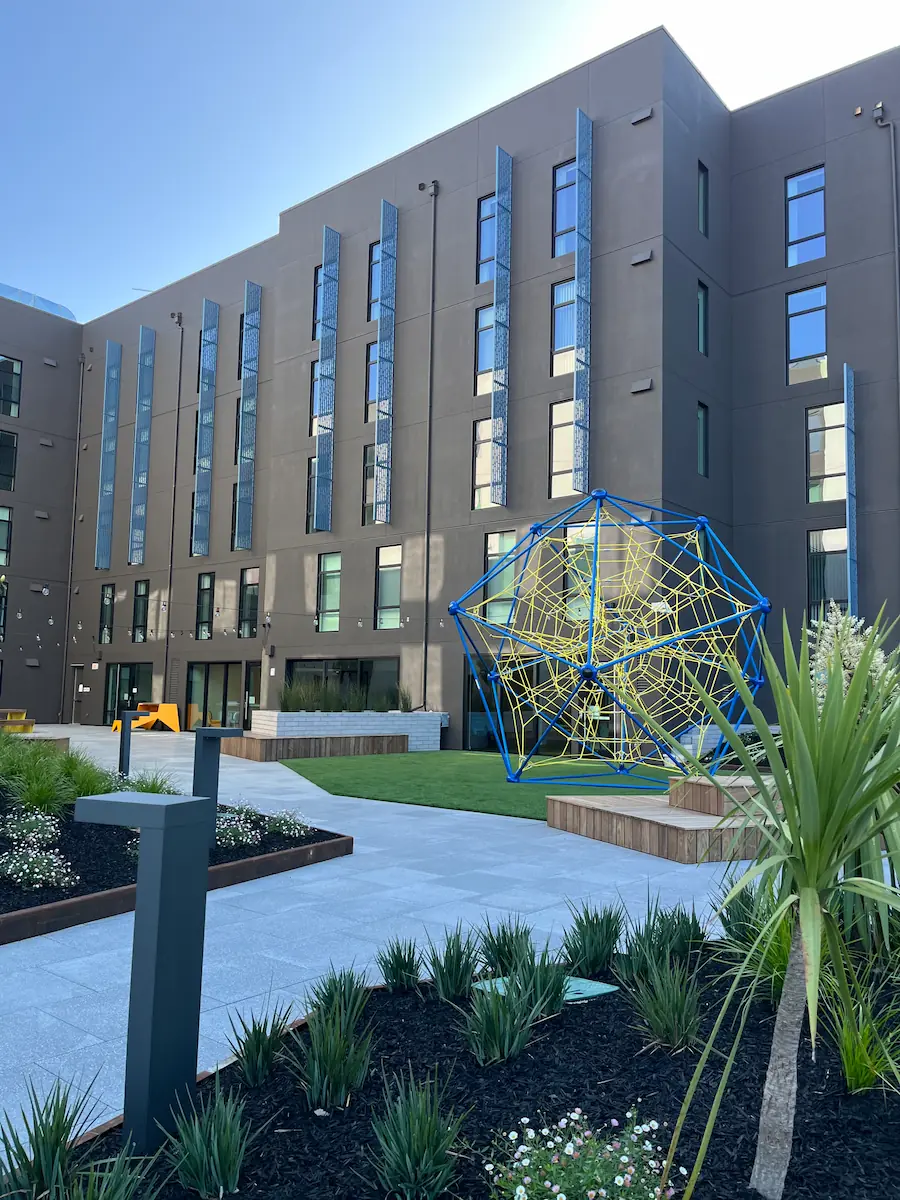
    In the Bay Area, East Palo Alto celebrated the grand opening of Colibri Commons, which includes 136 affordable homes, while further north, the city of Red Bluff broke ground on Palm Villas, a 61-unit affordable development. 

    State programs contributed a total of nearly $45.5 million to the projects. 

    With the high cost of living in the Bay Area and a great need for affordable workforce housing in rural areas, these new affordable homes are critical for local communities and the economy. 

    “California is supporting healthy, thriving neighborhoods throughout the state – from the Bay to the northern Sacramento Valley and beyond – by investing in much-needed affordable housing and sustainable community infrastructure,” said Samuel Assefa, Director of the California Governor’s Office of Land Use and Climate Innovation and Chair of the California Strategic Growth Council (SGC), which provided funding through the Affordable Housing and Sustainable Communities (AHSC) Program. “These projects reduce pollution, expand opportunities, and give more Californians what everyone should have: a place to call home.”

    “California’s momentum is real and these projects demonstrate what we can achieve when state investment aligns with strong local partnerships,” said Secretary Tomiquia Moss of the Business, Consumer Services and Housing Agency, who is a member of the SGC. “From East Palo Alto to Red Bluff, communities are working alongside us to deliver affordable, climate‑forward homes. Together, we’re accelerating progress and expanding opportunity for Californians across the state.” 

    Colibri Commons 

    Funded in part by $19.8 million from the AHSC Program, Colibri Commons in East Palo Alto is co-developed by MidPen Housing and East Palo Alto Community Alliance and Neighborhood Development Organization (EPACANDO).

    Eight of the 136 units are set aside for households experiencing homelessness in San Mateo County. 

    Residents have the options of studio, one-, two-, three- and four-bedroom units, and all apartments include a full kitchen with refrigerator, oven/range, microwave and dishwasher, private patio or deck, and storage space. 

    Beyond homes, Colibri Commons also offers a community room with a kitchen; outdoor play areas and an after-school learning center for resident children; laundry facilities; bike storage; and assigned parking spaces. 

    The complex is built on a city-owned and donated formerly vacant lot located near public transit, shopping, retail, restaurants, schools, a public library, parks, and a Boys & Girls Club. Residents also have easy access to the Rail Spur walking path, and nearby Faber-Laumeister Trail and SF Bay Area Trail. 

    AHSC funding enabled new transportation benefits including the purchase of a CalTrain Electric Multiple Unit train and three electric buses to expand the SamTrans bus service. 

    “It brings us so much joy to invest in the development of affordable housing and sustainable, convenient transportation in neighborhoods across California – from cities to rural areas,” said Erin Curtis, Executive Director of SGC, noting that the AHSC Program has funded nearly 25,000 affordable homes since its inception. “Congratulations to the new residents of Colibri Commons and a big thank you to our partners who are leading the efforts to strengthen resilience in your region.” 

    Palm Villas 

    Funded in part by $20.1 million from the AHSC Program and developed by Palm Communities, Palm Villas at Red Bluff will bring 61 affordable houses to the rural area. The project received an additional $5.5 million through the California Department of Housing and Community Development’s (HCD) No Place Like Home and Infill Infrastructure Grant programs. 

    The complex is designed for families earning between 30% and 60% of the Area Median Income (AMI) and will include 10 units for people experiencing homelessness who need on-site services through the No Place Like Home Program. 

    A separate community center, playground and a barbecue area are planned for families to enjoy. 

    There are also state-funded transportation upgrades including bus route enhancements and zero-emission vehicle purchases; renovations to the regional transit center including new passenger amenities and solar panels for sustainability; two new lane miles of bikeway; and over 2,000 linear feet of upgraded sidewalk. 

    Project partners include the Job Training Center, which is a partner of the NORTEC Workforce Development Board, and Poor and the Homeless Tehama County Coalition (PATH) for anti-eviction and rental assistance programs. 

    “The Affordable Housing and Sustainable Communities program continues to infuse transit-rich neighborhoods with much-needed affordable housing,” said HCD Director Gustavo Velasquez. “This critical investment helps reduce vehicle miles traveled and harmful emissions, while connecting low-income households to key amenities and educational and employment opportunities.” 

    California Climate Investments 

    The AHSC Program is funded through California Climate Investments, a statewide program that uses billions of Cap-and-Invest dollars to fund projects that reduce harmful emissions, protect public health, strengthen local economies, and support natural environments. With a strong focus on communities most impacted by pollution and limited access to resources, California Climate Investments helps build a more equitable and sustainable future. 

    California Climate Investments includes 117 programs administered by 27 state agencies, with funding directly supporting the Governor’s work to build a California for All, meeting the housing needs throughout the state while also protecting California’s climate.

    A Housing Approach That Works 

    From the very first moments of the Newsom administration, California has approached the decades-in-the-making housing and homelessness crisis with focus and urgency. No other state has devoted as much time and attention to these twin problems – and California is a leader in producing positive results. Governor Newsom, in partnership with the Legislature, has continued to make progress in reversing decades of inaction that has led to a 9.5% reduction in unsheltered homelessness, a first in more than 15 years:

     ✅ Creating shelter and support — Providing funding and programs for local governments, coupled with strong accountability measures to ensure that each local government is doing its share to build housing, and create shelter and support, so that people living in encampments have a safe place to go. 

    ✅ Addressing mental health and its impact on homelessness — Ending a long-standing 7,000-bed shortfall in California’s behavioral health system by rapidly expanding community treatment centers and permanent supportive housing units. In 2024, voters approved Governor Newsom’s Proposition 1, which is transforming California’s behavioral health systems. It is estimated that funding from Proposition 1 will create 6,800 residential treatment beds and 26,700 outpatient treatment slots for behavioral health care. 

    ✅ Creating new pathways for those who need the most help — Updating conservatorship laws for the first time in 50 years to include people who are unable to provide for their personal safety or necessary medical care, in addition to food, clothing, or shelter, due to either severe substance use disorder or serious mental health illness. Creating a new CARE court system that creates court-administered plans for up to 24 months to help people struggling with schizophrenia and other psychotic disorders, often with substance use challenges, get the treatment and housing they need to recover and thrive. 

    ✅ Streamlining and prioritizing building of new housing — Governor Newsom made creating more housing a state priority for the first time in history. He has signed into law groundbreaking reforms to break down systemic barriers that have stood in the way of building the housing Californians need, including broad CEQA reforms. 

    Removing dangerous encampments — Governor Newsom has set a strong expectation for all local governments to address encampments in their communities and help connect people with support. In 2024, Governor Newsom filed an amicus brief with the Supreme Court defending communities’ authority to clear encampments. After the Supreme Court affirmed local authority, Governor Newsom issued an executive order directing state entities and urging local governments to clear encampments and connect people with support, using a state-tested model that helps ensure encampments are addressed humanely and people are given adequate notice and support.

  • Climate Mitigation
  • Press Release
  • May 20, 2026
    136 affordable homes officially open in East Palo Alto; 61 units break ground in Red Bluff

    Off
    Article

    Mental Peace with Safe Sleep—Spotlight on Nina

    Off
    Newsroom Default Image

    For Nina, who lives with schizophrenia and experienced a cycle of homelessness throughout her adult life, the mental peace of not having to wonder where she’ll sleep each night has her feeling like a “princess in a castle.” A development by Eden Housing in the Marin County community of San Rafael, the 40 permanent supportive homes at Casa Canal were made possible by HCD’s Homekey, Accelerator, and No Place Like Home programs.

  • Homekey
  • Success Stories
  • May 18, 2026
    On
    Video

    Governor Newsom celebrates more than 380 new affordable homes coming to the Bay Area and Coachella Valley

    Off
    Sacramento, CA
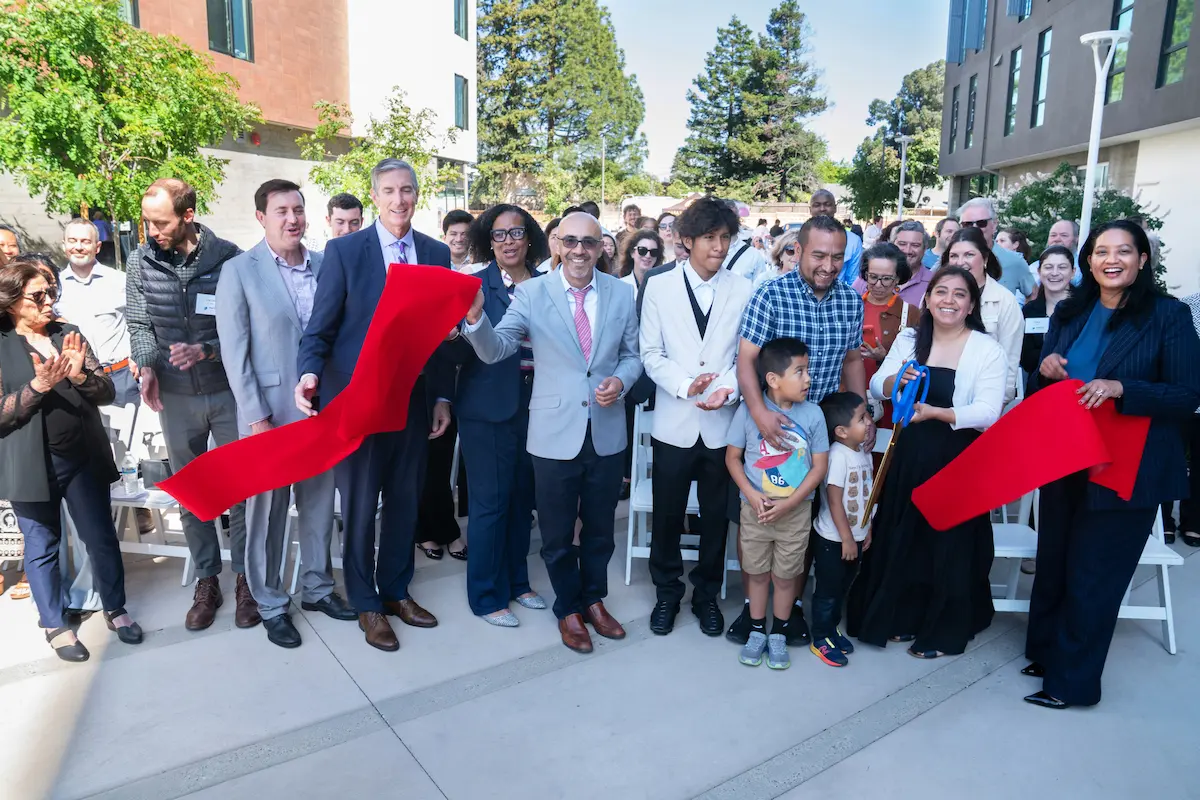
    ribbon-cutting ceremony

    Today Governor Gavin Newsom announced progress in the development of over 380 affordable homes across the Bay Area and in Coachella. Building on California’s commitment to expand access to affordable housing, Union City, Redwood City, Oakland and Coachella housing projects are being created near public transportation, local schools and other key resources.

    California Climate Investments, a Cap-and-Invest program that focuses on communities most impacted by pollution, supported the development of these new affordable housing projects. Investments into communities also support pedestrian, bike and rail infrastructure and expansion of parks.

    “These new housing developments will create more opportunities for Californians to live near family, work, and the places that shape their lives – bringing greater stability and strengthening communities for years to come. As we continue tackling the housing crisis, California is proving that bold investments and strong local partnerships can help build a future where more people have a fair shot not just to get by, but to thrive,” said Governor Gavin Newsom.

    “California is moving with urgency to build more climate-smart affordable homes, and these developments show what’s possible when state and local partners stay focused on the people who need them most,” said Tomiquia Moss, Secretary of the California Business, Consumer Services and Housing Agency. “These projects strengthen our communities, expand access to opportunity, and reflect the kind of practical, community driven solutions we’re advancing across the Bay Area and the state.” 

    “California is prioritizing the development of much-needed housing while keeping our climate goals front and center,” said Samuel Assefa, Director of the California Governor’s Office of Land Use and Climate Innovation and Chair of the California Strategic Growth Council (SGC), which provided part of the funding through two of its programs: Affordable Housing and Sustainable Communities (AHSC) and Transformative Climate Communities (TCC). “By investing in affordable, sustainable communities near transit and other key amenities, we’re supporting health, thriving neighborhoods — and there are many more AHSC-funded projects in the works statewide.”

    New affordable homes for families in the Bay Area 

    • Union City: With the first story of the Lazuli Landing affordable housing development now becoming visible, partners held a wall raising ceremony on May 8. Lazuli Landing, funded in part by $21.1 million from the state’s AHSC Program, will include 81 units restricted to households earning a range between 20%-80% Area Median Income (AMI). The development will also feature a ground-floor commercial space leased to the City of Union City’s Youth & Family Services (YFS), providing additional community-serving resources.
    • Redwood City: The Middlefield Junction development celebrated a dedication ceremony, marking the grand opening of 179 apartment homes. The development was funded in part by $25.5 million from the AHSC Program. The mixed-use community provides affordable housing for families in Redwood City’s North Fair Oaks neighborhood, with all 179 apartments reserved for households earning between 15% and 80% of the area's median income. Within the complex, 44 units are set aside for specific programs managed by Healthy Housing California and the San Mateo County Project-Based Voucher program.
    • Oakland: Longfellow Corner marked a milestone with a hardhat tour. The project, funded in part by $18.4 million from AHSC, is in its final phase of construction. The development, only a few blocks from the MacArthur BART station, will include 77 affordable homes, and 34 apartments will be dedicated to permanent supportive housing. The property also includes 14 units that are accessible and/or have features for those with auditory and visual impairments. There will also be 2,500 square feet of community-serving commercial space on the ground floor.

    State investments will also support BART rail cars; upgraded lighting; bikeways; pedestrian improvements; curb ramps; accessible parking; sidewalk extensions; signal heads; high visibility crosswalks; tree planting; bicycle education workshops. Some projects will also give residents free or lower-cost transit passes and career training. 

    “It is exciting to see so many Bay Area affordable housing projects opening their doors or moving toward completion thanks to our partnership with the Strategic Growth Council to create energy-efficient communities near transit and opportunity,” said HCD Director Gustavo Velasquez. “In addition to our shared work on the AHSC, HCD’s No Place Like Home, Multifamily Finance Super NOFA, and Accelerator programs have all played a critical role in bringing these much-needed developments to life.”

    exterior view of Longfellow Corner

    Longfellow Corner in Oakland.

    exterior view of Middlefield Junction

    Middlefield Junction in Redwood City.

    rendering of Lazuli Landing

    Rendering of Lazuli Landing in Union City.

    Senior homes coming to the Coachella Valley 

    The Golden State also celebrates the groundbreaking of a 53-unit development of 100% affordable housing for low-income seniors in Coachella - the first affordable housing senior complex in the City of Coachella. The Casa Sienna project, funded in part by $7.7 million from the state’s TCC Program and led by Chelsea Investment Corporation, includes 46 one-bedroom and six two-bedroom units serving households with incomes ranging from 30%-60% of the Area Median Income (AMI). 

    “The Casa Sienna development is a prime example of how our Transformative Climate Communities Program empowers our most pollution-burdened communities to transform their neighborhoods,” said Erin Curtis, Executive Director of the California Strategic Growth Council (SGC), which administers the TCC Program in partnership with the California Department of Conservation. “Affordable senior housing connected to services and amenities not only benefits seniors but also strengthens the broader community they call home. Today’s groundbreaking is the result of partnerships at all levels and community-led and -centered efforts to build thriving, resilient neighborhoods.”

    “This milestone speaks volumes on the great work of the Transformative Climate Communities (TCC) program, which fosters affordable and sustainable housing, energy efficiency, health and economic benefits and mobility options to the people that need it most, “ said Jennifer Lucchesi, Director of the Department of Conservation. “No one can do this work alone and I’m proud to say that our partnership with the California Strategic Growth Council and many others brought the Casa Sienna development to life. It is a big win-win for the community and the TCC program.” 

    The development serves as a vital safeguard against displacement for fixed-income seniors. Many key resources are nearby, including a public transit hub, social services, medical facilities, public parks, a community center, library, retail, financial institutions, and a post office.

    The development is one of nine community-led projects and plans funded by a $22.1 million grant from the TCC Program, all of which fall under the Coachella Prospera initiative. Coachella Valley has a well-documented housing crisis with an extreme rent burden: households spend more than 30% of their income on rent, with some spending more than 50%. Coachella Prospera has used community feedback to shape its TCC application, which aligns with the TCC displacement-avoidance strategy and continues the regional commitment to creating more than 10,000 affordable homes to combat the housing crisis.

    Using climate investments to pay for sustainable growth 

    The California Climate Investments funding is part of the state’s Cap-and-Invest program, which requires major polluters to buy allowances for the greenhouse gases they emit. The funding puts billions of dollars to work reducing greenhouse gas emissions, strengthening the economy, and improving public health and the environment — especially in disadvantaged communities. The funding directly supports the Governor’s work to build a California for All, meeting the housing needs throughout the state while building climate resilience. 

    By investing in the communities hit hardest by climate impacts — from wildfire recovery in Southern California to agricultural preservation in the Central Valley — California is using California Climate Investment funds to help communities thrive and increase opportunity across the state.

    A Housing Approach That Works 

    From the very first moments of the Newsom administration, California has approached the decades-in-the-making housing and homelessness crisis with focus and urgency. No other state has devoted as much time and attention to these twin problems – and California is a leader in producing positive results. Governor Newsom, in partnership with the Legislature, has continued to make progress in reversing decades of inaction that has led to a 9.5% reduction in unsheltered homelessness, a first in more than 15 years:

     ✅ Expanding shelter and support — Providing funding and programs for local governments, coupled with strong accountability measures to ensure that each local government is doing its share to build housing, and create shelter and support, so that people living in encampments have a safe place to go. In January, through a $77 million investment from California’s Cap-and-Invest program, Los Angeles announced the expansion and redevelopment of the largest public housing project in the region, the Jordan Downs Project. 

    ✅ Addressing mental health and its impact on homelessness — Ending a long-standing 7,000-bed shortfall in California’s behavioral health system by rapidly expanding community treatment centers and permanent supportive housing units. In 2024, voters approved Governor Newsom’s Proposition 1, which is transforming California’s behavioral health systems. It is estimated that funding from Proposition 1 will create 6,800 residential treatment beds and 26,700 outpatient treatment slots for behavioral health care. 

    ✅ Creating new pathways for those who need the most help — Updating conservatorship laws for the first time in 50 years to include people who are unable to provide for their personal safety or necessary medical care, in addition to food, clothing, or shelter, due to either severe substance use disorder or serious mental health illness. Creating a new CARE court system that creates court-administered plans for up to 24 months to help people struggling with schizophrenia and other psychotic disorders, often with substance use challenges, get the treatment and housing they need to recover and thrive. 

    ✅ Streamlining and prioritizing building of new housing — Governor Newsom made creating more housing a state priority for the first time in history. He has signed into law groundbreaking reforms to break down systemic barriers that have stood in the way of building the housing Californians need, including broad CEQA reforms. 

    Removing dangerous encampments — Governor Newsom has set a strong expectation for all local governments to address encampments in their communities and help connect people with support. In 2024, Governor Newsom filed an amicus brief with the Supreme Court defending communities’ authority to clear encampments. After the Supreme Court affirmed local authority, Governor Newsom issued an executive order directing state entities and urging local governments to clear encampments and connect people with support, using a state-tested model that helps ensure encampments are addressed humanely and people are given adequate notice and support.

  • Affordable Housing
  • Climate Mitigation
  • Press Release
  • Success Stories
  • May 15, 2026
    Off

    What you need to know: The Golden State continues its historic investment into building more affordable homes across California . Governor Newsom today announced a major accomplishment on the development of over 380 affordable homes across the Bay Area and Coachella.

    Article

    A Home is a Sanctuary – Spotlight on Steve

    Off
    Newsroom Default Image

    Steve is a senior resident of HCD-funded Jenny’s Place in Modesto. Steve had experienced homelessness in his past and found himself at risk of homelessness once again when his roommate passed away and he could not afford the rent on his own. Steve is now feeling happy and safe. Jenny’s Place was made possible by a $15.4 million investment from the Newsom Administration’s highly successful Homekey program, which aims to help prevent and end homelessness by using innovative approaches to build more affordable homes faster.

  • Homekey
  • May 13, 2026
    On
    Video

    Governor Newsom delivers $760 million in HHAP funding to support communities' efforts in reducing homelessness

    Off
    Sacramento, CA
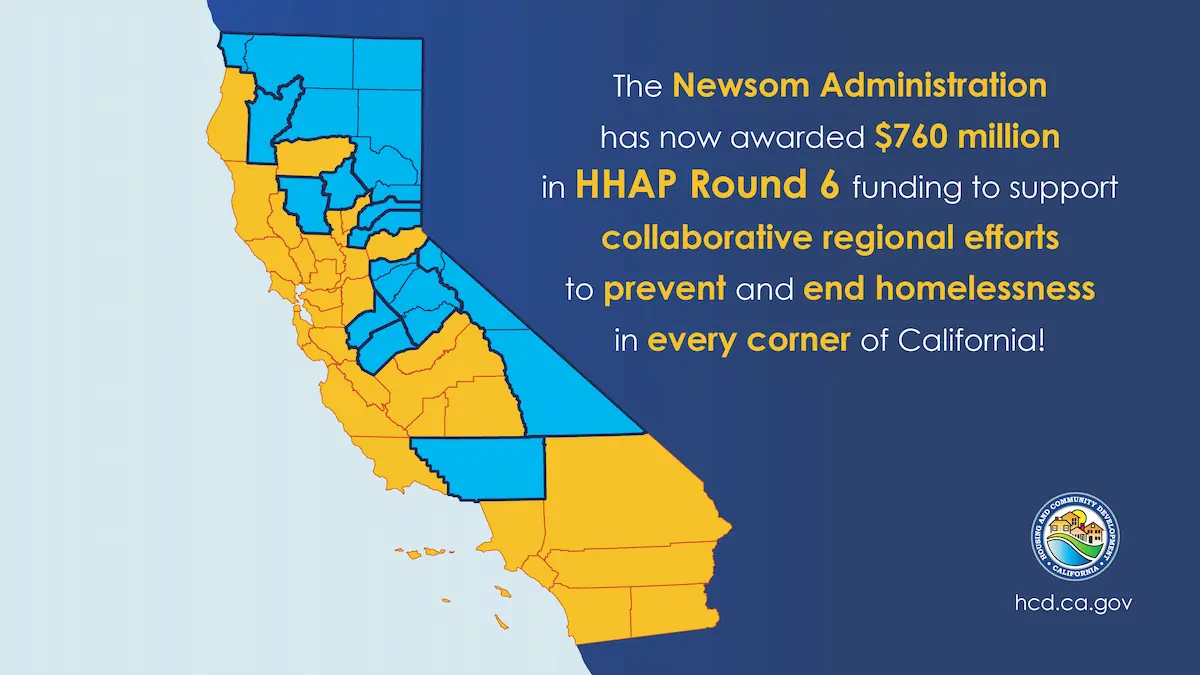
    map of California and highlighted regional awardees

    California continues advancing strategies that have led to a 9% drop in unsheltered homelessness by bringing funding and accountability to vital programs in local communities. Today, California Governor Gavin Newsom announced that 11 additional regions will receive $35.7 million in Homeless Housing Assistance and Prevention (HHAP) Funding. With these awards, every region in California has received support through HHAP Round Six funding. Thanks to multiple rounds of the HHAP program since 2023, more than 100,000 Californians have transitioned from homelessness into permanent housing.

    “No one in California should be without a place to call home. We must keep moving faster to get people off the streets and into stable housing, treatment, and care. We’re pairing historic investments with real accountability and demanding results at every level of government. Together, we’re making progress — including a 9% drop in unsheltered homelessness and hundreds of thousands of Californians now with a roof over their heads. We now have to keep pushing until every Californian has the dignity of a safe place to call home,” said Governor Gavin Newsom.

    HHAP is a multi-year grant program that helps local communities prevent and end homelessness through targeted regional housing solutions. Eligible recipients include California’s 58 counties, 14 large cities with populations over 300,000, and 44 Continuums of Care (CoCs). In partnership with the Legislature, the Newsom Administration has made historic investments in the program, with nearly $5 billion in multi-year funds appropriated through current and prior HHAP rounds to support local jurisdictions in promoting housing stability and reducing homelessness. 

    The California Department of Housing and Community Development (HCD) today awarded nearly $35.7 million to eleven regions through HHAP Round 6. HCD administers HHAP funding to prevent and address homelessness, delivering $760 million to all 42 eligible California regions as part of Round 6.

    “The state continues to invest in local regions and partner with local governments to scale proven solutions that prevent and end homelessness,” said Secretary Tomiquia Moss of the Business, Consumer Services and Housing Agency. “By expanding access to stable housing and the supportive services Californians need most, HHAP grants are driving significant, measurable progress and strengthening community-led efforts across the state.”  

    More accountability 

    Governor Newsom has strengthened accountability measures through HHAP to better ensure funding has the greatest impact for people experiencing homelessness. Round 6 applicants must demonstrate state funding will make an impact on reducing unsheltered homelessness and addressing encampments. 

    These regions have dedicated approximately 90 percent of their HHAP 6 budgets to permanent and interim housing. 

    HHAP Round 6 grantees have until June 30, 2029, to fully expend these funds. All funding activities are tied to and monitored under the California System Performance Measures—standardized metrics that measure program outcomes in each region.

    Californians can visit www.accountablity.ca.gov for more information about how their community is performing in addressing housing, homelessness, and mental health care. 

    More HHAP funding on the way 

    There is a seventh round of HHAP totaling $500 million planned for the coming budget year. HHAP Round 7 will expand existing accountability metrics to ensure grantees continue to make meaningful investments in housing solutions and adopt policies that will increase local housing supply.

    “Through HHAP, we are empowering neighboring local governments to work together to advance proven homelessness solutions that are most effective for their region,” said HCD Director Gustavo Velasquez. “Today every county in California is a step closer to achieving Governor Newsom’s end goal of seeing every Californian housed with safety and dignity.”

    These final HHAP 6 awards are being made to the following regions:  

    • Inyo County, Mono County and the Alpine Inyo Mono Counties CoC—$250,138.19. The Alpine, Inyo, and Mono region will use its grant to support homeless prevention activities, including providing housing navigation, application fees, rental and utility assistance, landlord incentives, and deposit insurance for households and youth at imminent risk of homelessness. The region will also fund hotel/motel vouchers, setting aside a portion of those vouchers to support those exiting institutions such as hospitals and jail.
    • Amador County, Calaveras County, Mariposa County, Tuolumne County and the Amador, Calaveras, Mariposa, Tuolumne Counties CoC—$1,696,691.91. The Amador, Calaveras, Mariposa, and Tuolumne region will continue funding interim housing operating subsidies and navigation center services, including youth programs, and will maintain motel/hotel voucher and permanent housing programs. Funds will also support ongoing rapid rehousing activities.
    • Butte County and the Chico, Paradise/Butte County CoC—$3,258,875.58. The Butte region will fund a range of housing activities, including supporting operating subsidies and services for existing interim housing, operating subsidies and services for permanent housing, prevention and diversion, rapid rehousing programs, and rental subsidies, including for youth.
    • Colusa County, Glenn County, Trinity County and the Colusa, Glenn, Trinity Counties CoC—$585,228.93. The Colusa, Glenn, and Trinity region will use its grant to support services for permanent and interim housing, case management, job and financial training, and connections to health services. The region will also fund prevention and diversion activities, including rental and utility assistance, mediation, and service linkages, and rapid rehousing and rental subsidies for youth.
    • Del Norte, Lassen, Modoc, Plumas, Shasta, Sierra, Siskiyou Counties and the Redding/Shasta, Siskiyou, Lassen, Plumas, Del Norte, Modoc, Sierra Counties CoC—$5,806,452.44. The Del Norte, Lassen, Modoc, Plumas, Shasta, Sierra, and Siskiyou region will commit nearly half of funds to permanent housing solutions, including capital for new permanent housing and gap funding to house veterans and unaccompanied youth. Other funded activities include interim housing operating expenses, improvements to existing interim housing, motel/hotel vouchers, rental subsidies, security deposits, and supportive services for individuals in bridge housing.
    • City of Bakersfield, Kern County and the Bakersfield/Kern County CoC—$12,802,588.48. The Kern region will use HHAP 6 funds for capital for new permanent housing, operations and expansion of existing interim housing, and operating subsidies for existing permanent housing. Other activities include street outreach, prevention and diversion, mobile shower services, case management, rapid rehousing, and rental subsidies.
    • Merced County and the Merced City & County CoC—$1,975,147.61. The Merced region will use its award to support ongoing operations of a 76-bed low-barrier congregate navigation center and a 50-bed emergency shelter, rapid rehousing rental assistance, and hotel vouchers for youth.
    • Nevada County and the Nevada County CoC—$1,217,653.73. The Nevada region will use its grant to fund operating expenses for existing permanent supportive housing and emergency shelters, rapid rehousing programs, homelessness prevention activities, and youth services coordination for those connected to interim housing.
    • Placer County and the Roseville, Rocklin/Placer County CoC—$1,656,575.42. The Placer region will sustain operations for emergency shelters, and fund permanent supportive housing, including acquisition, maintenance, and services for new and existing affordable housing in service of people experiencing homelessness. The region will also fund rapid rehousing and rental subsidies, homeless prevention activities, and support youth agencies that coordinate mental health, substance abuse, and primary care treatment while connecting youth to education and workforce programs.
    • Stanislaus County, and the Turlock, Modesto/Stanislaus County CoC—$4,842,297.39. The Stanislaus region will sustain existing interim housing operations, including a low-barrier emergency shelter, and the region’s homeless access center for youth. The region will also fund operating costs for permanent supportive housing projects, rental assistance for homelessness prevention, and services for housing programs, including case management.
    • Sutter County and the Yuba City & County/Sutter County CoC—$1,590,816.55. The Sutter region will use its grant to support operating expenses for existing interim housing, outreach and medical services expansion, and homelessness prevention and diversion programs.

    Delivering for local communities 

    Today’s announcement comes just one day after Governor Newsom announced the distribution of $111 million in voter-approved Proposition 1 funding to create another six affordable housing communities through the state’s Homekey+ program to expand supportive housing and behavioral health services statewide. Yesterday’s announcement creates 307 new permanent supportive homes to provide stability for veterans and other Californians who are experiencing or at risk of homelessness and living with behavioral health challenges. Homekey+ has so far allocated $858.8 million to support 50 permanent supportive housing projects that will create 2,471 affordable homes throughout California for individuals experiencing or at risk of homelessness with behavioral health challenges. Of these homes, 620 are reserved for veterans. 

    This adds to state investments made by the administration and Legislature since 2019 to help local communities address homelessness, including the launch of the first-in-the-nation Homekey program that has funded nearly 16,000 homes across more than 250 projects that will house an estimated 172,000 Californians over the projects’ lifetimes; $4.95 billion through current and previous rounds of the HHAP Program; $2.2 billion through Homekey+ to serve individuals with mental health or substance use challenges and veterans; $1 billion in Encampment Resolution Funds to provide services and housing to help 23,000 individuals across 120 encampment sites transition from homelessness.  

    Reversing a decades-in-the-making crisis 

    Governor Newsom is the first governor to have prioritized new housing, homeless, and mental health programs, and is turning around the impacts of this national crisis on California.  

    From the very first moments of the Newsom administration, California has approached the decades-in-the-making housing and homelessness crisis with focus and urgency. No other state has devoted as much time and attention to these twin problems – and California is a leader in producing positive results. Governor Newsom, in partnership with the Legislature, has continued to make progress in reversing decades of inaction, leading to a 9% reduction in unsheltered homelessness, a first in more than 15 years:

     ✅ Expanding shelter and support — Providing funding and programs for local governments, coupled with strong accountability measures to ensure that each local government is doing its share to build housing, and create shelter and support, so that people living in encampments have a safe place to go. 

    Addressing mental health and its impact on homelessness — Ending a long-standing 7,000-bed shortfall in California’s behavioral health system by rapidly expanding community treatment centers and permanent supportive housing units. In 2024, voters approved Governor Newsom’s Proposition 1, which is transforming California’s behavioral health systems. It is estimated that funding from Proposition 1 will create 6,800 residential treatment beds and 26,700 outpatient treatment slots for behavioral health care. 

    Creating new pathways for those who need the most help — Updating conservatorship laws for the first time in 50 years to include people who are unable to provide for their personal safety or necessary medical care, in addition to food, clothing, or shelter, due to either severe substance use disorder or serious mental health illness. Creating a new CARE court system that creates court-administered plans for up to 24 months to help people struggling with schizophrenia and other psychotic disorders, often with substance use challenges, get the treatment and housing they need to recover and thrive. 

    Streamlining and prioritizing building of new housing — Governor Newsom made creating more housing a state priority for the first time in history. He has signed into law groundbreaking reforms to break down systemic barriers that have stood in the way of building the housing Californians need, including broad CEQA reforms. 

    Removing dangerous encampments — Governor Newsom has set a strong expectation for all local governments to address encampments in their communities and help connect people with support. In 2024, Governor Newsom filed an amicus brief with the Supreme Court defending communities’ authority to clear encampments. After the Supreme Court affirmed local authority, Governor Newsom issued an executive order directing state entities and urging local governments to clear encampments and connect people with support, using a state-tested model that helps ensure encampments are addressed humanely and people are given adequate notice and support.

  • Press Release
  • May 13, 2026
    Today’s award provides 11 regions with $35.7 million to create shelter and housing
    Off

    What you need to know: After the first drop in statewide unsheltered homelessness in 15 years, Governor Newsom continues to advance effective programs to help local communities reduce homelessness. Today, the state is awarding 11 communities with $35.7 million in Homeless Housing Assistance and Prevention (HHAP) funding to advance this work.

    Article

    Governor Newsom delivers $111 million in voter-approved Prop 1 funding to communities to get people off the streets and connected to mental health care

    Off
    Sacramento, CA
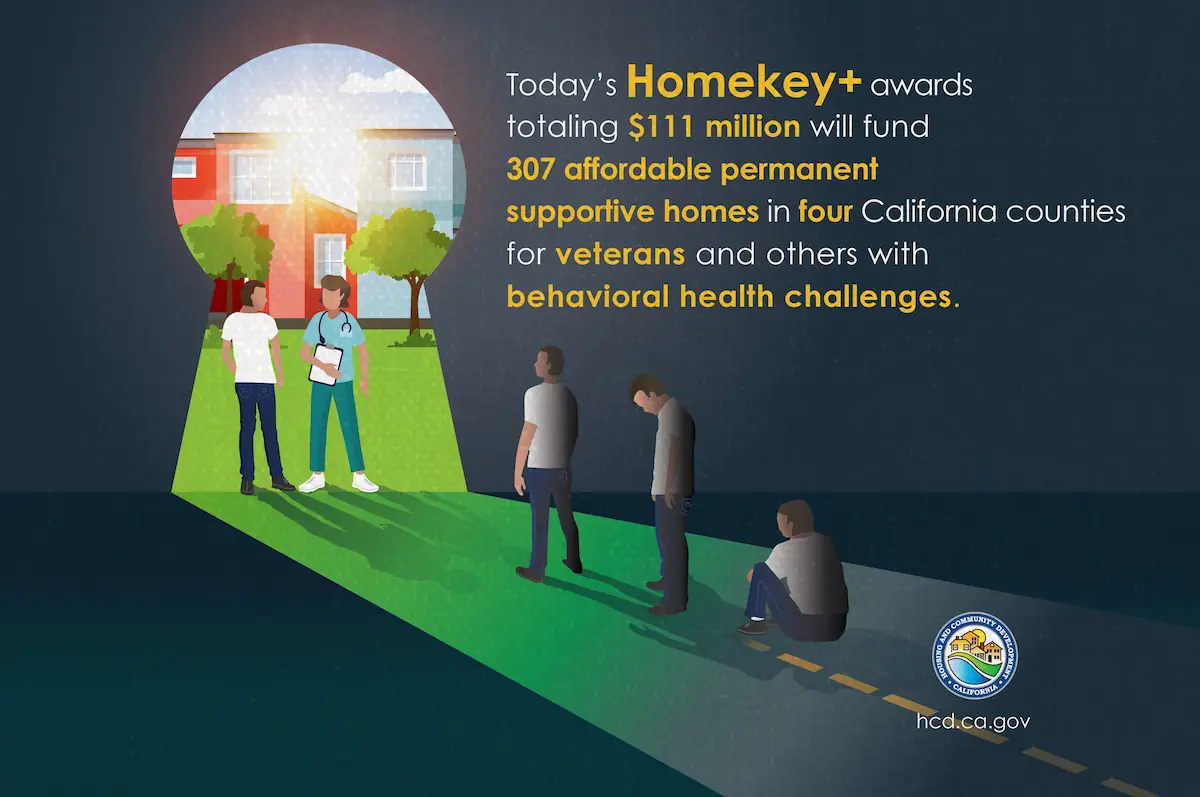
    graphic of man hunched over and sad standing up and walking toward the light which displays housing and health services. Text reads: Today’s Homekey+ awards totaling $111 million will fund 307affordable permanent supportive homes in 4 California counties for veterans and others with behavioral health challenges.

    Building on California’s strategies leading to a 9% reduction of unsheltered homelessness last year, Governor Gavin Newsom today announced the award of voter-approved Proposition 1 funding to create another six affordable housing communities. The communities are part of the state’s Homekey+ program to expand supportive housing and behavioral health services statewide. Today’s announcement creates 307 new permanent supportive homes to provide stability for veterans and other Californians who are experiencing or at risk of homelessness and living with behavioral health challenges.

    “Our state investments have launched critical programs for local communities to help get vulnerable people off the streets and into housing and care. Together, we’re breaking cycles of homelessness that took decades to create — and we’re doing it with urgency, compassion, and accountability,” said Governor Gavin Newsom.

    Governor Newsom is the first governor to have prioritized new housing, homeless, and mental health programs, and is turning around the impacts of this national crisis impacting California, leading the first reduction in unsheltered homelessness in more than 15 years. 

    More than 1.2 million adults in California live with a serious mental illness, and 1 in 10 residents meet the criteria for a substance use disorder, greatly increasing their odds of experiencing homelessness.

    Proposition 1, advanced by the Governor in partnership with the Legislature and approved by voters in 2024, helps local communities provide vital care and housing for these vulnerable residents. Prop 1 is transforming California’s behavioral health systems with a $6.4 billion Behavioral Health Bond for housing, services, and treatment for veterans and people experiencing homelessness, including $2.25 billion through Homekey+ to serve individuals with mental health or substance use challenges and veterans.

    “Proposition 1 and Homekey+ funds are supporting communities throughout California by investing in affordable homes with supportive services,” said Business, Consumer Services and Housing Agency Secretary Tomiquia Moss. “The homes created through today’s awards will provide stability and dignity to Californians most in need.”

    With today’s awards, Homekey+ has so far allocated $858.8 million to support 50 permanent supportive housing projects that will create 2,471 affordable homes throughout California for individuals experiencing or at risk of homelessness with behavioral health challenges. Of these homes, 620 are reserved for veterans.

    “Each new Homekey+ award means more than housing. It means stability, dignity, and a fresh start for veterans in need,” said CalVet Secretary Lindsey Sin. “With 75 more veterans’ homes in this round, and 620 total veterans’ units across 50 projects, we are seeing the real impact of strong partnerships and a shared commitment to those who served. CalVet is proud to continue working alongside the California Department of Housing and Community Development and local partners to turn these projects into places where veterans can rebuild their lives.” 

    Approximately $1.033 billion in Proposition 1 bond funds are currently available through Homekey+ to cities, counties, housing authorities, and tribal entities for permanent supportive housing projects serving veterans. Another $1.11 billion is available for projects serving all target populations, through a combination of Proposition 1 bond funds and Homeless Housing, Assistance, and Prevention Program (HHAP) funds. 

    In addition to supportive affordable housing through Homekey+ and HHAP, through Proposition 1 bonds, the state is also funding 6,800 residential treatment beds and 26,700 outpatient treatment slots for behavioral health. 

    “HCD is working with CalVet to advance California voters’ vision for a state in which people with mental health challenges have the services and support they need to succeed in a life lived off the streets,” said HCD Director Gustavo Velasquez. “We have reached a point where the numbers are reflecting the cumulative impact of our programs, and we look forward to building on those successes under the soon-to-be California Housing and Homeless Agency.”

    The Homekey+ awards announced today total $111 million to create 307 homes across six projects, with 75 units for veterans and six manager units:  

    • The City of Antioch in partnership with California Supportive Housing, will receive nearly $34.9 million in Homekey+ funds to acquire and rehabilitate a hotel into 85 homes, including one manager’s unit. The project will set aside 21 units for veterans and 21 units for transitional age youth. The development known as CSH Mahogany Housing is conveniently located near two bus stops and a busy commercial area that offers amenities such as a grocery store, pharmacy, restaurants, retail stores, and two major medical centers.
    • The City of Cudahy in partnership with National Community Renaissance of California and Prima Development, will receive just under $8 million in Homekey+ funding to fill a financing gap for Amanda Villas. The project will have a total of 140 homes, including two manager’s units. The project dedicates 69 units to individuals experiencing chronic homelessness, 18 of which are designated as Homekey+ units for people facing a behavioral health challenge. In addition to Homekey+ funds, HCD’s Multifamily Finance Super NOFA Program awarded $6.7 million in 2023. Project-based rental subsidies of $33.1 million have been committed by the Los Angeles County Development Authority.
    • The County of Fresno, in partnership with UP Holdings California, LLC and RHCB Development LP, will receive just over $27 million in Homekey+ funding for Sendero Commons, a new construction project with 88 homes, including one manager's unit. The project dedicates 45 units to veterans. HCD’s No Place Like Home program awarded $10 million in 2022. The Homekey+ award will fill the financing gap and replace the need for tax credits.
    • The Housing Authority of the City of Los Angeles, in partnership with The RightWay Foundation, will receive more than $12.5 million in Homekey+ funding to acquire two newly constructed buildings with a total of 33 homes, including two manager’s units, to serve youth who are experiencing or at risk of homelessness with a behavioral health challenge. All units include a kitchen and private bathroom.
    • The City of Los Angeles, in partnership with National Community Renaissance of California, will receive $15.6 million in Homekey+ funding to rehabilitate a motel into Huntington Villas, with 52 homes for individuals experiencing homelessness with a behavioral health challenge and one manager’s unit. The project also has funding and rental subsidy commitments from Los Angeles County.
    • The County of Santa Barbara, in partnership with DignityMoves, will receive a Homekey+ award of just over $11.7 million to build the 30-home Calle Real Family Village to serve veterans, youth, and other Californians experiencing or at risk of homelessness, as well as one on-site manager. Nine units are dedicated for veterans, with three of those reserved for veterans aged 18-24. The project will utilize modular units and include indoor and outdoor community spaces. It is located within one-half mile of transportation stops, a medical clinic.  

    This adds to state investments made by the administration and Legislature since 2019 to help local communities address homelessness, including the launch of the first-in-the-nation Homekey program that has funded nearly 16,000 homes across more than 250 projects that will house an estimated 172,000 Californians over the projects’ lifetimes; $4.95 billion through current and previous rounds of the HHAP Program; $2.2 billion through Homekey+ to serve individuals with mental health or substance use challenges and veterans; $1 billion in Encampment Resolution Funds to provide services and housing to help 23,000 individuals across 120 encampment sites transition from homelessness. 

    The Homekey+ NOFA allocates funding by region based on a proportionate share of veterans and others experiencing homelessness, and by share of extremely low-income households whose rent is more than half of their income. There are also allocations for rural projects and for projects serving youth experiencing or at risk of homelessness. Homekey+ applications will continue to be reviewed and approved on a rolling basis.

    Reversing a decades-in-the-making crisis 

    From the very first moments of the Newsom administration, California has approached the decades-in-the-making housing and homelessness crisis with focus and urgency. No other state has devoted as much time and attention to these twin problems – and California is a leader in producing positive results. Governor Newsom, in partnership with the Legislature, has continued to make progress in reversing decades of inaction, leading to a 9% reduction in unsheltered homelessness, a first in more than 15 years:

     ✅ Expanding shelter and support — Providing funding and programs for local governments, coupled with strong accountability measures to ensure that each local government is doing its share to build housing, and create shelter and support, so that people living in encampments have a safe place to go. 

    Addressing mental health and its impact on homelessness — Ending a long-standing 7,000-bed shortfall in California’s behavioral health system by rapidly expanding community treatment centers and permanent supportive housing units. In 2024, voters approved Governor Newsom’s Proposition 1, which is transforming California’s behavioral health systems. It is estimated that funding from Proposition 1 will create 6,800 residential treatment beds and 26,700 outpatient treatment slots for behavioral health care. 

    Creating new pathways for those who need the most help — Updating conservatorship laws for the first time in 50 years to include people who are unable to provide for their personal safety or necessary medical care, in addition to food, clothing, or shelter, due to either severe substance use disorder or serious mental health illness. Creating a new CARE court system that creates court-administered plans for up to 24 months to help people struggling with schizophrenia and other psychotic disorders, often with substance use challenges, get the treatment and housing they need to recover and thrive. 

    Streamlining and prioritizing building of new housing — Governor Newsom made creating more housing a state priority for the first time in history. He has signed into law groundbreaking reforms to break down systemic barriers that have stood in the way of building the housing Californians need, including broad CEQA reforms. 

    Removing dangerous encampments — Governor Newsom has set a strong expectation for all local governments to address encampments in their communities and help connect people with support. In 2024, Governor Newsom filed an amicus brief with the Supreme Court defending communities’ authority to clear encampments. After the Supreme Court affirmed local authority, Governor Newsom issued an executive order directing state entities and urging local governments to clear encampments and connect people with support, using a state-tested model that helps ensure encampments are addressed humanely and people are given adequate notice and support.

  • Homekey
  • Press Release
  • May 12, 2026
    To date, Homekey+ has created 50 supportive housing projects with 2,471 affordable homes —including 620 homes for veterans
    Off

    What you need to know: Governor Newsom today announced the award of $111 million of voter-approved Proposition 1 funding to create six new affordable housing communities across the state – helping to house and support thousands of people, including veterans and people with behavioral health needs.

    Article
    Top